Showing posts with label Holy Supper. Show all posts

08 February 2024

Gott macht ein großes Abendmahl

Here is my translation of the hymn on God’s Word, “Gott macht ein großes Abendmahl” (Erdmann Neumeister, d. 1756), in GGELB #195 with melody assignment “Es ist gewisslich an der Zeit” and title “Against the despising of [God’s Word]”; earlier appearing in the author’s Zugang zum Gnaden-Stuhl (1710), his Evangelischer Nachklang (Hamburg, 1718) for Trinity II.


GOD makes a supper great for all
Out of His grace’s treasure,
And to the Savior’s banquet-hall
Invites His guests with pleasure:
“O come, for all is ready now!
Come, all who in deep hunger bow,
And here receive refreshment.

2 Then hear, all who have ears to hear,
God’s gracious call discerning!
He bids us sinners have no fear,
But from our sin be turning.
For all who heartily repent
Find mercy in the Sacrament
Of Jesus’ blood and body.

3 Alas, O God, what shall be done?
Though all the call are given,
Most to the world would rather run
Than to Thine open heaven.
Mere gold they seek, not goods above;
The lust and pride of flesh they love,
And follow selfish passions.

4 In sin and error on they fly,
Delib’rately unwitting
What murder to their soul thereby
They sadly are committing.
All who God’s banquet would despise,
Will grieve at last with anguished cries
When pains of hell shall follow.

5 Then guard yourselves from such a fate,
O true and faithful Christians!
Do not the worldly imitate
In lusts and vile ambitions,
But call to mind eternity
And seek salvation earnestly,
While days of grace are granted.

6 Oh, govern me, dear God, that I
May truly be believing,
And on Thy precious Word rely
In faith all things receiving,
Till yonder at Thy gracious call
Thy ceaseless feast in heaven’s hall
Shall gladden me forever.

Translation © 2024 Matthew Carver.

GERMAN
Gott macht ein großes Abendmahl
von Reichthum seiner Gnaden,
und läßt in Christi Kirchensaal
die Gäste freundlich laden.
Kommt, ruft er, alles ist bereit!
Kommt alle, die ihr hungrig seid,
und lasset euch erquicken!

2 So höre doch ein jedermann,
wer Ohren hat zu hören.
Gott spricht die Sünder gnädig an,
sie sollen sich bekehren.
Und welcher wahre Buße thut,
der soll durch Christi theures Blut
Barmherzigkeit erlangen.

3 Ach Gott! wie ists um uns bestellt?
wie machts der größte Haufen?
Sie wollen lieber zu der Welt
als zu dem Himmel laufen.
Sie suchen schnödes Geld und Gut,
sie lieben ihres Fleisches Muth,
und thun, was sie gelüstet.

4 Sie fahren in den Sünden fort,
und wollen nicht verstehen,
wie daß sie einen Seelenmord
an ihnen selbst begehen.
Veracht man Gottes Abendmahl,
so wird zuletzt der Höllen Qual
zur Strafe drauf erfolgen.

5 Vor solchen Wesen hütet euch,
ihr Gott-ergebnen Christen;
und stellt euch dieser Welt nicht gleich,
noch folget ihren Lüsten;
bedenket nur die Ewigkeit,
und sorget in der Gnadenzeit
für euer Heil der Seelen.

6 Ach lieber Gott, regiere mich,
daß ich von Herzen gläube;
im Glauben auch beständiglich
bei deinem Worte bleibe;
bis daß dereinst im Himmelssaal
dein unaufhörlich Freudenmahl
mich ewig wird ergötzen.

01 November 2023

Hier bin ich, Jesus, zu erfüllen

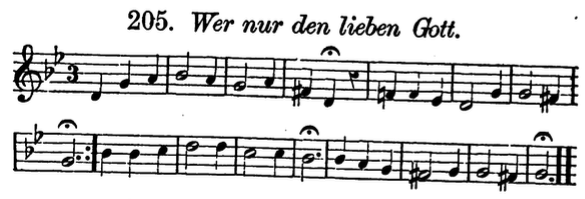
Here is my translation of the Communion hymn, “Hier bin ich, Jesus, zu erfüllen” (David Bruhn, d. 1782), in NEGB #117 with melody assignment “Wer nur den lieben Gott läßt walten,” first appearing in the Gsb für off. Gottesdienst (1765) edited by himself and Diterich, and later in several of the “new” hymnals of the late 18th c., and the various ed.s of Diterich’s own Lieder für den off. Gottesdienst.


I’M here to do, O dearest Savior,
What Thou didst in Thy gracious will
That Passion-night, ordain forever
My duty, and my salve for ill;
To do my duty now aright,
Grant me Thy Spirit’s strength and light.

2 Lord, let this be a pledge of heaven
Which for my conscience doth suffice;
Yea, let me here a part be given
In Thine atoning sacrifice!
Then will my soul right joyful be
In Thy relief, and worship Thee.

3 I marv’ling think on Thine affection
Which moved Thee thus to save mankind.
O pity, which that dread direction
To Calvary Thy step inclined!
Oh, let me of Thy mortal pain
A new impression here obtain!

4 Let me renounce all sin sincerely,
For which, self-off’ring, Thou wast slain;
Nor what Thou didst procure so dearly
By any vile abuse profane.
Let not Thy death-bought comfort be
A cause of self-security.

5 I here devote myself completely,
My Lord and God, to Thee anew.
I swear Thee solemnly and meetly
Before Thy Table, to be true;
Thine own forever I will be:
I’m Thine because Thou died’st for me.

6 I will not blush at scoffers ever
For service which to Thee is done,
Nor take a step, nor aught endeavor
Which to my conscience is a sin.
Oh, let such zeal in me be poured
To think as Thou dost think, O Lord.

7 Let me my neighbor love intently,
And if he stumble and offend,
Be reconciled, and answer gently,
And ever in my mind attend
How Thou didst in unfailing grace
My greater weight of guilt efface!

8 In faith may this yet stronger make me,
To know my soul shall live for aye,
And that Thy mighty call shall wake me
To leave the dusty tomb some day,
O mighty Prince of Life, when Thou
Shalt show Thyself, and all shall bow.

9 Here at Thy feet, O Lord, I bend me,
With thanks and praise, with sigh and pray’r.
Thy grace in new effusions send me!
My Savior, let this Supper fair
Be consecrated unto me
To strengthen my fidelity.

Translation © 2023 Matthew Carver.

GERMAN

Hier bin ich, Jesu, zu erfüllen,
was du in deiner Leidensnacht,
nach deinem gnadenvollen Willen,
zur Pflicht und Wohlthat mir gemacht.
Verleih zur Übung dieser Pflicht
mir deines Geistes Kraft und Licht.

2 Es werde, Herr, für mein Gewissen
dein Abendmahl ein Unterpfand,
mir sei an dein versöhnend Büssen
ein selig Antheil zuerkannt!
So freuet meine Seele sich
in deinem Heil, und lobet dich.

3 Bewundernd denk ich an die Liebe,
damit du unser Heil bedacht.
Wie stark sind deine Mitleidtriebe,
die dich bis an das Kreuz gebracht!
O gieb von deinem Todesschmerz
heut neuen Eindruck in mein Herz!

4 Laß mich mit Ernst die Sünden scheuen,
für welche du, dich opfernd, starbst;
durch schnöden Mißbrauch nie entweihen,
was du so theuer mir erwarbst.
Nie führe mich zur Sicherheit
der Trost, den mir dein Tod verleiht.

5 Ich übergebe mich aufs neue,
o du, mein Herr und Gott! an dich.
Ich schwöre dir beständge Treue
vor deinem Tische feierlich.
Dein eigen will ich ewig sein.
Du starbst für mich, drum bin ich dein.

6 Nie will ich mich vor Spöttern schämen
des Dienstes, den man dir erweist;
mich nie zu einem Schritt bequemen,
den mein Gewissen sündlich heißt.
O flöße mir den Eifer ein,
wie du, o Herr, gesinnt zu sein.

7 Laß mich mit Ernst den Nächsten lieben,
und wenn er strauchelnd was versieht,
Versöhnlichkeit und Sanftmuth üben.
Nie komm es mir aus dem Gemüth,
welch eine schwere Schuldenlast
du mir aus Huld erlassen hast.

8 Es stärke sich in mir der Glaube,
daß meine Seele ewig lebt,
und daß einst aus des Grabes Staube
mich dein allmächtger Ruf erhebt,
wenn du dich, großer Lebensfürst!
den Völkern sichtbar zeigen wirst.

9 Hier liege ich zu deinen Füssen
mit Dank und Lob, Gebet und Flehn.
Laß neue Gnade auf mich fließen!
Mein Heiland, laß es doch geschehn,
daß mir zur Stärkung meiner Treu
dein Abendmahl gesegnet sei!

31 October 2023

Ich komm jetzt als ein armer Gast

Here is my translation of the Communion hymn, “Ich komm jetzt als ein armer Gast” (Justus Sieber, d. 1695), in NEGB #116 with melody assignment “Es ist gewisslich an der Zeit,” first appearing in the author’s Poetisirende Jugend (Dresden, 1658) with title: “Devotion at participation of the Holy Supper for a godly soul.” Many hymnals, says Fischer, have it as “Jetzt komm ich…” Henkel notably includes the whole 11 stanzas, and that with the few variants found also in the Erbauliche Liedersammlung. I include earlier forms of the German in square brackets, and to some extent incorporate those in the translation.


I COME now as a needy guest,
O Lord, Thy Table nearing,
Which Thou for me hast ready dressed,
For my heart’s strength and cheering,
When at my soul a hunger gnaws,
And spirit-thirst doth anguish cause,
Till I no more am fearing.

2 “I am the Bread of Life,” Thou say’st,
O Jesus, Lord and Savior!
“That hunger by this Bread is chased
Which naught else stilleth ever.
I am the Fount; who doth believe [I am the draught…]
In Me, his heart will then receive
The stings of thirsting never.”

3 Then lead me, O my Shepherd true,
To these Thy meads of heaven,
Until my soul is quickened through,
When Thou the sight hast given
Of all the waters of Thy grace,
Prepared for those in every place
Which to Thy grace are driven. [Unto Thy shelter…]

4 A lowly lamb I follow Thee
Where pastures green delight me;
So let Thy living Manna be
My balm when woes affright me;
Thy precious blood let be my drink,
That no false goods which smile and wink
May from thy love excite me.

5 Like as the dear in weariness
Pants for some cooling river,
So pants my soul in its distress:
Oh, come, my soul deliver
From all the heavy pain of sin,
And pour Thy soothing flood within,
And I am blest forever.

6 Above all else to me supply
A penitence unfeigning,
That as from some vile creature I
From sin may be abstaining
Upon me put the robe of faith
Which clings to Thy atoning death,
My heart all gladness gaining.

7 Devotion’s flame light from above,
That I, the world forsaking,
May grasp Thy truth and brother-love,
Here of Thy food partaking,
That by Thy love, love may anew
Spring up unto my neighbor too,
All bonds of hatred breaking.

8 Oh, carry me away from me,
For here is all damnation;
And bring me, Savior, but to Thee,
Where is no desolation!
In me is naught but hell’s distress,
In Thee is only blessedness
With all who know salvation.

9 O Staff of Life, Thy Spirit send,
With gifts my soul renewing,
That sin in me may have an end,
Which else I oft were doing;
Reign over my unruly sense,
That it may cast its passions hence,
Which else it were pursuing.

10 Then come, dear Treasure of my soul,
I fondly would embrace Thee!
My heart is Thine, receive it whole,
And let none else replace Thee,
My Bridegroom Thou alone must be,
Since Thou didst save me on the Tree.
From me no pow’r can chase Thee.

11 To Thee, my Savior, glory be
For mercy unabating!
I almost faint for love of Thee,
That Day anticipating,
When Thou, the Prince of Life, wilt come
And lead me with all Christendom
To where the Feast is waiting.

Translation © 2023 Matthew Carver.

GERMAN
Ich komm jetzt als ein armer Gast [Jetzt komm ich…]
O Herr, zu deinem Tische,
den du für mich bereitet hast,
daß er mein Herz erfrische,
wann mich der selig Hunger nagt, [Seelen-Hunger]
wann mich der Durst des Geistes plagt,
bis ich den Schweiß abwische.

2 Nun sprichst du, Seelenbischof, dort:
ich bin das Brot zum Leben,
dies Brot treibt auch den Hunger fort,
den sonst nichts mag aufheben.
Ich bin der Brunn, wer glaubt an mich, [Ich bin der Trank…]
dem wird der Durst nicht ewiglich,
im Herzen Stiche geben.

3 Drum führe mich, o treuer Hirt!
auf deine Himmels-Auen,
bis meine Seel erqucket wird,
wann du sie lässest schauen
die Ströme deiner Gütigkeit,
die du für alle hast bereit,
die deiner Güte trauen. [so deiner Hut sich…]

4 Ich armes Schäflein suche dich
auf deinen grünen Weiden, […deiner grünen Weide;]
dein Lebensmanna speise micht,
zu Trost in allem Leiden; […Leide:]
es tränke mich dein theures Blut,
auf daß mich ja kein falsches Gut
von deiner Liebe trenne.

5 Gleichwie des Hirsches mattes Herz
nach frischem Wasser schreiet,
so schreiet auch mein Seelenschmerz:
Ach! laß mich sein befreiet
von meiner schweren Sündenpein,
und schenke mir die Trostfluth ein,
damit ist mir gedienet. [dann bin ich benedeiet.]

6 Vor allen Dingen wirk in mir [Vor allem aber…]
ein ungefärbte Reue,
daß wie für einem wilden Thier
ich mich für Sünden scheue;
zieh mir den Rock des Glaubens an, [wirf…]
der dein Verdienst ergreifen kann,
damit mein Herz sich freue.

7 Entzünd in mir die Andachtsbrunst,
daß ich die Welt verlasse,
und deine Treu und Brudergunst
in dieser Speise fasse,
daß durch dein Lieben Lieb in mir
zu meinem Nächsten wachs herfür,
und ich fort niemand hasse.

8 Ach! führe mich nur selbst von mir,
bei mir ist nichts denn Sterben.
Nimm aber mich, O Herr, zu dir!
bei dir ist kein Verderben.
In mir ist lauter höllenpein, […Höll und Pein,]
in dir ist nichts dann selig sein, […als selig sein,]
mit allen Himmelserben.

9 Erneure mich, o Lebensstab,
durch deines Geistes Triebe, [mit deines Geistes Gaben.]
daß ich die Sünde lege ab, [Laß mich der Sünde danken ab,]
im guten mich stets übe; [die mich sonst pflegt zu laben.]
regiere meinen trägen Sinn, […losen Sinn,]
daß er die Lüste werfe hin
die er sonst pflegt zu haben.

10 So komm nun, o mein Seelenschatz!
Und laß dich freundlich küssen;
mein Herze gibt dir Raum und Platz,
und will von keinem wissen,
als nur von dir, mein Bräutigam,
dieweil du mich am Kreuzesstamm
aus Noth und Tod gerissen.

11 Hab, lieber Heiland, großen Dank [O liebster…]
für deine Süßigkeiten;
ich bin für lauter Liebe krank,
drum wart ich auf die Zeiten,
in welchen du, o Lebensfürst,
mich samt den Auserwählten wirst
zur Himmelstafel leiten.

26 July 2023

O Sacrum Convivium in quo Dei Filius

Here is my translation of the Communion chant, “O Sacrum Convivium in quo Dei Filius” and “O welch ein heiliges Abendmahl” (Pomerania, 1563), in ELGB #332a–b, a confession from the Pomeranian reformation published in the 1560s against the Sacramentarians, then included in the Pomeranian Agenda of 1569 in both Latin and Low German with musical notation, later again published in 1582 with more thorough explanation by Jacob Runge. The first few words are identical to the older Communion antiphon “O Sacrum convivium, in quo Christus sumitur” attributed to Thomas Aquinas, but the similarity ends there. It has been wholly reimagined as a confession of the True Presence , an apologetic summary of the Lutheran teaching furnished with its own chant melody (based on a Mode 3 Antiphon) and appointed to be sung during Communion in the churches of Pomerania. Later Pomeranian hymnals include the High German translation, and in the 19th c., a paraphrase is found adapted to a chorale tune. Grabau includes both the Latin and German titles for each version respectively: “Confession of the true presence of the Body and Blood of our Lord Jesus Christ in the Sacrament of the Altar, to be sung during Communion.” No music is provided in the hymnal, and must have been taken from an edition of the Pomeranian Agenda.


From the Latin:
O SACRED banquet, wherein the Son of God, Christ the Lord, the Crucified, feedeth the Church by a wonderful mystery, under the sacred bread giving His true Body that hung on the tree of the cross, under the sacred wine giving His true Blood that was poured out for the sins of the world: Thus is Christ present in the Supper: not with His grace alone, not with His Spirit alone, not absent with His Body, but since He sitteth at the right hand of the Father in heaven, filling all things, He is truly present, as God and Man, Almighty, true in His word, when He saith, “This is My Body which is given for you. Take, eat.” Therefore in the most Sacred Supper all Christians, worthy and unworthy, eat the Body of the Lord. The worthy eat with the mouth and faith unto life eternal. The unworthy eat with the mouth only, without faith, unto the judgment of death.

From the German:
OH, what a Holy Supper, wherein the Son of God, the Lord Christ, crucified for us, feedeth His Christian congregation with wonderful mystery! Where He, under the sanctified bread, giveth the same His true Body, which hung on the tree of the Cross, under the blessed wine; He giveth the same His true Blood, which was poured out for the sin of the world. Thus is the Lord Christ present in His Supper: not only with His grace, not only with His Spirit, not absent with His body, but because He sitteth in heaven at the right hand of the Father, and filleth all things, therefore is He truly present, God and Man, almighty and true in His Word, when He saith, “This is My Body, which is given for you. Take, eat.” Therefore in the Holy Supper all Christians, the worthy and unworthy, eat the Body of the Lord. The worthy eat it with the mouth and faith unto eternal life; the unworthy eat it only with the mouth, without faith, unto judgment and death.

Translation © 2023 Matthew Carver.

LATIN
Sacrum convivum,
in quo Dei Filius,
Christus Dominus crucifixus,
pascit Ecclesiam mirando mysterio.

Sub pane sacro dans Corpus
illud suum verum,
quod pependit in Crucis ligno.

Sub vino sacro dans Sanguinem
suum illum verum,
qui effusus est pro peccatis mundi.

Sic adest Christus in Cena,
non sola gratia,
no solo Spiritu,
no absens corpore.

Sed quia sedit ad dexteram Patris,
in caelestibus,
implens omnia
vere praesens est
Deus et Homo,
potens omnia,
verax in verbo suo,
cum inquit dicens:
HOC EST CORPUS MEUM
QUOD PRO VOBIS TRADITUR:
ACCIPITE, COMEDITE:

Ergo in Cena sacratissima
Corpus Domini manducant omnes Christiani,
digni et indigni.
Digni edunt ore et fide ad vitam aeternam.
Indigni edunt solo ore sine fide ad mortis judicium.

GERMAN
O welch ein heiliges Abendmahl,
darin der Sohn Gottes, der Herr Christus,
für uns gecreuziget,
seine christlich Gemeine
speiset mit wunderbarem Geheimniß!

Da Er unter dem geheiligten Brod
giebt denselbigen seine wahren Leib,
welcher am Holz des Creuzes gehänget hat.

Unter dem gesegneten Wein
giebt Er dasselbige sein wahres Blut,
welches für der Welt Sünde vergossen ist.

Also ist der Herr Christus in seinem Abndemahl zugegen,
nicht allein mit seiner Gnade,
nicht allein mit seinem Geiste,
nicht abwesend mit seinem Leibe.

Sondern, weil Er im Himmel
zur Rechtendes Vaters sitzt,
und alles erfüllet,
so ist Er wahrhaftiglich gegenwärtig,
Gott und Mensch, allmächtig
und wahrhaftig in seinem Wort.

Da Er spricht: das ist mein Leib,
der für Euch gegeben wird, nehmet, esset.

Derhalben essen im heiligen Abendmahl
des Herrn Leib alle Christen,
die Würdigen und Unwürdigen.

Die Würdigen essen ihn mit dem Munde
und Glauben zum ewigen leben,
die Unwürdigen essen ihn allein mit dem Munde,
ohne Glauben zum Gericht und Tod.

10 April 2023

Dem König, welcher Blut und Leben

Here is my translation of the Communion hymn, “Dem König, welcher Blut und Leben” (Ernst Gottlieb Woltersdorf, d. 1761), from Ev.-luth. Gsb #180, first published in the author’s posthumous Sämtliche neue Lieder (Berlin, 1767) and titled (by reference to the foregoing hymn there) “The remembrance of the Crucified Jesus in the Supper. 1 Cor. 11:24–26.” As may be seen from the position in the Wisconsin hymnal, this hymn was inadvertently passed over in the course of the previous year and is here inserted especially as not inappropriate to the Easter season. The appointed melody is “O daß ich tausend Zungen hätte.”


THE King who blood and life hath given
To save the life of all His own
Be glorified in earth and heaven!
His praises evermore intone!
Sing all the wonders of our God,
Yet over all extol His blood!

2 My heart hath found that King victorious,
Where else but there on Calv’ry’s mound?
There from His wounds flows healing for us,
There my redemption too is found;
He let His life for me outflow
While I was yet His fervent foe.

3 To whom else should I then surrender,
O King that dièdst on the tree?
My blood and life to Thee I tender,
My heart pours out itself to Thee;
I to Thy crossèd banner swear,
Thy citizen and soldier e’er.

4 Lord, for Thy blood my soul is thirsting;
Thy parchèd land doth pant for rain.
My heart without Thy life is bursting;
My life doth wither, shrink, and wane,
My spirit shall be faint and ill
Until Thy blood upon me spill.

5 Give Thee as manna to sustain me!
Thy wine of joy my heart supply,
That I forget not nor disdain Thee!
Thyself within me glorify;
Then will I daily sup with Thee;
Thy merits cannot numbered be.

Translation © 2023 Matthew Carver.

GERMAN
Dem König, welcher Blut und Leben
dem Leben seiner Völker weiht,
dem König werde Preis gegeben!
Erzählt sein Lob der Ewigkeit!
singt alle Wunder, die er thut;
doch über alles rühmt sein Blut!

2 Den König hat mein Herz gefunden,
wo anders als auf Golgatha?
Da floß mein Heil aus seinen Wunden;
auch mich, auch mich erlöst er da.
Für mich gab er sein Leben hin,
der ich aus seinen Feinden bin!

3 Wem anders sollt ich mich ergeben? –
O König, der am Holz verblich,
hier opf'r ich dir mein Blut und Leben,
mein ganzes Herz ergießet sich;
dir schwör ich zu der Kreuzesfahn
als Streiter und als Unterthan.

4 Mich dürstet, Herr nach deinem Blute,
nach Regen lechzt dein dürres Land.
Ach, außer dir, dem höchsten Gute,
ist keine Nahrung mir bekannt.
Mein Geist ist elend und beklemmt,
bis daß dein Blut mich überschwemmt.

5 Gieb dich, ein Manna, mir zu essen!
Dein Freudenwein erfülle mich!
O laß mich deiner nie vergessen!
in meinem Geist verkläre dich;
so halt ich täglich Abendmahl;
denn dein Verdienst ist ohne Zahl.

13 November 2022

Ach Gnad über alle Gnaden

 Here is my translation of the Communion hymn, “Ach Gnad über alle Gnaden” (Anna Sophie Landgravess of Hessia-Darmstadt, d. 1672), in Ev.-Luth. Gesangbuch #310. ” Fischer  states: “The authoress’s, Der Treue Seelenfreund Christus Jesu . . . (Jena, 1658), p. 245: ‘Contemplation hymn of the high grace which Jesus Christ shows us in His most holy Supper.’ . . . Freylinghausen has the hymn with several alterations, which are often commendable. The closing lines: ‘Du allein Herr annst mich heilen / Von der Sünden Eiterbeulen’ Bunsen 1833 alters thus: ‘Du wollst selbst Herr in mir leben, / Dir sei ganz mein Herz ergeben [Lord, live in me, let my heart be whole devoted to Thee].’” The appointed melody is “Freu dich sehr, o meine Seele.”


GRACE all other grace excelling!
Is this not the height of grace?
Round the Savior’s table swelling
Jesus bids us take our place,
Yea, invites us as His guest,
That we all, by sins oppressed,
May His sweet relief be given
And be lifted up to heaven.

2 Jesus Christ Himself will feed us
And our very food will be.
Oh, what grace from sin hath freed us,
Dearest Jesus, giv’n by Thee!
Such a thing was never heard
By man’s ear, O blessed Word,
Nor was to man’s eye presented,
Nor by human mind invented.

3 Thou wast unto death subjected
For our life and blessedness,
That we might be resurrected,
Freed from torment and distress,
Yet Thy love did Thee compel
To give us Thyself as well,
In Thy flesh to us Thou cleavest,
With Thy blood our thirst relievest.

4 Here we see Thy faithful spirit,
Thou alone the Healer art,
From whom we a draft inherit,
Granted by Thy gracious heart.
Thou art portioned to our soul,
That we may be rendered whole
From our spirit’s wounds untended,
Which had else been never mended.

5 Oh! I humbly come before Thee,
Dearest Jesus Christ, this day,
And in fervent faith implore Thee,
Since Thou didst Thy table lay:
Heav’nly grace to me afford,
That my soul may be restored,
Nor be faint in its starvation
But have Thy invigoration.

6 Lord, in order to uplift me,
Very bread of heav’n supply,
And with ample comfort gift me,
That I death and hell defy;
Let Thy fount of life so flow
That e’en I am white as snow
Quench me with the drink I cherish,
Lest for thirst I parchèd perish.

7 Lo, my heart, way-worn and sickened,
I would give Thee for relief;
Let it be with heaven quickened,
For it almost faints with grief.
Good Physician! only Thou
From my sin canst cleanse me now;
Only Thou hast pow’r to heal me
From the sores of sin that fill me.

Translation © 2022 Matthew Carver.

GERMAN

Ach Gnad über alle Gnaden!
heißet das nicht Gütigkeit,
Jesus hat uns selbst geladen
zu dem Tisch, den er bereit't,
Jesus bitt't uns selbst zu Gast,
daß wir aller Sorgenlast,
aller Sünd und Noth entnommen,
in den Himmel möchten kommen,

2 Jesus, Christus, will uns speisen,
und auch selbst die Speise sein, [Köste]
Heißet das nicht Gnad erweisen,
o mein liebstes Jesulein?
Solches ist an keinen Ort,
o mein liebster Seelenhort!
sonst gehöret, noch gesehen,
solches ist sonst nie geschehen.

3 Hast du dich doch schon gegeben,
unsertwegen in den Tod,
daß wir möchten wieder leben
frei von aller Qual und Noth;
aber deiner Liebe Macht
hat dich auch dahin gebracht,
daß du deinen Leib uns schenkest
und mit deinem Blute tränkest.

4 Hier sieht man dein treu Gemüthe,
du bist sonst der Arzt allein
doch willst du aus lauter Güte
auch die Arzenei selbst sein.
Du giebst dich selbst uns zu Theil,
daß wir möchten werden heil
von den tiefen Seelenwunden,
die sonst waren unverbunden.

5 Ach! zu dir komm ich geschritten,
o mein liebster,Jesu Christ!
und will dich im Glauben bitten,
weil für mich bereitet ist
Itzo dein Genadentisch,
daß sich meine Seel erfrisch,
und vor Hunger nicht vergehe,
stets in deiner Kraft bestehe. [Wenn mir meine Kraft entstehe]

6 Ach! so wollest du mich laben
mit dem rechten Himmelbrod,
und mit reichem Trost begaben
wider Hölle, wider Tod;
ach, laß deine Lebensquell
auch mich machen weiß und hell.
Tränke mich denn, eh ich sterbe
und vor großem Durst verderbe.

7 Dir will ich anitzo schicken
mein ganz müd und mattes Herz,
Ach! das wollest du erquicken,
weil es fast vergeht vor Schmerz.
O mein Arzt! du kannst allein
mich von Sünden machen rein;
du allein kannst mich heilen
von der Sünden Eiterbeulen.


12 November 2022

Laß irdische Geschäfte stehen

 Here is my translation of the Communion hymn, “Laßt irdische Geschäfte stehen” (Erdmann Neumeister, d. 1756), in Ev.-Luth. Gesangbuch #309 a cento of 8 stanzas, and the three omitted stanzas (8–9) drawn from the author’s original Der Zugang zum Gnaden-Stuhl Jesu Christo (1710), where it is titled “Comfort-Hymn on the Holy Supper.” Fischer overlooks the hymn both in the lexicon entries and in the titles listed under Erdmann Neumeister. Original wording is noted in square brackets; among which alterations found in the Wisc. Hymnal, most notable is in st. 7, where Christ’s simple presence is exchanged for receptionist language in the later revision. The appointed melody is “Wer nur den lieben Gott läßt walten.”


OF earthly matters all unheeding,
Arise, O soul, and ready thee!
Ere at God’s table thou art feeding,
Discern what thy own state may be
And whether as a proper guest
For Jesus’ banquet thou art dressed.

2 But when I look, I fain would hide me,
And fear to feel the judgment rod;
I meet a million sins inside me
Which I have wrought against my God,
And think: “No putrid sinner may
Come to the table Thou dost lay!”

3 How shall I ask for God’s forbearing,
Who as a sinner stand condemned?
But nay, I need not be despairing:
God lays the table to this end,
That He may make the sinner whole
And comfort give the needy soul.

4 In God my heart is happy, knowing
He blots out my iniquity;
I wash in Jesus blood, that, flowing,
Atonement made for sinful me;
By faith His robe of righteousness
And of salvation I possess.

5 I’ll wear this garment as my glory,
A child of God and chosen heir,
Included in salvation’s story,
With heaven’s guests I have a share;
Since Jesus Christ I have put on,
God looks at me as at His Son.

6 Ah, how this Food with quick’ning thrills me,
Whereof my soul doth here partake!
In wondrous wise my Jesus fills me,
Himself the precious Food doth make—
Behold, how Jesus loveth thee,
Who gives Himself, thine own to be.

7 To all but bread and wine I’m blind here,
Yet faith discerns a higher good:
In, with, and under either kind here
Is Christ’s true body and His blood;
So saith the Savior true and tried,
Here then my faith doth firm abide.

[8 I stand unfearing and undoubting
That I the grace of God possess;
Come, hell! Come, every devil shouting,
Though much upon my debts ye press!
I now am righteous, pure, and free,
No condemnation here can be.

8 Thus I of Jesus have partaken,
Thus I am Jesus’ house divine,
Thus I with Jesus sleep and waken,
Thus I am His and He is mine;
Thus He conducts me on life’s way,
Thus I begin new life today.

9 Since Jesus hath to me elected
His life-infusing flesh to give,
My members likewise resurrected
From mold’ring grave again shall live.
This is my hope, the end of faith,
My confidence in life and death.]

10 My Jesus died for my transgression,
My Jesus also lives for me,
My Jesus won for me salvation,
On this I stand unwav’ringly,
And cling alone to Christ the Lamb:
My Friend is mine, and His I am.

Translation © 2022 Matthew Carver.

GERMAN

Laß irdische Geschäfte stehen,
auf! Seele, mache dich bereit!
Du willst zu Gottes Tische gehen; [Ich will…]
doch, prüfe deine Würdigkeit,
ob du dich als ein rechter Gast
zum Abendmahl geschicket hast?

2 Es will mir fast der Muth verschwinden,
ob ich dabei erscheinen kann;
ich finde viele tausend Sünden, […Millionen Sünden]
ach, die ich wider Gott gethan!
Ich darf zu dieser Tafel nicht, [kein Sünder darf zur…]
nicht unrein vor sein Angesicht. [er stinkt vor Gottes…]

3 Daß Gott erbarm, was soll ich sagen?
Ich Sünder muß verloren sein!
Doch nein, ich darf noch nicht verzagen:
Gott setzt den Tisch deswegen ein,
das er den Sündern Trost und Kraft
für ihre armen Seelen schafft.

4 Wie wohl ist mir in Gott zu Muthe!
Gott tilget meine Missethat;
ich wasche mich in Jesu Blute,
der meine Sünde gebüßet hat: […Schuld gebüßet hat]
mein Glaub erlangt von ihm das Kleid [mein Glaube kriegt…]
des Heils und der Gerechtigkeit.

5 In diesem Schmucke will ich gehen
als Gottes auserwähltes Kind
und selig an dem Orte stehen,
wo andre Himmelsgäste sind;
weil ich mit Jesu angethan,
sieht Gott in ihm mich gnädig an. […mich selbst als Jesum an.]

6 Ach wie erquicket mich die Speise,
die meine Seele hier genießt,
da Jesus wunderbarer Weise
die theure Speise selber ist!
Ach siehe, wie dich Jesus liebt,
der dir sich selbst zu eigen giebt!

7 Ich kann nur Brod und Wein erblicken,
doch sieht der Glaub ein höher Gut:
in, mit und unter beiden Stücken
empfang ich Christi Leib und Blut; [ist Christi wahrer…]
er sagt es selbst, er ist getreu,
drum bleibt mein Glaube fest dabei

[8 So hab ich Jesum selbst genossen,
so kann ich Jesu Tempel sein;
so hab ich Jesum eingeschlossen,
so bin ich sein, so ist er mein;
so führt er mich die Lebens-Bahn,
so fang ich neu zu leben an.

9 Ich habe weder Furcht noch Zweifel.
Die Gnade Gottes ist mit mir.
Komm, Hölle! komm, kommt, alle Teufel!
Trotz! werft mir meine Sünden für,
ich bin gerecht, ich bin nun rein,
an mir kann nichts Verdammlichs sein.

10 Weil Jesus mir sein Fleisch gegeben,
das alles Lebens Usrprung ist,
so muß mein Fleisch auch wieder leben,
ob solches die Verwesung frißt.
Das ist mein Trost und Glaubensziel,
drauf leb und sterb ich, wenn Gott will.]

11 Mein Jesus ist für mich gestorben,
mein Jesus lebet auch für mich,
mein Jesus hat mir Heil erworben,
darauf besteh ich festiglich
und halte mich an ihn allein:
mein Freund ist mein, und ich ben sein.


10 November 2022

Herr, du hast für alle Sünder

Here is my translation of the Communion hymn “Herr, du hast für alle Sünder” (Caspar Neumann, d. 1715), found in Ev.-Luth. Gesangbuch #307. Fischer says: “First in an edition of the Silesian Kirchengesangbuch edited by the author . . .  Stier . . . calls it “a beautiful Communion hymn”; J. P. Lange, conversely, . . . dislikes how “the thoughts of the hymn appear to depend somewhat on the rhyme.” Notably, Fischer is unsure of the first appearance. I find an earlier publication of the text in Vollständige Kirchen- und Haus-Music (Breslau, 1699), p. 451. While this claims to be largely a reprint of an earlier book from 1611, Neumann’s hymn must be regarded as a new addition. The appointed melody is “Freu dich sehr, o meine Seele.”


LORD, Thou hast a table holy
For all sinners richly graced,
Where the bread of children lowly
Of the Father’s love doth taste.
Here today I am Thy guest,
Present at Thy kind behest;
Grant me also to come rightly,
Nor to treat Thy kindness lightly.

2 Purge, I pray, from mind and spirit
All offensive filth away,
That my heart may by Thy merit
Be Thy hallowed house today,
For I only hope in Thee,
Dearest Jesus! Love Thou me;
Let on earth Thy table festal
Hint at paradise celestial.

3 If the Lord can give the servant
His own body and His blood,
Help me trace with spirit fervent
Here Thy love’s unfathomed good.
Neither let me, for Thy sake,
To my judgment here partake
Of what Thou to me hast given
For redemption, life, and heaven.

4 Captive therefore take my reason,
In true faith my thinking seal,
Curb the flesh, so prone to treason,
Grant it not to blunt my zeal.
Rouse my longing to be fed
In my mis’ry, with the bread
That the spirit’s hunger stilleth
And with God my being filleth.

5 Prince of Life, consider mainly
“Jesus” is Thy name of pride;
And consider, ’twas not vainly
That Thou for the world hast died,
Hear, then, what I ask of Thee,
Share Thy very self with me,
Give this day Thy lifeblood spilling
From Thy wounds, my conscience filling.

6 Lord, of Thee is our begetting,
On Thy strength let us be fed;
There is only futile fretting
Save where Jesus giveth aid.
Oh, then bread and wine impart
As the Manna of my heart,
That the working of this dinner
May be mighty in this sinner!

7 Give me of Thy love to savor,
And to taste the goods of heav’n
Or, should fear assail me ever,
Or to anguish I be driv’n,
Grant Thy blood may furnish me
With bold faith and constancy,
Letting naught in all creation
Rob me of my consolation.

8 Help me on Thy bitter Passion
E’er to gaze with faithful eyes,
Let me live in Christian fashion
Nor my fellow guest despise,
Oh, possess me perfectly
Till I shall be all in Thee,
And in Thee, my All, possessing
Fullness of Thy gifts and blessing!

Translation © 2022 Matthew Carver.

GERMAN
Herr, du hast für alle Sünder
einen reichen Tisch gedeckt,
wo das Brod der armen Kinder
nach des Vaters Liebe schmeckt.
Heute nun bin ich dein Gast,
wie du mir befahlen hast;
aber hilf auch, daß mein Herze
nicht mit deiner Wohlthat scherze.

2 Räume, bitt ich, mein Gemüthe
rein von allen Argen aus,
daß auch meines Herzens Hütte
werde dein geweihtes Haus,
Denn ich hoffe nur auf dich,
liebster Jesu, liebe mich
und laß deinen Tisch auf Erden
mir zum halben Himmel werden.

3 Kann der Herr dem Knechte schenken
auch sein eigen Fleisch und Blut:
ach, so hilf mir recht bedenken,
was hier deine Liebe thut;
und verleihe, daß ich nicht
eß und trinke zum Gericht,
was du, Jesu, für mein Leben
zur Erlösung hast gegeben.

4 Nimm jetzt die Vernunft gefangen,
daß ich glaube schlecht und recht,
und erwecke mein Verlangen,
wenn das Fleisch den Eifer schwächt,
bis ich fühle meine Noth
und mich sehne nach dem Brod,
weiches allen Hunger stillet,
und mein Herz mit Gott erfüllet.

5 Denke doch, du Fürst des Lebens,
denke, daß du Jesus heißt,
denke, daß du nicht vergebens
für die Welt gestorben sei'st;
drum erhöre, was ich bitt,
theile mir dich selber mit
und laß heut in mein Gewissen
Blut aus deinen Wunden fließen.

6 Sind wir doch aus dir geboren,
nähr uns auch durch deine Kraft;
und weil Alles da verloren,
wo nicht Jesus Hülfe schafft;
ach, so laß dein Brod und Wein
meines Herzens Manna sein,
daß die Wirkung dieser Speise
künftig in der That sich weise. [kräftig…]

7 Laß mich deine Liebe schmecken
und die Güter jener Welt;
oder wenn auch Furcht und Schrecken
mich zuweilen überfällt,
so verschaffe mir dein Blut
einen rechten Freudenmuth,
daß ich meinen Trost im Glauben
mir durch Niemand lasse rauben.

8 Hilf mir recht ins Herze fassen
deinen herben, bittern Tod;
laß mich auch Niemanden hassen,
der mit ir genießt dein Brod;
nimm mich ganz vollkommen ein,
bis ich werde bei dir sein
und die Fülle deiner Gaben,
meinen Gott und Alles, haben.


09 November 2022

Komm, mein Herz, in Jesu Leiden

Here is my translation of the Communion hymn “Komm, mein Herz, in Jesu Leiden” (Ernst Gottlieb Woltersdorf, d. 1761), in Ev.-Luth. Gesangbuch #302. A translation by Salyard of stanzas 1, 8, 9, and 10 is available from the old Ohio Joint Synod hymnal, A Collection of hymns for public and private worship (1855) and is quoted in the Lutheran history books of Dr. Eric Lund. Unfortunately, the translation does not account for the unifying fifth line “Daß ich einen Heiland habe” which appears without alteration in all the German stanzas. Thus in my translation I have attempted to keep at least the words “that I have a Savior” in that place, with variation of other words as necessary for the syntax and sense in English. I retain most of Salyard’s 10th stanza, and a little of his first. The proper melody is “Schmücke dich, o liebe Seele.”


COME, my heart, no longer languish,
Jesus feeds thee on His anguish:
Blood of life divine is flowing,
From the Prince of Life’s outflowing
That I surely have a Savior
Who my soul doth quicken ever,
Robes me in His free salvation,
Fills my heart with jubilation!

2 Jesus daily is my Center,
When upon His blood I venture
As I journey unto heaven
Drink and food by Him I’m given,
And the fact I have a Savior
Gladdens me both now and ever;
There’s no prize in all creation
Greater than my Jesus’ Passion.

3 Yet my heart would fain be feeling
His Communion Supper’s healing,
Soul and body’s thirst He whetteth,
Thus my heart no more forgetteth
That I surely have a Savior,
Who in cross and tomb was ever,
My Redeemer, and remaineth,
So the Scripture true maintaineth.

4 We, by unbelief possessèd,
Soon forget the glory blessèd
Of our only Sin-Atoner,
Yea, I oft forget that honor—
That I surely have a Savior,
And find then no gift or favor
To provide for my redeeming,
And despair at all my sinning.

5 Oh, how weary then I wither,
Peaceless wander yon and hither,
And the world and sin assail me,
When I let my mem’ry fail me
That I surely have a Savior,
Who with staff attends me ever
In His gentle shepherd station,
Is my life and my salvation.

6 I, a sinner oft offending
And from sinners all descending,
Would be by all hope forsaken
If this truth from me were taken:
That I surely have a Savior,
Who to win me heaven’s favor
Poured His blood, a sweet libation—
Sweeter far than all creation.

7 Be Thou blessed, Love eternal,
That, in faithfulness supernal,
When mistrusting thoughts would blind me,
Thou didst make this to remind me
That in Thee I have a Savior,
Who in humble, true behavior
Bore the cross, His life He gave me,
Dared the jaws of death to save me.

8 Sacred bread and host, I greet thee,
For with thee He comes to meet me,
Whose fair body, wholly riven,
Hath to man redemption given;
Thus the fact I have a Savior,
Who, all pale, of death did savor
In the tomb for my transgressions,
Gives me sweetest cogitations.

9 Sacred wine, to me be blessed!
For in thee I’ll have th’ expressèd
Blood of Jesus ever-living,
All the sins of man forgiving.
Thus the fact I have a Savior—
Parchèd souls’ Refreshment-giver!—
How shall such a thing seem curious?
I may drink His life-blood glorious!

10 In my heart His voice is swelling,
“Freely eat, thy grief dispelling,”
Come!” He bids me, “freely drinking,
Deep in joys ethereal sinking,”
Showing that I have a Savior,
Who for me secures God’s favor,
With His blood forever flowing,
Meat and drink, and life bestowing.

11 God, what knowledge need I further?
Yea, what joy to me is worthier?
Who can my salvation ponder?
Let me not forget that wonder
That I surely have a Savior;
I am free from death forever,
If my sin and hell would scare me,
Then my Savior’s hand will spare me.

12 Yea, my Savior—Him I’ve taken,
(nor have churlishly forsaken)—
“Take!” to all Thy cry resounding;
Therefore let this cry be sounding:
That I surely have a Savior,
And He is my quick’ning ever;
Foes defying, though they hate me,
They will no disturbance give me.

13 Now if foes should come attacking,
Or should I in aught be lacking,
Or if all my pow’rs be falling,
I will comfort find, recalling
That I surely have a Savior,
Who from crib to tomb doth ever
Cure my woes—the Lord of heaven—
He this sinner hath forgiven!

Translation sts. 1, 10, Salyard, alt.
Translation sts. 2–9, 11–13 © 2022 Matthew Carver.


GERMAN

Komm, mein Herz, in Jesu Leiden!
deinen Hunger satt zu weiden,
und ertränk dein sehnlich Dürsten
in dem Blut des Lebensfürsten.
Daß ich einen Heiland habe
und in seinem Heil mich labe,
und in sein Verdienst mich kleide;
das ist meines Herzens Freude.

2 Zwar ich hab ihn alle Tage,
wenn ich in sein Blut mich wage.
er ist auf der Himmelsreise
täglich mein Getränk und Speise;
daß ich einen Heiland habe,
bleibt mein Alles bis zum Grabe,
und ich mag nichts anders wissen
als sein Leiden zu genießen.

3 Dennoch will ich mit Verlangen
auch sein Abendmahl empfangen;
hier darf Seel und Leid ihn essen,
und so kann ichs nicht vergessen:
daß ich einen Heiland habe,
der am Kreuz und in dem Grabe,
wie sein Wort mir sagt und schreibet,
mein Erlöser war und bleibet.

4 Weil der Unglaub uns besessen,
kann man nichts so leicht vergessen,
als den Tilger unsrer Sünden
ja, auch mir will's oft verschwinden:
das ich einen Heiland habe,
und dann weiß ich keine Gabe
zur Versöhning darzubringen;
meine Schuld muß mich verschlingen.

5 Ach, wie werd ich da so müde.
wie entweicht der süße Friede;
Sünd und Welt kann mich verwunden,
wenn mir dieses Licht verschwunden:
daß ich einen Heiland habe,
der mit seinem Hirtenstabe
sanft und mild und voll Vergeben,
mir nichts ist, als Heil und Leben.

6 O ich Sünder, ich Verdammter
und von Sünder Abgestammter!
was wollt ich vom Troste wissen,
wäre dieses weggerissen:
daß ich einen Heiland habe,
dessen Blut mich Sünder labe.
Besser wär es nie geboren,
als dies theure Wort verloren!

7 Sei gesegnet ewge Liebe!
daß du mir aus treuem Triebe,
da das Mißtraun mich vergiftet,
solch ein Denkmal selbst gestiftet:
daß ich einen Heiland habe,
der den Gang zum Kreuz und Grabe,
ja den Sprung ins Todes Rachen,
gern gethan, mich los zu machen.

8 Heilges Brot, sei mir gesegnet!
weil er mir mit dir begegnet,
dessen Leichnam voller Wunden,
die Erlösung ausgefunden.
Daß ich einen Heiland habe,
der erblaßt und tot im Grabe,
auch für meine Schuld gelegen:
will ich schmecken und erwägen!

9 Heilger Wein, sei mir gesegnet!
denn, wie Christi Blut geregnet
zur Vergebung aller Sünden,
das will ich in dir empfinden.
Daß ich einen Heiland habe,
der die dürren Seelen labe:
wie kann mir das fremde dünken?
hab ich doch sein Blut zu trinken!

10 Er befiehlt's, mich satt zu essen;
meines Jammers zu vergessen;
er gebeut's, mich satt zu trinken;
ganz in Freude zu versinken:
daß ich einen Heiland habe,
der sich selbst zur Opfergabe,
ja, sein Opfer mir zum Leben,
um zur Speis und Trank gegeben.

he commands me to be sated,
Be my grief eradicated,
Eat and drnk thy fill, He bids me,
Wholly into joy immerse thee:
That I surely have a Savior
who is Off’ring and the Giver,
Yea, His off’ring for my living

11 Gott! was brauch ich mehr zu wissen?
ja, was will ich mehr geniessen?
wer kann nun mein Heil ermessen?
werd ich das nur nicht vergessen:
daß ich einen Heiland habe,
ich bin frei vom Tod und Grabe.
wenn mich Sünd und Hölle schrecken;
so wird mich mein Heiland decken.

12 Ja, mein Heiland, den ich nehme,
weil ich mich nicht knechtisch schäme!
Nehmet hin! so rufst du allen;
darum soll es laut erschallen:
daß ich einen Heiland habe
und an ihm mich muthig labe.
Trotz den Feinden, die mich hassen!
ich will mich nicht stören lassen.

13 Will hinfort mich erwas quälen,
oder wird mir erwas fehlen,
oder wird die Kraft zerrinnen:
so will ich mich nur besinnen,
daß ich einen Heiland habe,
der vom Kripplein bis zum Grabe,
bis zum Thron, wo man ihn ehret,
mir, dem Sünder zugehöret.

18 July 2022

Wir danken Dir, Herr Jesu Christ, daß Du das Lämmlein . . .

 Here is my translation of the Communion hymn “Wir danken Dir, Herr Jesu Christ, daß Du das Lämmlein . . .” (N. Selnecker, 1572), a simple prayer of faith containing several petitions relating to the Holy Supper. The appointed melody in Evangelisch-Lutherisches Gesang-Buch (the old Buffalo Synod German Hymnal) is “Wenn wir in höchsten Nöten sein,” but in the hymnal of the Allgemeine Versammlung, “Herr Gott, dich loben alle wir.”


LORD Jesus Christ, our thanks to Thee,
That Thou wast made our Lamb to be,
And bearest all our sin and shame;
Grant that we may Thy grace proclaim.

2 Lord, Thy most Holy Supper e’er
Preserve among us everywhere;
Thy body and Thy crimson blood
Serve for our soul and body’s good.

3 Thou hast ordained this cov’nant high,
And said’st, on this with joy rely!
Take, eat, this is My body true,
Drink Thou My blood. This often do.

4 I eat Thy body, drink Thy blood,
And am refreshed in heart and mood,
In body, soul, and conscience blest,
By sin and death no more distressed.

5 E’en though I die, I die to Thee,
Thy body_and blood abide with me,
And where Thou art, I will remain;
O Lord, my feeble faith sustain!

6 Curs’d be the heretic and fool,
Who think their God to overrule!
O Jesus Christ, I am Thy sheep,
I hear Thy voice, to Thee I keep.

7 Among the godly number me,
Who eat Thy Supper worthily;
Forsake me not, O Lord my God!
Thine is the glory, pow’r, and laud.

8 Help by Thy bitter Passion aye,
That we may always Thee obey,
And in Thy pledge here testified,
Thy promise, and Thy truth abide.

Translation © 2022 Matthew Carver.

GERMAN 

Wir danken Dir, Herr Jesu Christ,
das Du das Lämmlein worden bist
und trägst all unsre Sünd und Schuld,
gib, daß wir rühmen Deine Huld.

2 Dein allerheiligst Abendmahl,
erhalt bei uns, Herr, überall,
Dein Leib und rosenfarbnes Blut,
komm unserm Leib und Seel zu gut.

3 Den Bund Du selbst gestiftet hast,
gesagt: Euch fröhlich drauf verlaßt!
nimm hin und iß, das ist mein Leib:
trink du mein Blut und dabei bleib.

4 Ich ess Dein Leib und trink Dein Blut,
dadurch werd ich erquickt an Muth,
an Seel, an Leib, am Gwissen gar,
wider die Sünd und Todsgefahr.

5 Wenn ich gleich sterb, so sterb ich Dir,
Dein Leib und Blut kommt nicht von mir,
und wo Du bist, da will ich sein,
hilf, Herr, dem schwachen glauben mein.

6 Verflucht sei aller Ketzer Rott,
die meistern wollen ihren Gott,
ich bin Dein Schäflein, Jesu Christ,
Dein Stimm ich hör zu jeder Frist.

7 Laß mich sein in der Frommen Zahl,
würdig zu Deinem Abendmahl,
verlaß mich nicht mein Gott und Herr,
Dein ist die Kraft, macht, Lob und Ehr.

8 Hilf uns durchs bittre Leiden Dein,
daß wir allzeit Dir ghorsam sein
und halten uns an Deinen Eid,
an Dein Verheißung und Wahrheit.


02 August 2013

Wir glauben all und bekennen frei

Here is my translation of the Bohemian Brethren hymn “Wir glauben all und bekennen frei” (M. Weiße, 1531),  a sort of brief symbol or confession of what the Supper is (as the original title suggests). The melody is apparently based on the Gregorian tune “Omnipotens Pater gentium.” Both text and tune were later altered and are still found in many hymnals to this day, including that of the SELK.


WE believe and freely all confess,
Just as Jesus said,
That this bread His Body is
That for all our sin to suff’ring sped,
And was crucified and dead;

2. Also that the wine, as He has willed,
Is His Blood unstained,
That upon the cross was spilled,
And the greatest good for all obtained
Who in Him have faith unfeigned.

Translation © 2013 Matthew Carver.

GERMAN
1. Wir glauben all und bekennen frei,
daß nach Christi Wort,
diß Brot der Leib Christi sei,
der für unser Sünd und Missetat
leid am Kreuz den bittern Tod.

2. Desgleichen der Wein in seiner Art
sein unschuldig Blut,
welchs am Kreuz vergossen ward,
uns und allen gläubigen zugut,
so ihm folgen in Demut.


12 July 2013

Wach auf, mein Geist, erhebe dich

Here is my translation of the hymn “Wach auf, mein Geist, erhebe dich” (J. Rist, 1651), a communion hymn for Passiontide rooted in the Five Wounds school. The title reads: “A Good Friday hymn describing the spiritual delight of an enlightened soul in the five wounds of its dearest Redeemer and Savior, Jesus Christ, the crucified.”

The appointed tune provided by Rist’s accomplished musical partner Johann Schop was also used for “O Ewigkeit, du Donnerwort” [Eternity, Thou Thund’rous Word].


AWAKE, MY spirit, lift thine eye,
Awake, five mortal stings espy,
The wounds thy Master marring;
Awake, the world and passions leave,
For I would hide thee in the cave
Of dear Immanuel’s scarring;
Awake, and fill thy heart and eye
Here on the cross of Calvary.

2. Here five great cellars stand in sight,
Filled up with wine for thy delight:
That man may take and drink it,
If he as Savior Jesus own,
And through Him cast his passions down
And into hell but sink it—
By this fair wine that man will be
Drunk but to heaven’s ecstasy.

3. This draught, as honey sweet, that came
In torrents from the tree of shame,
From Jesus’ side outpouring,—
How pleasant to the eyes, behold!
So tarry not, but come, be bold,
And taste without demurring:
Well art thou granted every hour
To stagger in this liquor’s pow’r.

4. Here stand five tables fairly decked,
With beauty that can souls perfect,
With foods beyond comparing;
Approach, my soul, approach, I say!
Take, eat and drink at ease today,
Here are no laws o’erbearing,—
No secret rules, no hidden ways,
No bows to rank or proud displays.

5. This supper knows no guile or fear,
For what is spread before thee here
Can feed thy soul to heaven;
No poison lurks in what is brought,
Nor can one sip be sold or bought,
But freely is it given;
O man, this meal will nourish thee
To live for all eternity.

6. Here spring five wells of clearest gold
And openly their stores unfold
With fresh, untainted currents:
Ah! come, approach, dear soul, and see
What from these fissures flows for thee,
And in thee what fair torrents!
Here wash thyself with holy care
And thou wilt be all white and fair.

7. Here see five portals plain to view
By which a man, but passing through,
Sets foot in heaven’s garden;
The slender doorways part a space
And bring us to the noble place
Of joy, relief, and pardon;—
Release from pains of hell, and death,
And safety from the devil’s wrath.

8. Here Jesus’ hands and feet unfold,
Than honey sweeter—here behold
Our victory completed!
Where will I find more help and aid
Than in the One who all things made,
Who also death defeated?
Here at His feet I’ll hold me still,
And hearken to my Savior’s will.

9. Here in this place five hollows yawn,
(As in the Word of God is shown)
That man may hide inside them:
Yea, thus, dear soul, the creatures meek
Within a rock their refuge seek,
When scents of storm betide them:
The dove flies to her rocky nest,
The sparrow seeks a tree for rest.

10. Oh, spirit, then not hopeless sigh
If mighty thunder crack the sky,
The cloud of grace to scatter:
In Jesus’ wounds thy hiding make
Where thou canst refuge safely take,
Lest thee the tempest batter
There wilt thou find no flash of wrath,
But well escape the storms of death.

11. Here are five healing draughts distilled
With wondrous pleasures sweetly filled,
And spice than all things dearer;
Oh, then, dear soul, thy mouth but yield
And only taste, and thou art healed!
Here is no cause for terror:
To heav’n this incense leads amain,
To heights that death cannot attain.

12. Here shine five pearls of wondrous worth
Within this lot to give thee mirth,—
Whose rays the sun’s outmeasure;
What man could guess the price aright?
O dearest soul, here is a light,
Here is thy highest pleasure;
Here is the greatest pow’r of heav’n
By which that realm itself is giv’n.

13. Take hold, dear soul! Here dost thou see
The oil of gladness spilled for thee,
Here golden stars still brighten;
Here shines a glorious fivefold stone,
More brilliant rays were never known,
The farthest climes they lighten;
This prize, the longing of thy heart,
Keep on thy breast, nor let depart.

14. Who cares for jewels blue and clear?
My Jesus’ wounds I hold more dear,—
The fairest earthly treasure:
Who has them not will never find
The wedding invitation kind
Sent at the Lamb’s good pleasure;
They only who this Jewel wear
Will join that feast beyond compare.

15. O Jesus, dearest heav’nly Groom,
Thy body, from the winepress come,
Hath dressed me in Thy merit:
The scarlet robe, the mantle pearled,
My highest joy in all the world,
That wholly stirs my spirit!
Now, O my sweetest mouth, I see,
With all Thy heart Thou lovest me.

16. O Lord, Thy wounds all clearly show
Who laid this mighty sinner low
And rent this beast asunder!
O Lord, Thy wounds grant me to view
That I may be raised up anew
When I through grief must wander;
O Lord, Thy wounds at last I’ll take
When I must die, and in Thee wake.

Translation © 2013 Matthew Carver.

GERMAN
Ein Charfrietagsgeang
worin beschrieben wird die geistreiche Erlustigung
einer erleuchteten Seelen in den fünf Wunden ihres
am Kreuze hängenden allerliebsten Heilandes und Seligmachers
Jesu Christi.

1. Wach auf mein Geist, erhebe dich,
wach auf, hie sind fünf Todesstich
und Wunden deines Herren,
wach auf, laß Welt und Wollust sein,
ich will dich in die Höhl hinein
Immanuels versperren;
wach auf, mach Herz und Augen satt
am Kreuz allhie bei Davids Stadt.

2. Fünf Keller blicken hie herfür,
die stehen ganz voll Weins vor dir,
mit welchem wird getränket
nur der, dem Jesus ist bewußt,
und der durch ihn die Sündenlust
zur Höllen hat versenket,
ein solcher wird von diesem Wein
allein zum Himmel trunken sein.

3. Dies Honigsüße Naß, daß kam
geflossen von des Kreuzes Stamm
aus deines Jesu Seiten,
sehr lieblich ist es anzusehn,
drum säume nicht hineinzugehn,
den Trank dir zu bereiten,
es ist dir ja zur jeden Zeit
vergönnet solche Trunkenheit.

4. Five Tische stehen wohlbesetzt
mit allem, was die Seel ergötzt,
mit auserlesnen Speisen.
Hinzu, du meine Seel, hinzu,
nimm, trink, und iß in guter Ruh,
hie sind nicht fremde Weisen,
da man sich muß mit großem Pracht
erst bücken, wie die Welt es macht.

5. Die Mahlzeit weiß von keiner List,
denn was dir augesetzet ist,
das kann dich kräftig laben.
Kein Gift wird hie getragen auf,
auch ist die Speise nicht zu Kauf;
umsonst kanst du sie haben.
Ja, diese Kost die nähret dich,
o Mensch, zum Leben ewiglich.

6. Fünf Quellen wie das Gold so klar
entspringen hie ganz offenbar,
die lautre Ström ergiessen;
ach, komm herzu, du liebe Seel,
und schaue, was aus dieser Höhl
in dich für Wässer fliessen,
da wasche dich mit ganzem Fleiß,
alsdenn so wirst du schön und weiß.

7. Fünf Türen sind allhie zu sehn,
durch welche man hinein kann gehn
recht in des HImmels Garten,
es öffnet sich die schmale Pfort
und bringt uns an den edlen Ort,
da wir der Freud abwarten,
ja, da wir für der Höllen Pein,
auch Tod und Teufel sicher sein.

8. Es öffnen sich die Händ und Füß
an Jesu mehr den Honigsüß,
uns ist durch sie gelungen:
wo find ich besser Hülf und Rat,
als wenn mich der umfangen hat,
der selbst den Tod bezwungen?
Zu seinen Füßen sitz ich still
und horche, was mein Heiland will.

9. Fünf Höhlen zeigt uns dieser Ort,
die trägt an sich des Vaters Wort,
da kann man sich verkriechen;
ja, liebe Seel, es suchen doch
die wilden Tier ein sichers Loch
wenn sie das Wetter reichen:
die Taube fleugt den Felsen zu,
das Vöglein such im Baume Ruh.

10. Auch du mein Geist, verzage nicht,
im Fall ein starker Donner bricht
die Wolken großer Gnade.
Kriech in des Herren Wunden ein,
da kannst du frisch und sicher sein,
daß dir der Sturm nicht schade.
Da trifft dich weder Blitz noch Zorn,
da bist du gänzlich unverlorn.

11. Fünf Apoteken stehn bereit
voll wundersüßer Lieblichkeit,
voll edler Spezereien:
Ei, liebe Seel, halt auf dein Mund
und schmecke nur, du wirst gesund,
hie darfst du dich nicht scheuen.
Dies Rauchwerk führt dich Himmel an,
dahin der Tod nicht kommen kann.

12. Fünf Perlen trefflich hoch von Schatz
erzeigen sich auf diesem Platz,
ihr glanz verjagt die Sonne,
ihr Wert ist auszusprechen nicht,
O liebste Seel, hie schwebt ein Licht,
hie steht dein höchste Wonne,
hie liegt des Himmels beste Kraft,
welch uns den Himmel selbst verschafft.

13. Greif immer zu, geliebte Seel,
hie findest du das Freudenöl,
hie glänzen güldne Sterne,
hie steckt ein Kleinod solcher Art,
desgleichen nie gesehen ward,
das leuchtet auch von ferne.
Die Kleinod, deines Herzen Lust
bewahre stets an deiner Brust.

14. Was will der Demant und Saphir?
Des Herren Wunden nehm ich mir,
den besten Schmuck auf Erden,
wer den nicht hat, kann nimmermehr
zu dieses Lämmleins Hochzeit Ehr
hinein gelassen werden;
nur der, den dieses Kleinod ziert,
wird auf dies große Mahl geführt.

15. O Jesu, liebster Bräutigam,
dein Leib, der aus der Kelter kam,
der hat mir angezogen
den roten Schmuck, den Perlen Pracht,
der meinen Geist so fröhlich macht,
das er wird ganz bewogen,
jetzt fühl ich, O mein süßer Mund,
du liebest mich aus Herzens Grund.

16. Herr, deine Wunden zeigen mir,
wen mich das starke Sündentier
erleget hat zur Erde.
Herr, deine Wunden laß mich sehn,
wenn ich durchs Tränen-Tal muß gehn,
daß ich erquicket werde!
Herr, deine Wunden zum Beschluß
ergreif ich, wenn ich sterben muß.