31 August 2025

Sieh das Wunder-Regiment

Here is my translation of the hymn “Sieh das Wunder-Regiment” (L. Helmbold, d. 1598), from the author’s Schöne geistliche Lieder, the 2nd of 12 hymns for Trinity XI.

Mel.: Dies sind die heilgen Zehn Gebot.

BEHOLD by what a wondrous art
God’s house is governed, which doth part
The flock that hears God’s Holy Word;
Not all hearts alike are stirred.
Kyrieleis.

2 The Pharisee extols aloud
Himself, and in the Law is proud;
The Ten Commandments doth abuse
And for his own glory use.
Kyrieleis.

3 He from the Law hath learned no more
Than how the world may him adore,
And how he may live handsomely,
And than God more honored be.
Kyrieleis.

4 The Gospel word he will not bear,
Nor Jesus’ works and teachings fair;
From such abuse of God’s commands
He in condemnation stands.
Kyrieleis.

5 The right use of the Law aggrieves
The publican, who thus perceives
That all he is without, within,
Is pure wickedness and sin.
Kyrieleis.

6 To boast or strut he never deigns,
Alone the Gospel cry remains
His heart’s delight and comfort true:
That Christ hath redeemed him too.
Kyrieleis.

7 To God in humble faith then cry,
Who will not nor can us deny
The righteousness of Christ His Son,
Praise to Him be ever done!
Kyrieleis.

Translation © 2025 Matthew Carver.

GERMAN

Sieh das Wunder-Regiment
in Gottes Haus, das Volk sich trennt,
dem Gottes Wort gepredigt wird,
doch nicht zugleich sich dran kehrt. Kyrieleis.

2 Der Pharisäer rühmt sich sehr,
stolziert bei des Gesetzes Lehr,
beim Misbrauch der zehen Gebot,
sein eigen Lob singt für Gott. Kyrieleis.

3 Er hat nichts mehr daraus studiert,
denn daß er für der Welt geziert,
ein scheinbarlichen Wandel führ,
wills auch für Gott haben Ehr. Kyrieleis.

4 Kein Evangelium begehrt,
veracht, was Christus thut und lehrt,
aus solchem Misbrauch der Gebot,
kömmt ein verdammt Übermuth. Kyrieleis.

5 Der rechte Brauch sehr traurig macht
den Zöllner, ders also betracht,
daß er an sich nichts anders sind,
denn durch und durch große Sünd. Kyrieleis.

6 Weiß nichts zu rühmen überall,
allein der Evangelisch Schall
ist seines Herzen Freud und Trost,
daß Christus ihn hat erlost. Kyrieleis.

7 Ruft Gott in solchem Glauben an,
der nicht versagen will noch kann,
uns seines Sohns Gerechtigkeit,
es lob ihn all Ewigkeit. Kyrieleis.

30 August 2025

Etliche, die vermassen sich

Here is my translation of the hymn “Etliche, die vermassen sich” (N. Herman, 1561), from the author’s Sonntags-Evangelia for Trinity XI (Luke 18, the Pharisee and the Publican). Gesius 1605 appoints the same melody as the previous week in addition to including two more closing stanzas from Herman’s later editions, which however reference Luke 17.

Mel.: Wenn wir in höchsten Nöthen sein.

TO certain, in themselves who trust,
That they are holy, good, and just,
And in disdain would others hold;
This parable Christ Jesus told:

2 A Pharisee to temple came
To pray—a publican, the same.
With diligence the two did pray,
Each in his manner and his way.

3 The Pharisee himself did praise
For all his good and holy ways,
And said: “O God, my thanks to Thee
That I am not as others be!”

4 “I am no thief or robber
I keep my pledge and honor sure,
I also fast two days a week,
Strive with no man, nor wrathful speak.

5 “Full tithes of all that I possess
I give, though it be more or less,
I never have deceived a man,
As doubtless hath this publican.

6 The publican yet stood outside,
Nor durst look up in joy or pride,
But casting down his eyes, he wept
And bitterest repentance kept.

7 He smote his breast, cried piteously:
“God, Father, gracious be to me!
For all my sins my heart doth grieve;
Let me Thy mercy kind receive!

8 Now hear what verdict Christ bestow’th,
And how He justly judges both:
The publican went homeward just,
Not he who in himself would trust.

9 He that exalts himself in pride
Shall be abased and vilified;
But he that humbled is, shall be
Exalted to great dignity.

10 God can abide no arrogance,
He bears not with the haughty sense,
A place with God the humble finds,
He pleasure takes in lowly minds.

*11 Lord Jesus, when we have done all
That God commands of great and small,
We are unworthy servants quite,
And unjust sinners in Thy sight.

*12 Therefore we cannot us extol,
We lack much yet in body and soul;
Help us that by Thy mercy we
May be from our transgressions free.

Translation © 2025 Matthew Carver.

GERMAN

Etliche, die vermassen sich,
sie wären grecht, fromm und heilig
und ander Leut verachten sie,
den sagt Christus ein Gleichnis hie.

2 Ein Pharisär in Tempel kam,
und ein Zöllner zu beten an,
die beide beteten mit Fleiß,
ein jeder auf ein sondre Weis.

3 Der Pharisäer rühmt sich sehr,
wie er so fromm und heilig wär,
sprach: Ich dank Gott von Herzen heut,
daß ich nicht bin wie ander Leut.

4 Ich bin kein Dieb, auch Mörder nicht,
ich halt treulich mein Ehr und Pflicht,
auch fast ich all Wochen zween Tag,
mit niemands ich mich zank noch plag.

5 Den Zehend auch von allem Ding
geb ich, es sei groß oder gring,
niemand hab ich betrogen je,
gleichwie der Zöllner der steht hie.

6 Der Zöllner stund hinter der Thür,
er durft nicht fröhlich sehn herfür,
sein Augen schlug er unter sich,
im Herzen weint er bitterlich.

7 Sein Bruster schlug und zu Gott schrie’r:
O Gott Vater, sei gnädig mir,
mein Sünd sind mir von Herzen leid,
beweis mir dein Barmherzigkeit.

8 Nun hört was für ein Urtheil spricht,
Christ, und wie er die beide richt:
Der Zöllner wie ein Gottes Knecht
heim gangen ist für jenem grecht.

9 Wer sich selbs erhöcht und stolziert,
der wird gestürzt und degradiert,
wer aber selbst demütigt sich,
der kommt zu Ehren eigentlich.

10 Kein Stolz noch Trotz Gott leiden kann,
die Hoffärtign nimmt er nicht an,
Demuth bei ihm hat Platz und Stadt,
an Demuth Gott Gefallen hat.

*11 Herr Jesu, wenn wir alls gethan,
was Gott im Gsetz will von uns han,
dennoch sind wir unnütze Knecht,
Sünder für dir und ungerecht.

*12 Drum können wir uns rühmen nicht,
denn uns (leider) noch viel gebricht.
Hilf, daß wir durch dein Güte groß
werden von unsern Sünden los.

29 August 2025

Hebe Herzen, Aug und Ohren

Here is my translation of the hymn “Hebe Herzen, Aug und Ohren” (B. Schmolck, 1715), from the author’s Der lustige Sabbath part II, for Trinity X, with title: “The Jerusalem healed by Jesus, but not made whole [or saved].”

Mel.: Zion klagt mit Angst und Schmerzen.


EYES, behold! and ears, be hearing,
Salem, lift thy heart to heed!
Jesus to thy gate is nearing,
Halts a while His journey’s speed.
He, thy Healer, standeth by,
With His healing art is nigh.
Oh, miss not the time intended,
That thy wounds may soon be mended!

2 See how He with grace appealeth,
Help and wisdom offers thee,
And thine ill condition healeth
With a gentle remedy.
Yea, for healing He appears,
Shedding salutary tears,
By which love’s assuring token
He would see thy heart awoken.

3 Break thy heart, unbar the portal,
Seeing how His heart doth break!
Hear His pitying words immortal
Wracked with sorrow’s piercing ache:
If thou knew’st of coming strife,
Thou wouldst ponder this in life
Nor wouldst leave thy heart neglected,
But be to thy peace directed.

4 Feel how sharply thou art mended
O thou city full of sin,
By the Savior, who, offended,
Doth His sharper cure begin
On the merchants who profaned
His abode (how He was pained!)
And, to trade and traffic given,
By His biting whip were driven.

5 Hear how with His piercing sentence
Jesus healing would impart;
Could it but have wrought repentance,
And transfixed thy double heart!
For He saith: Oh, have a care!
My house is a house of pray’r,
But ye, scorning peace, have spurned it,
To a den of robbers turned it.

6 ’Tis to heal thee He doth chasten—
Balm of Gilead is He—
Yet thou wilt not to Him hasten,
City of iniquity!
That His help thou mightest win,
Since thou cleavest to thy sin,
From thy load thou hast refusèd
Ever to be healed and loosèd.

7 In thine evil situation
Think how things may soon progress,
How God’s righteous vindication
Draws thee on in stubbornness.
Lo, His whetted weapon see,
Which His anger points at thee
As a sword of judgment hidden,
Till the season it is bidden.

8 Ah, how painful and dismaying,
Was thy suff’ring under Rome!
Then how true was Jesus’ saying
Of destruction that would come:
How within thee not a stone
On another would be known,
Since thou thought’st the visitation
Of the Lord a curst occasion.

9 Govern, God, my heart and thinking,
Rouse them to sincere remorse,
Lest at my salvation winking
I in fear forsake my course.
Let the Savior’s tearful brook
Loud lament, and mournful look
To repentance true invite me—
Yea, let Salem’s fate affright me!

10 Let this as a terror-mirror,
Me, a child of sin, alarm,
That when Jesus, drawing nearer,
Spreads o’er me His gracious arm,
I may thither safely flee,
And escape all penalty,
And receive the application
Of His healing and salvation.

Translation © 2025 Matthew Carver.

GERMAN

Hebe Herzen Aug und Ohren,
O! Jerusalem, doch auf,
JEsus steht vor deinen Thoren,
Und hemmt seiner Reise Lauf,
Er, dein Artzt, ist selber da,
Und mit seiner Hülfe nah,
O! so säume nicht zu eilen,
Laß dir deine Wunden heilen.

2 Siehe, wie er voller Gnaden
Rath und Hülffe dir ertheilt,
Und dir deinen bösen Schaden
Mit gelinden Mitteln heilt,
Den durch seine Thränen Fluth
Er will machen wieder gut,
Denn mit diesem Liebeszeichen
Will er dir dein Herz erweichen.

3 Oeffne deines Herzens Pforte,
Da sein eigen Herze bricht,
Höre die Erbarmungsworte,
Die sein Mund voll Jammer spricht:
Wüßtest du den Krieg und Streit,
O! so würdest du bei Zeit
Dieses alles wohl bedenken,
Und dein Herz zum Friede lenken.

4 Fühle, wie dir deine Wunden,
O du sündenvolle Stadt,
JEsus recht sehr scharf verbunden,
Da er scharf geschlagen hat
Die sein Heiligthum entweiht,
Und zu seinem Herzeleid
Ihren Wandel wollten üben,
Die er schlagend ausgetrieben.

5 Höre, wie mit scharfen Worten
JEsus deinen Schaden heilt,
O! daß sie dein Hertz durchbohrten,
Das du hast mit GOtt getheilt,
Denn er spricht: O! Seelenpein,
Mein Hauß soll ein Bethauß sein,
Aber, die ihr Heil verschuben,
Machen es zur Mörder Gruben.

6 Obgleich JEsus dich will heilen
Als der Artzt aus Gilead,
O! so willst du doch nicht eilen,
sünd- und schandenvolle Stadt,
Daß du seine Hülf erlangst;
Weil du an den Sünden hangst
So begehrst du von Beschwerden
Nimmer heil und loß zu werden.

7 Dencke bei der bösen Sache,
Was darauf erfolgen kann,
Und wie GOttes seine Rache
Dich zieht mit Verstockung an,
Daß sein schon gewetztes Schwerdt,
So sein Zorn auf dich gekehrt,
Bleibt vor deinem Angesichte
Ein verborgen Strafgerichte.

8 O! du haft voll Schmerz erfahren,
Als dich Rom geängstiget,
Wie wahr Christi Worte waren,
Als er dir verkündiget;
Daß an dir auch nicht ein Stein
Mehr würd auf dem andern sein,
Weil du hast die Zeit verfluchet
Da dich JEsus heimgesuchet.

9 O! regiere GOtt mein Herze,
Weck es auf zu wahrer Reu,
Daß ich nicht mein Heil verscherze,
Und mich voller Schrocken scheu;
Laß mich JEsu Thränenbach,
Seines Mundes kläglich Ach,
Doch zu wahrer Buß erwecken
Und Jerusalem mich schröcken.

10 Dieses sei der Schröckensspiegel,
Der mich Kind der Sunden schröckt,
Daß ich, da die Gnaden Flügel
JEsus über mich noch deckt,
Unter diese möge fliehn,
Und der Strafe mich entziehn,
Daß ich die Entschliessung fasse,
Und mich JEsum heilen lasse.

28 August 2025

Liebster Heiland, dein Verlangen

Here is my translation of the hymn “Liebster Heiland, dein Verlangen” (J. Olearius, 1671), from the author’s Singekunst for Trinity X (Gospel Luke 19:41–48).

Mel.: Ach, was soll ich Sünder machen.

DEAREST Savior, Thy desiring
That men might repent, believe,
And salvation’s gift receive
I behold in Thy suspiring,
Wetted cheeks, and words forlorn,
Which my soul forever warn.

2 Let me think these hours abiding,
Ere the time of grace shall cease,
What belongeth to my peace;
Let Thy Word my heart be guiding,
Lest th’ abhorrent lust of sin
Should my soul from heaven win.

3 Help me ceaselessly to ponder
Zeal and wrath and righteousness,
Mercy, grace, and blessedness,
And to turn my mind in wonder
From all vanity away,
And to seek th’ eternal day.

Translation © 2025 Matthew Carver.

GERMAN

Liebster Heiland, dein Verlangen
nach der Menschen Frömmigkeit,
Buße, Heil und Seligkeit
zeigen deine naße Wangen,
deine Thränen, deine Wort,
die mich warnen immerfort.

2 Laß michs ja beizeit bedenken,
weil noch währt die Gnadenfrist,
was zum Frieden dienlich ist,
laß mein Herz durch dein Wort lenken,
daß mich nicht der Sündengreul
bring um meiner Seelen Heil.

3 Hilf, daß ich den Ernst und Güte,
daß ich die Gerechtigkeit
neben der Barmherzigkeit
stets bedenk, und mein Gemüthe
wende von der Eitelkeit,
trachte nach der Ewigkeit.


Amen.

27 August 2025

Seht welch ein Visitator ist

Here is my translation of the hymn “Seht welch ein Visitator ist” (L. Helmbold, d. 1598), from the author’s Schöne geistliche Lieder under Trinity X, with the title: “Of the Lord Christ’s Visitation.”

Mel.: Dies sind die heilgen Zehn Gebot.

BEHOLD what sort of Visitor
Christ in His temple was of yore!
From booth and seat He did eject
Those who there would wealth collect.
Kyrieleis.

2 Such visiting behooveth us:
We must not bear the covetous;
Within God’s house they have no place,
Give them not the food of grace.
Kyrieleis.

3 Avoid the tables of such men,
Seek nothing of the robber’s den;
From all his greedy traffic fly,
Do not set your booth nearby.
Kyrieleis.

4 The Lord let our example be,
He knoweth better far than we.
What recompense such greed doth pay,
Holy Scripture well doth say.
Kyrieleis.

5 He wills His house be used as meet:
To heaven nothing smells so sweet
As heartfelt pray’r upon God’s grace
That He would our sins efface.
Kyrieleis.

6 All else within the temple done
Doth counter to man’s welfare run.
Such Christ rebukes as robbery
By His Word and earnestly.
Kyrieleis.

7 Speak boldly, freely, as ye ought,
Teach rightly, though ye merit not
The favor of the mighty men
’Twill be clear at last who won.
Kyrieleis.

8 They are the Visitor’s arch-foe,
And fain would see His overthrow,
And yet the multitude they fear:
Oh, take heart, God holds us dear!
Kyrieleis.

9 He holds us dear, and hath the pow’r;
They shall not slaughter nor devour
One lamb without the Lord’s consent;
He their counsels shall prevent.
Kyrieleis.

10 All that His Word and Will ordain
Appointed is, our peace to gain;
God make this known to one and all;
Praise to Him in heaven’s hall!
Kyrieleis.

Translation © 2025 Matthew Carver.

GERMAN

Seht welch ein Visitator ist
in seinem Tempel Jesus Christ,
er jagt von Tischen un von Stuhln,
die Geld darinn sammlen wolln. Kyrieleis.

2 Laßt uns auch also visitiern,
keinm Geldsüchstigen Mann hofiern,
er hat im Haus des Herrn kein Statt,
das Abendmahl ihm versagt. Kyrieleis.

3 Hütet euch selbs vor seinem Tisch,
begehrt von seinem Wechsel nichts,
fliehet sein geizig Krämerei,
setzt euern Stuhl nicht darbei. Kyrieleis.

4 Folget des Herrn Exempel nach,
er weiß wohl dreimal großer Sach,
denn was der Geiz auf Tischen zählt,
die heilig Schrift recht behält. Kyreleis.

5 Darnach will er sein Haus gebraucht
gen Himmel nichts so lieblich raucht,
als ein Gebet von Herzen Grund,
auf Gottes Gnad, für die Sünd. Kyrieleis.

6 Was anders im Tempel geschieht,
wider des Menschen Wohlfahrt geht,
es wird vom Herrn gestraft als Mord,
straft auch mit Ernst nach seim Wort. Kyrieleis.

7 Sagt offentlich, wie mans verschuldt,
lehrt recht, obwohl damit kein Huld
wird bei den Obersten verdient,
laß sehn zuletzt, wer gewinnt. Kyrieleis.

8 Sie sind dem Visitierer feind,
hätten ihn gern bald aufgeräumt,
und fürchten sich doch vor dem Volk,
seid freudig, Gott is uns hold. Kyrieleis.

9 Er ist uns hold, hat auch die Macht,
es wird kein Lamm ohn ihn geschlacht,
wenn er nicht selbs sagt Ja darzu,
trotz, daß der Feind uns was thu. Kyrieleis.

10 Es ist alles zum Fried gericht,
was nach seim Wort und Willn geschicht,
Gott helf es uns erkennen all,
gelobet ins Himmelssaal. Kyrieleis.

26 August 2025

Ihr heißen Thränenquellen

Here is my translation of the hymn “Ihr heißen Thränenquellen” (B. Schmolck, 1712), from the author’s Der lustige Sabbath I, for Trinity X, with title: “They that weep with them that weep,” a meditation on the Savior’s tears for Jerusalem.

Mel.: Herzlich thut mich verlangen.


YE founts of fervent weeping,
Whence heartfelt sorrows flow,
Like mournful waters leaping:
My spirit stoopeth low
Before your waters holy,
Forgets its hopes and fears,
And now is minded solely
To issue hymns of tears!

2 Who hath you thus expressèd,
Ye precious pearls so rare?
What hand hath you distressèd,
Dissolved in vinegar?
’Tis Salem’s sins that wounded
That sacred heart and eye;
And more the pain abounded,
The more they ventured nigh.

3 Most gracious One, Thou weepest
As for a wayward child.
What faithful love thou keepest,
For Thine, whose eyes, defiled,
Are blind, who will not ponder
What serveth for their peace,
But keep from that asunder
Which makes God’s anger cease.

4 Thou weepest that this city
Must to destruction fall,
Thou see’st with heartfelt pity
War’s tools and troops withal,
Thou see’st the foe surround her,
Her glory ripped away,
How streams of blood have drowned her,
As though it were that day.

5 O tears of love so tender!
Ye mourn your rival here
With longing, yet th’ offender
Sheds not a single tear.
O love for sinners wondrous,
Who can thee meetly praise?
The sun grows dim and pondr’ous
Ere nighttime hides her rays.

6 Ye fervent tears, be flowing
On my poor heart as well!
Let not your spring be slowing,
Let grief and sorrow swell,
Let me be thus suspended
In floods that flow aloft,
For I have you offended,
As Salem too hath oft.

7 How seldom I discernèd
On earth the time of grace
When unto me was turnèd,
My gracious King, Thy face.
Jerusalem’s example,
Alas, my prophet is,
Where neither town nor temple
Still flow’rs or flourishes.

8 Should I not sorrow meetly,
Let me without delay
Dissolve in tears completely
Ere grace’s time decay!
Yea, set Thy tears of sorrow
Before my tearful flood;
Let me the way thence borrow
To find a gracious God.

9 Drive all sin’s exploitation
Out of my heart fore’er,
And by Thy transformation
Make there a house of pray’r.
On this earth build and make it,
Let it belong to Thee,
Lest sinful flesh should take it
A robbers’ den to be.

10 Must I with Thee be weeping
Here on this wretched earth,
(As is Thy way of keeping
Thy own from wanton mirth)
Let me conclude securely:
Who here like Thee doth mourn
Will laugh with Thee most surely
There in Thy Father’s bourn.

Translation © 2025 Matthew Carver.

GERMAN

IHr heiſſen Thraͤnen-qvellen,
Wo Schmertz uñ Hertze fleuſt,
Jhr Jammer-vollen Wellen,
Es laͤſſet ſich mein Geiſt
Bey euren Brunnen nieder,
Wo er ſich ſelbſt vergißt,
Und nur auff Thraͤnen-Lieder
Jtzund gerichtet iſt.

2 Wer hat euch ausgepreſſet,
Jhr theuren Perlen ihr?
Und welche Hand zerlaͤſſet
Euch in dem Eßig hier?
Ach Salems groſſe Suͤnden
Verwunden Aug und Hertz,
Je naͤher ſie ſich finden,
Je mehr qvillt auch der Schmertz.

3 Holdſeligſter, du weineſt
Umb ein verkehrtes Kind.
Wie treulich du es meineſt,
Doch iſt dein Volck ſo blind:
Es wil gar nicht bedencken,
Was ihm zum Friede dient,
Auch ſich zu dem nicht lencken,
Was GOttes Zorn verſuͤhnt.

4 Du weinſt, daß dieſe Staͤte
Zu Grunde gehen ſoll,
Du ſiehſt das Kriegs-Geraͤthe
Der ſtrengen Feinde wohl,
Wie ſie ſie werden ſchleiffen,
Und ihre Herrligkeit
Jm Blutte gantz erſaͤuffen,
Bey nun verſaͤumter Zeit.

5 O zarte Liebes-Thraͤnen!
Beweint ihr noch den Feind,
Der doch bey eurem Sehnen
Nicht eine Zaͤhre weint.
O groſſe Suͤnder-Liebe!
Wer kan dich gnung erhoͤhn?
Die Sonne ſcheinet truͤbe,
Eh ſie wil untergehn.

6 O fluͤßt, ihr heiſſen Tropffen,
Auch auff mein armes Hertz.
Laſt euren Qvell nicht ſtopffen,
Biß daß mich Reu und Schmertz
Jn eine Suͤndfluth ſetzet,
Die immer fleuſt Berg-an;
Denn ich hab euch verletzet,
Wie Salem hat gethan.

7 Wie hab ich auch ſo wenig
Die Gnaden- Zeit erkant,
Wenn du, mein Gnaden-Koͤnig,
Dich haſt zu mir gewant.
Jeruſalems Exempel
Jſt leider! mein Prophet,
Wo weder Stadt noch Tempel
Jn ſeinem Flore ſteht.

8 Soll ich nicht auch ſo buͤſſen,
So laß mich alſobald
Jn Thraͤnen gantz zerfluͤſſen,
Eh deine Huld erkalt.
Ja ſetze deine Thraͤnen
Auch meinen Thraͤnen bey,
Mir einen Weg zu baͤhnen,
Daß GOTT verſoͤhnlich ſey.

9 Treib allen Suͤnden-Handel
Jm Hertzens-Tempel aus,
Und mache durch den Wandel
Ein rechtes Beth-Hauß draus.
Bau es auff dieſer Erde,
Damit es nimmermehr
Zur Moͤrder-Grube werde,
Und dir allein gehoͤr.

10 Und muß ich mit dir weinen
Auff dieſer boͤſen Welt,
Wie meiſtens auff die Deinen
Der Thraͤnen Regen faͤllt.
So laß den Schluß mich macheñ:
Wer dir an Zaͤhren gleich,
Der wird auch mit dir lachen
Jn deines Vaters Reich.

25 August 2025

Was frag ich nach der Welt / mit aller ihrer Ehre?

Here is my translation of the hymn “Was frag ich nach der Welt / mit aller ihrer Ehre?” (E. Neumeister, 1702), from the author’s Zugang zum Gnadenstuhl (second series), for the feast of St. Bartholomew, Gospel of Luke 22:24–30. Neumeister in customary fashion takes his first line from a famous chorale, here Pfefferkorn’s “Was frag ich nach der Welt / und alle seine Schätze.” I take the usual English translation by A. Crull (“What is the world to me / with all its vaunted pleasure”) as the basis for my rendering.

Mel.: Was frag ich nach der Welt.


WHAT is the world to me
With all its vaunted glory?
E’en if its majesty
Were not so transitory,
It still would seem as naught
Compared to that above
Which even now is mine
By Jesus’ grace and love.

2 I am a child of God!
Ye lords, the earth commanding,
Can all your ranks compare
With such a glorious standing?
’Tis Christ my saving Lord
Enfeoffs me with that prize,
And crowns my head by faith
With love that never dies.

3 He dwells Himself in me,
Bestowing peace and blessing,
And hath in prepared in heav’n
A home for my possessing.
There shall His countenance
So full of majesty
That never tongue can tell
Forever gladden me.

4 What is the world to me
With all its vaunted glory?
For I by faith am Thine,
And e’er shall live before Thee:
Yes, Thee, my Rock and Shield,
My Praise and Majesty,
My Joy, my Crown, my All,
What is the world to me?

Translation © 2025 Matthew Carver.

GERMAN

Was frag ich nach der Welt
mit aller ihrer Ehre?
wenn ihre Herrlichkeit
auch gleich nicht eitel wäre;
so wäre sie wie nichts
doch gegen der geschätzt,
in welche hier und dort
mich Jesus Gnade setzt.

2 Ich bin ein Gotteskind!
ihr Großen und ihr Reichen,
kann euer Adel wohl
dem Ehrenstande gleichen?
Mein Heiland Jesus ists,
der mich damit belehnt,
und durch den Glauben mich
mit Huld und Liebe krönt.

3 Er selber wohnt in mir,
und segnet mich mit Frieden.
Im Himmel hat er auch
das Reich für mich beschieden,
allwo sein Angesicht
mit allen Herrlichkeit,
die unaussprechlich ist,
mich ewiglich erfreut.

4 Was frag ich nach der Welt,
mit aller ihrer Ehre?
da ich, mein Jesu, dir
im Glauben angehöre;
dir, der mein Preis und Ruhm;
dir, der mein Hort und Held;
dir, der mein Alles ist;
was frag ich nach der Welt?

24 August 2025

Wer in der Demuth gehet

Here is my translation of the hymn “Wer in der Demuth gehet” (E. Neumeister, 1702), from the author’s Zugang zum Gnadenstuhl (first series) for the feast of St. Bartholomew, Gospel of Luke 22:24–30.

Mel.: Helft mir Gotts Güte preisen.


WHO here will be abasèd
And humble in his mind,
Shall be at last upraisèd
To God his Father kind.
But haughty pride at last
Shall be brought down and ended,
And all its pomp so splendid
Be to destruction cast.

2 Oh, set your thinking solely
Upon the narrow way!
It ill becomes God’s holy
To strive for rank and sway;
’Tis hateful in God’s sight.
His heart of loving graces
Those humble hearts embraces
That walk in faith upright.

3 Dear Jesus, Lord and Savior,
True Crown of lowliness!
Help lofty spirits ever
A humble way possess.
Yea, make me more like Thee,
In heart and mind more lowly,
Till in Thy realm I wholly
Conformed to Thee shall be.

Translation © 2025 Matthew Carver.

GERMAN

Wer in der Demuth gehet,
und niedrig ist gesinnt,
der wird zuletzt erhöhet,
als Gottes liebes Kind.
Doch stolzer Übermuth
wird ganz gewiß gestürzet,
und alle Pracht verkürzet,
worauf er trotzig thut.

2 Ach führt doch die Gedanken,
nur auf die schmale Bahn.
Um Oberstellen zanken
steht Christen gar nicht an.
Es ist bei Gott verhaßt.
Dargegen seine Güte
umfäht ein solch Gemüthe,
das sich mit Demuth faßt.

3 Ach Jesu, liebster Meister,
du Bild der Niedrigkeit,
lenk alle hohen Geister
zur Demuth jederzeit.
Ja, lenke meinen Sinn,
daß er dem deinen gleiche;
bis ich in deinem Reiche
dir völlig ähnlich bin.

23 August 2025

Nimm von uns, Herr, du treuer Gott, / die scharfe Ruth und große Noth

Here is my translation of the hymn “Nimm von uns, Herr, du treuer Gott, / die scharfe Ruth und große Noth” (E. Neumeister, 1710), from the author’s Zugang zum Gnadenstuhl for Trinity X (second series), an homage to Martin Moller’s similarly titled “Nimm von uns, Herr, du treuer Gott, / die schwere Straft und große Noth,” itself a metrical version of Aufer immensam and often appointed for Trinity X, as seen, e.g., in Bach’s chorale cantata.


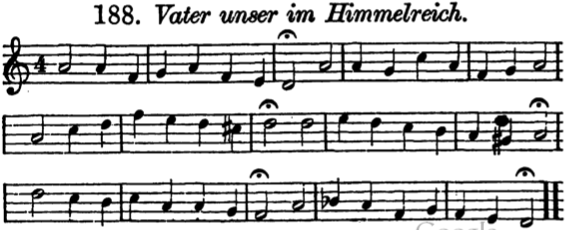
Mel.: Vater unser im Himmelreich.


REMOVE from us, O faithful God,
The great distress and stinging rod
Which all our sin and trespass sore
Have merited from Thee, and more;
Oh, turn them, and rebuke us not,
Nor let Thy fearsome wrath be brought!

2 Show to Thy wicked servant grace!
Thou wouldst deal justly, we confess,
If Thou didst us in wrath reprove
And all Thy grace from us remove;
Yet is Thy heart with mercy filled,
And readily its wrath is stilled.

3 Ah, Lord God, by Thy faithfulness
Thy dread avenging hand suppress,
Thy precious oath, which promiseth,
Thou dost not will the sinner’s death,
With Thee shall firm abide for aye.
Let righteousness to grace give way.

4 Why wilt Thou be so angry, Lord?
Why wrath on such poor worms be poured?
What are we men, O God of might?
In truth, a nothing in Thy sight.
So in the riches of Thy love
Thy patience to us wretches prove!

5 With sin we are corrupted sore;
’Tis more than sand upon the shore.
All this we never can deny,
Yet do not into judgment fly!
Thou know’st who our iniquity
Hath reconciled eternally.

6 Remember Thy Son’s bitter death
Who on the cross endured all wrath,
He satisfied Thy angered heart;
Yea, God, of Him Thou mindful art,
And dost for His sake speak us free
Us from all our debt and penalty.

7 Conduct us with Thy strong right hand,
Let us and our dear fatherland
So prosper in Thy grace, that peace
And blessing everywhere increase.
And take us when our course done
Up into heav’n through Christ Thy Son.

Translation © 2025 Matthew Carver.

GERMAN

Nimm von uns, Herr, du treuer Gott,
die scharfe Ruth und große Noth,
die usnre Sünd und Missethat
mehr als zu wohl verschuldet hat.
Ach! wende sie, und straf uns nicht
durch dein erschrecklich Zorngericht.

2 Erbarm dich deiner bösen Knecht.
Du handelst zwar an uns gerecht,
wenn du nach deinem Grimm verfährst,
und alle Gnade von uns kehrst:
jedoch ist auch dein Herz zugleich
an Lieb und an Erbarmung reich.

3 Ach! Herr Gott durchdie Treue dein
halt mit der schweren Rachhand ein.
Dein theurer Eid, der uns verspricht,
du wollst den Tod des Sünders nicht:
wird ja bei dir noch feste stehn.
Laß Gnade dann für Recht ergehn.

4 Warum willt du so zornig sein?
Du zörnst mit armen Würmelein.
Ja großer Gott, was sind doch wir?
Fürwahr ein lauter nichts vor dir.
Drum nach dem REichthum deiner Huld
erzeige doch an uns Geduld.

5 Die Sünd hat uns verderbet sehr.
Ihr ist noch mehr denn Sand am Meer.
Wir leugnen solches alles nicht;
geh aber doch nicht ins Gericht.
Du weist, wer unsre Missethat
auf ewig schon gebüsset hat.

6 Gedenk an deins Sohns bittern Tod,
und alle seine Kreuzesnoth.
Der, der hat gnung für uns gethan.
Ja, lieber Gott, du denkst daran,
und also sprichst du uns dabei
von aller Schuld und Strafe frei.

7 Leit uns mit deiner rechten Hand,
laß uns und unser Vaterland
in deiner Gnade so gedeihn,
das wir in Fried und Segen sein.
Und nimm uns nach vollbrachtem Lauf
durch Christum in den Himmel auf.

22 August 2025

Da Christ der Herr nah kommen that

Here is my translation of the hymn “Da Christ der Herr nah kommen that” (N. Herman, 1561), from the author’s Sonntags-Evangelia for Trinity X, a paraphrase of the Gospel with a closing supplication. The melody appointment is from Gesius 1605.

Mel.: Wenn wir in höchsten Nöthen sein.

WHEN Jesus came to Salem near,
He looked upon His city dear,
And hot and bitter tears did weep,
For what distress she soon would reap.

2 With groaning spake the Shepherd true:
Oh, if thou knew’st what would ensue,
Thou wouldst thine own advantage see,
Ere hostile strangers visit Thee!

3 But now ’tis hidden from thine eyes,
And therefore spurnest thou the prize;
Thine enemies shall ring thee round,
Afflict, and lay thee to the ground.

4 At last thou shalt be piteously
Robbed of the Temple’s majesty,
And this destruction shall be wrought
Since thy salvation thou knew’st not.

5 Then He into the Temple came,
Took whip in hand, without all shame,
And in His Father’s house was bold
To cast out them that bought and sold.

6 He said: A house of pray’r ’tis named
Where God doth dwell and is acclaimed,
But this ye have ignored, vile men!
And made it but a robbers’ den!

7 Then did He in the temple preach
And doctrines soothing deign to teach;
The chief priests and the Pharisees
Their fellows, did this much displease.

8 They sought to take His life and limb,
Yet feared the people’s outcry grim
For all the people eager were
To see Him, and His words to hear.

9 When Thou dost visit us, O Lord,
Grant us to follow at Thy Word,
Obeying ever Thy desire,
And so escape Thy wrath and ire.

Translation © 2025 Matthew Carver.

GERMAN

Da Christ der Herr nahkommen that {…nu kam gar nah}
Jerusalem, der heilgen Stadt,
sah er sie an und weinet sehr,
über sie bittr und heiße Zähr.

2 Mit Seufzen sprach der treue Hirt,
ach weßt du wie es dir gehn wird,
du willst dest bedenken dein Best,
eh denn dir kämen fremde Gäst.

3 Nun aber ists verborgen dir,
drum achst dus nit, aber glaub mir,
dein Feind werden belgen dich,
plagen, und ängsten jämmerlich.

4 Endlich wirst du geschleift ohn Scheu,
der schön Tempel und groß Gebäu,
soll als in Grund werden verbrannt,
weil du dein Heil nicht hast erkannt.

5 Darnach er in den Tempel kam,
ein Peitsch er in sein Hände nahm,
und eivert um seins Vaters Haus,
Krämer und Wechsler treib er aus.

6 Und sprach, ein Bethaus ists genannt,
darin Gott wohn, und werd erkannt,
ihr aber solches ungeacht,
habt es zur Mörder Grub gemacht.

7 Darnach im Tempel predigt er,
und sagt dem Volk tröstliche Lehr,
die Hohenpriestr es sehr verdroß,
und Pharisäer, ihr Mitgenoß.

8 Sie trachten ihm nach Leib und Blut,
und förchten doch des Volks Unmuth,
denn alles Volk hing ihm fast an,
gern hört sein Predigt jedermann.

9 Wenn du uns heimsuchst, o Herr Gott,
gib, daß wir folgen deim Gebot,
und ghorchen allzeit deiner Stimm,
daß wir entfliehn deim Zorn und Grimm.

21 August 2025

O Corinth, du Zier der Welt

Here is my translation of the hymn, “O Corinth, du Zier der Welt” (M. Opitz von Boberfelt, 1639), from the author’s Die Psalmen Davids und Episteln, &c., for Trinity IX, the Epistle from 1 Corinthians 10. The melody appointed is that of Geneva 136, since Opitz’s project, dedicated to the dukes of Liegnitz, included a new translation of the Genevan Psalter from 1637 to which were added paraphrases of the Epistles of the Church Year to the same melodies. The meter also fits the Lutheran melody: “Nu komm, der Heiden Heiland.”

Mel.: Old 136 / Célébrez Dieu hautement
Or:
Nun komm der Heiden Heiland.


C
ORINTH, earth’s adornment bright!
How canst thou take such delight
In a false and fond desire,
And the flesh’s wretched fire?

2 Look well, Corinth, what thou dost,
Shun the wickedness of lust,
Put thy idol gods away,
By which ye from heaven stray.

3 Follow not the ancient race
Which to God was pure disgrace,
And but ate and drank and played,
And from their Creator strayed.

4 From unchastity be free,
Since by that impurity
Three and twenty thousand men
Fell in one day on the plain.

5 Tempt not God, but of Him learn,
Who doth speak a judgment stern!
When such Isr’el’s race employed,
They by serpents were destroyed

6 If ye suffer some distress,
Murmur not at God, but bless;
For that like misdeed He hath
Punished righteously by death.

7 All these things note carefully,
Let them admonitions be:
He who stands, let him be sure
That he may no fall endure.

8 God, who knows all that is true,
Knows well how to tempt you too;
He will give men no more share
Than they able are to bear.

Translation © 2025 Matthew Carver.

GERMAN

O Corinth, du Zier der Welt,
wie das dir so sehr gefällt
einer falschen Liebegunst
und des schnöden Fleisches Brunst?

Schaue wohl zu, was du thust:
Meide des Gelustens Lust,
stelle deine Götter ein,
die zu wenig göttlich sein.

3 Folge nicht der alten Schar,
die für Gott ein Greuel war,
und nur spielte: Trank und aß,
daß sie ihrer selbst vergaß.

4 Seid von Unzucht los und frei,
weil durch jener Hurerei
drei und zwanzig tausend Mann
einen Tag fiel auf den Plan.

5 Auch versucht den Herren nicht,
der ein strenges Urtheil spricht:
als es dies Volk so gemacht,
wards von Schlangen umgebracht.

6 Leidet ihr auch irgend Noth,
murret drum nicht wider Gott,
dann er jener gleiche That
durch den Tod gestrafet hat.

7 Dieses nehmet fleißig ein,
laß es eure Warnung sein:
Welcher stehet sehe zu,
daß er keinen Fall nicht thu.

8 Gott, der weiß es allzuwohl,
wie er euch versuchen soll,
er thut keinem nicht mehr an,
als was er ertragen kann.

20 August 2025

Mein Gott, hier steht dein Rechentisch

Here is my translation of the hymn “Mein Gott, hier steht dein Rechentisch” (B. Schmolck, 1712), from the author’s Lustiger Sabbath I for Trinity IX, titled “God’s Counting Board.”

Mel.: Herr Jesu Christ, du höchstes Gut.

MY God, Thy counting board I see,
And Thee, my soul reviewing,
Who have done sore dishonestly
In all my life and doing.
Thou biddest me account to give,
And I must faint, and scarce can live,
Nor can I stand before Thee.

2 Thou hast made me a wealthy man
By long and bounteous giving;
Thy gifts unmeasured fill the span
Of all my earthly living.
My reputation Thou dost know,
And my own heart doth clearly show
How ill Thy gifts I’ve tended.

3 What shall I do? Where shall I flee
If Thou wilt thus dismiss me?
I cannot, wheresoe’er I be,
As safe from Thee assess me.
And without Thee I cannot live.
It would the great torment give
If I from Thee were sundered.

4 I refuge dare to take in Thee,
Despite my life so blameful,
Nor will like that proud steward be
Who thought to beg were shameful.
I beg Thee, Lord, for bread of grace;
Have mercy on my wretched case,
And let me find Thy favor!

5 Here too I dig within my breast,
And own my great transgressions;
My heart laments the sins confessed
With painfullest sensations.
Yea, here I dig and bury me
In Jesus’ wounds exclusively.
How canst Thou then condemn me?

6 O Father, think not how I have
So ill Thine assets tended.
My Jesus stands as pledge for me;
Let all by grace be mended!
He is the Payor of my debt,
Therefore, O Lord, have patience yet,
Help me to do still better!

7 Thy Holy Spirit to me give,
That I may grow far wiser,
How much more shrewdly here doth live
Each worldly child and miser!
But since I am a child of light,
Let me not be ashamed for right
To use such prudent thinking!

8 A worldly child doth well attend
What him advantage bringeth,
And seeks to win him many a friend
To help when trouble stingeth.
I have no better friend than Thee,
Who true and faithful art to me!
Let me but hold Thee firmly!

9 For more than hundred loads of wheat
Aboundeth Thy forgiving
The rich with oil and wine so sweet
May miserly be living,
But I have all I need from Thee,
Thou never sternly deal’st with me,
I shall not die of hunger.

10 And if I have my portion due
Which Thou for me dost measure,
Help me assist the poor man too
Out of this borrowed treasure.
Their “God repay it!” has great weight
When giving brings an int’rest rate
That reacheth unto heaven.

11 Now when I have sufficiently
Thy house in this world tended,
To heaven’s house receive Thou me,
To steward things more splendid!
What sweet response my ear shall win:
“Come, faithful servant, enter in
The joy of God thy Master!”

Translation © 2025 Matthew Carver.

GERMAN

MEin GOTT, hier ſteht dein Rechen-Tiſch,
Jch bin davor verleſen,
Der ich doch gantz verſchwenderiſch
Jn meinem Thun geweſen.
Du foderſt von mir Rechenſchafft,
Und mir vergehet alle Krafft,
Denn ich kan nicht beſtehen.

2 Du haſt mir als ein reicher Mann
Viel Guͤtter uͤbergeben,
Die ich nun nicht berechnen kan
Von meinem gantzen Leben.
Jch bin beruͤchtiget fuͤr dir,
Mein eignes Hertze ſagt es mir,
Wie ſchlecht ich haußgehalten.

3 Was ſoll ich thun? wo flieh ich hin,
Wenn du mich ab wilſt ſetzen?
Jch kan mich, wo ich immer bin,
Vor dir nicht ſicher ſchaͤtzen.
Und ohne dich mag ich nicht ſeyn,
Das waͤre mir die groͤſte Pein,
Von dir verſtoſſen werden.

4 Jch wage mich, und wil allein
Zu dir die Zuflucht nehmen,
Und nicht wie jener Stoltze ſeyn,
Des Bettelns mich zu ſchaͤmen.
Jch bitte, HErꝛ, das Gnadenbrodt,
Erbarme dich in meiner Noth,
Und laß mich Gnade finden.

5 Jch grabe hier in meine Bruſt,
Erkenne meine Suͤnden:
Mein Hertze klaget den Verluſt
Mit ſchmertzlichem Empfinden.
Jch grabe mich hiernechſt allein
Jn meines JESU Wunden ein.
Wie kanſt du mich verdammen?

6 Ach Vater, dencke nicht, wie ich
So uͤbel haußgehalten;
Mein JESUS buͤrget ja fuͤr mich,
Laß deine Gnade walten.
Er iſt Bezahler meiner Schuld,
Drumb habe, Herꝛ, mit mir Geduld,
Jch wil mich kuͤnfftig beſſern.

7 Du aber gieb mir deinen Geiſt,
Damit ich kluͤger werde;
Wie witzig ſind doch allermeiſt
Die Kinder dieſer Erde?
Weil ich ein Kind des Lichtes bin,
So laß mich ihren klugen Sinn
Jm Gutten nicht beſchaͤmen.

8 Ein Kind der Welt nimmt wohl in acht,
Was ihm kan Vortheil bringen,
Und ſuchet, wo es Freunde macht,
Die willig, beyzuſpringen.
Jch habe keinen beſſern Freund,
Als dich, der es ſo treulich meint,
Laß mich dich feſte halten.

9 Du ſchreibſt mir groͤßre ſchulden ab,
Als Hundert Malter Weitzen,
Und wenn die Reichen noch ſo knap
Mit Moſt und Oele geitzen,
So giebſt du mir, was ich bedarff,
Uñ handelſt niemals mit mir ſcharf,
Daß ich nicht darben werde.

10 Und hab ich mein beſcheidnes Theil,
Das du mir zugemeſſen,
So laß mich auch der Armen Heyl
Zu foͤrdern nicht vergeſſen.
Ein GOtt bezahl es hat viel Krafft,
Weñ man mit geben Wucheꝛ ſchaft,
Der biß zum Himmel reichet.

11 Hab ich denn nun in dieſer Welt
Genungſam haußgehalten,
So fuͤhre mich ins Himmels-Zelt,
Was groͤſſers zu verwalten.
Wie lieblich wird die Stimme ſeyn:
{Du treuer Knecht
{Du treue Magd   — geh zu mir ein,
Jn deines HERREN Freude.

19 August 2025

Thu Rechnung, Rechnung will *

Here is my new translation of the hymn “Thu Rechnung, Rechnung will” (J. Olearius, 1671), which I saw halfway through I had translated in 2023 as “Give thine account! The Lord,” but since this present version is sufficiently different (yet odd to note some accidental similarities!), and since the originally designated melody was not given there, I let it “count” and also give the correct melody here. It is from the author’s Singekunst for Trinity IX, Gospel.

Mel.: O Jesu, Gottes Lamm.
 
Or: O Gott, du frommer Gott.


OH, give account, for such
Is willed by God in heaven!
The Lord saith: Give account
Of all to thee I’ve given!
Yea, give account, fear God,
Else must thou soon depart;
So give account, and take
This thund’rous word to heart.

2 Say thus: Dear God, who can
Before Thy throne stand firmly,
If with Thy servant Thou
wilt enter judgment sternly?
For in the whole wide world
No mortal may be found
Who can one word reply
When thousands from Thee sound.

3 Let grace o’er justice win!
Oh, let me find Thy favor,
And from my every sin
In grace my soul deliver!
Let Thy Son’s blood my heart
To purity restore;
Let all my debt be dead,
And be recalled no more!

4 Here in this world let me
Live only to Thy glory,
Yea, let my body
and soul
Be tools of service for Thee;
Thy Spirit govern me,
Then shall I firmly stand
In my account, and come
To heaven’s joyful land.

Translation © 2025 Matthew Carver.

GERMAN

Thu Rechnung, Rechnung will
Gott ernstlich von dir haben,
thu Rechnung, spricht der Herr,
von allen einen Gaben,
thu Rechnung, fürchte Gott,
du mußt sonst plötzlich fort,
thu Rechnung, denke stets
an diese Donnerwort.

2 Sprich: Lieber Gott, wer kann
für deinem Thron bestehen,
wenn du mit deinem Knecht
in dein Gericht wollst gehen,
weil in der ganzen Welt
zu finden nicht ein Mann,
der dir auf tausend nur
ein Wort antworten kann.

3 Laß Gnade gehn für Recht,
ach laß mich Gnade finden,
mach mich aus Gnaden los
von allen meinen Sünden,
laß deines Sohnes Blut
auch mein Herz machein rein,
laß alle meine Schuld
tot und vergessen sein.

4 Laß mich in dieser Welt
nur dir zu Ehren leben,
laß ja mein Leib und Seel
dir allzeit sein ergeben,
dein Geist regiere mich,
so werd ich wohl bestehn
in meiner Rechung und
zur Himmelsfreud eingehn.

18 August 2025

Als der Haushalter wußte

Here are my two translation of the hymn “Als der Haushalter wußte” (L. Helmbold, d. 1598), one of the hymns from the author’s Schöne geistliche Lieder for Trinity IX, this bearing the title: “Of Diligence in Temporal Things to the Negligence of the Eternal.” The second one from 2026 was done independently without reference to the first, because the first had not been noted in the translator’s records.

Mel.: Herr Gott, nun sei gepreiset.

 
THE faithless steward learnèd
That he account must give,
And to sly counsel turnèd,
That he might thereby live
And not be all forsaken
When his employ was taken,
But in men’s homes received.

2 Therefore relief he offered
To debtors, for their good;
His lord the loss thus suffered
Of grain and oil they owed;
Though by deceit offended,
The master yet commended
His steward’s wisdom shown.

3 Alas, that men are clever
In seeking temp’ral gain,
And set their thinking never,
On that eternal plain,
Where man for aye abideth;
For life too soon subsideth,
And lord and guest must hence.

4 Though he by great endeavor
Amass of oil a store,
It can assist him never
When life at last is o’er.
Though wheat be much abounding,
The hungry heart astounding,
He yet must leave it all.

5 This love of earthly treasure
Doth many a man devour,
And few their days will measure,
Or think to help the poor;
While thus content and healthy:
Woe to the godless wealthy!
Our souls may God receive!

Translation © 2025 Matthew Carver.


Independent 2026 Translation (July 28):

THE steward, when he learnèd

That he account must give,

With craft the reck’ning turnèd,

That he might not needs live

Out in the streets forsaken,

But in some house be taken,

When he his work must leave.


2 He did this by relieving

The debt of those who owed.

His master, less receiving,

Thereby lost many a good,

Though justly this offended,

He nonetheless commended

The servant’s cleverness.


3 Oh, that men are so clever

In temp’ral things, and shrewd,

And turn their senses never

To that eternal good,

Where they may e’er be dwelling;

Soon at God’s call compelling,

Both lord and guest must go.


4 Yea, though of oil he hoarded

A thousand barrels pure,

No help would be afforded,

His death is still as sure;

Though he had food abounding,

And corn beyond all counting,

All must be left at last.


5 This plague with force proceedeth,

And many doth devour,

And yet no other heedeth

One whit, till at God’s hour

They die, though sick or healthy—

Woe to the godless wealthy!

God bring us home to Him!


Translation © 2026 Matthew Carver.


GERMAN

Als der Haushalter wußte,

daß er sollt Rechnung thun,

richt ers dahin mit Liste,

wenn er gleich sollt davon,

daß er nicht auf der Gassen

umher müßt gehn verlassen,

sondern behauset würd.


2 Das thut er mit Quittieren,

zugut den Schuldenern,

sein Herr mußte verlieren

viel Korns und Öls empern:

derrselb, wiewohl betrogen,

thut doch gleichewohl loben

solch Klugheit seines Knechts.


3 Ach, daß man so geschwinde

soll auf das Zeitlich sein,

und nicht vielmehr die Sinne

mit Ernst richten dahin,

da man ewig möcht bleiben

von hinnen muß bald scheiden

der Wirt mit seinem Gast.


4 Wenn er gleich hundert Tonnen

des besten Öles hätt,

gar nichts sie helfen können,

der Tod nimmet ihn mit,

wenn er gleich hätt zu essen

viel tausend Malter Weisen,

kurzum er muß davon.


5 Solchs geht in vollem Schwanke,

und frißt viel Menschen auf

und will doch kein Gedanke

der andern merken drauf,

bis sie selbs müssen weichen:

Weh den Gottlosen Reichen,

Gott helf uns zu ihm heim!  Amen.


GERMAN

Als der Haushalter wußte,
daß er sollt Rechnung thun,
richt ers dahin mit Liste,
wenn er gleich sollt davon,
daß er nicht auf der Gassen
umher müßt gehn verlassen,
sondern behauset würd.

2 Das thut er mit Quittieren,
zugut den Schuldenern,
sein Herr mußte verlieren
viel Korns und Öls empern;
derselb, wiewohl betrogen,
thut doch gleichewohl loben
solch Klugheit seines Knechts.

3 Ach, daß man so geschwinde
soll auf das Zeitlich sein,
und nicht vielmehr die SInne
mit Ernst richten dahin,
da man ewig möcht bleiben,
von hinnen muß bald scheiden,
der Wirth mit seinem Gast.

4 Wenn er gleich hundert Tonnen
des besten Öles hätt,
gar nichts sie helfen können,
der Tod nimmet ihn mit,
wenn er gleich hätt zu essen
viel tausend Malter Weizen,
kurzum er muß davon.

5 Solchs geht in vollem Schwanke,
und frißt viel Menschen auf
und will doch kein Gedanke
der andern merken drauf,
bis sie selbs müssen weichen;
weh den Gottlosen Reichen,
Gott helf uns zu ihm heim.
Amen.