Showing posts with label Ephesians. Show all posts

14 November 2025

Zuletzt seid stark in unserm Gott

Here is my translation of the hymn, “Zuletzt seid stark in unserm Gott” (J. Olearius, 1671), from the author’s Singekunst, for the Epistle on Trinity XXI, Eph. 6:10–17.

Mel.: Herr Jesu Christ, meins Lebens Licht.


SAINTS, in the Lord our God be strong,
Who puts to shame the devil’s throng,
And in whose might the war is won;
Wherefore put His whole armor on.

2 We wrestle not ’gainst flesh and blood,
But th’ evil prince of hell’s abode,
Who now hath pow’r to rule the world,
And to their doom hath many hurled.

3 The spirit of the darkness, he—
The foe of good and verity;
Alone your God’s whole armor use,
Else ye the war will surely lose.

4 So when the evil day shall come,
Sleep not secure, with senses numb,
But forcefully the foe withstand,
And God shall give the upper hand.

5 With God victorious hold the field,
To whom alone earth’s prince will yield.
So shall the battle prosp’rous tend,
So shall the war in vict’ry end.

6 Stand therefore girt, your bodies dress
With godly truth and righteousness
As belt and breastplate; and your feet
With preparation dress, as meet.

7 The Gospel Word of peace employ,
Take up the shield of faith with joy,
Quench and disarm the fiery darts
Of Satan and his wicked arts.

8 The helmet of salvation take,
And Spirit’s sword, and battle make!
Who boldly wields God’s Word doth well,
And conquers all the gates of hell.

Translation © 2025 Matthew Carver.

GERMAN

Zuletzt seid stark in unserm Gott,
der eure Feinde macht zu Spott,
sein Macht und Stärke bringt euch dran,
drum zieht den Harnisch Gottes an.

2 Wir kämpfen nicht mit Fleisch und Blut,
es ist der Fürst der Höllen Gluth,
er hat Gewalt, der Herr der Welt,
der manchen plötzlich hat gefällt.

3 Es ist der Geist der Finsternüs,
der Tugend Feind und Hindernüs
der Harnisch Gottes thuts allein,
sonst wird die Schlacht verloren sein.

4 Wenn kömmt das böse Stündelein,
müßt ihr nicht sicher schläfrig sein,
ihr müßt thun kräftig Widerstand,
so giebt euch Gott die Überhand.

5 Mit Gott erhaltet ihr das Feld,
dem weicht allein der Fürst der Welt,
so wirds gar wohl gerichtet aus,
so läuft der Krieg auf Sieg hinaus.

6 Drum steht umgürtet, seid bereiet,
mit Wahrheit und Gerechtigkeit,
zieht an den Krebs, macht euch gerüst
mit stiefeln, thut was nötig ist.

7 Und treibt das Wort, seid stets bereit,
ergreift den Glaubens Schild mit Freud,
löscht aus, daß sie euch schaden nichts
die Feuer-Pfeil des bösen Wichts.

8 Den Helm des Heils nehmt auch zur Hand,
das Schwert des Geists zum Widerstand;
wer freudig kämpft mit Gottes Wort,
der sieget ob der Höllen Pfort.

17 October 2025

Nun ich ermahne euch

Here is my translation of the hymn “Nun ich ermahne euch” (J. Olearius, 1671), from the author’s Singekunst for Trinity XVII, the epistle reading. Ephesians 4:1–6.

Mel.: O Jesu, Gottes Lamm.
 
Or: O Gott, du frommer Gott.

A PRIS’NER of the Lord
For His own acclamation,
This I beseech you now,
Desiring your salvation,
That ye would follow me
Nor wander from the road,
But walk as ye are called,
As servants of your God.

2 Walk lowly, suff’ring long,
With meekness and forbearing
In Christian love, that ye
May strive to keep from tearing
In peace’s perfect bond
The Spirit’s unity
E’en as ye have been called
A Christian here to be.

3 There is one body and
One Spirit, God-appointed
Unto one hope; one Lord,
One faith, one font anointed,
One God and Fath’r of all,
The Father of the Son,
Above all and through all
And in all, mighty One.

Translation © 2025 Matthew Carver.

GERMAN
Nun ich ermahne euch,
der ich jetzt bin gefangen,
jedoch zu Gottes Ehr,
und trag ein groß Verlangen
nach eurer Seligkeit,
folgt mir und wandelt nicht,
wie der Beruf mitbringt,
daß ihr seid Gottes Knecht.

2 Mit Demuth, mit Geduld,
mit Sanftmuth, mit Vertragen
in aller Liebe, daß
ihr fleißig mögt nachjagen
des Geistes Einigkeit,
dem werthen Friedesband,
wie ihr berufen seid
zu eurem Christenstand.

3 Ein Leib, ein Geist, auf eins
die Hoffnung ist gerichtet,
ein Herr, ein Glaub, ein Tauf,
ein Gott, der alles schlichtet,
ein Vater unser all,
der Vater Jesus Christ,
der überall, durchall
in allen mächtig ist.

18 February 2025

Gott sei die Ehr zu aller Zeit

 Canticle XC. St. Paul’s Song of Joy, Eph. 3.


Mel.: Ein feste Burg ist unser Gott.


TO God forever glory be,
Within His congregation:
Who can do all exceedingly,
Beyond imagination,
More than mortal can
Ask for, more than man
Can conceive right—
So great His pow’r an might
By which all things He worketh.

Text: C. Spangenberg, 1582.
Translation © 2025 Matthew Carver.


GERMAN
Gott sei die Ehr zu aller Zeit,
in der Christlichen Gmeine,
immer und in all Ewigkeit,
denn er kann thun alleine,
überschwenklich mehr,
denn wir mit Begehr
bitten und verstehn,
nach seiner Kraft muß gehn,
dadurch er alles wirket.

17 February 2025

Gelobt sei Gott zu dieser Frist

 St. Paul’s Song of Thanksgiving for Divine Election, Eph. 1.


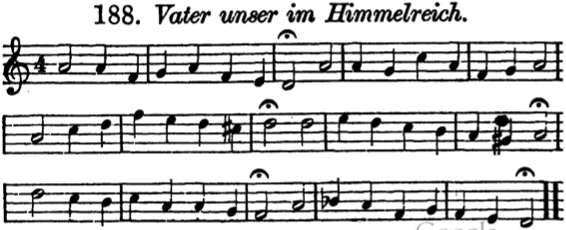
Mel.: Vater unser im Himmelreich.


ALL blessing be to God outpoured,
The Father of the Christ our Lord,
Who hath us blessed with blessings all
Of lofty kind, and spiritual,
In heav’nly bounties for us won
Through Jesus Christ, His only Son!

2 In Christ He chose us, long before
He made the world, that evermore
We men should truly holy be,
And without blame assuredly,
Before Him in unfeignèd love,
And live as citizens above.

3 He to adoption us ordained
According to His godly mind,
By Jesus Christ, after His will,
His own good pleasure to fulfill,
The glory of His grace to praise,
Wherein He brings us love and grace.

4 He hath made us acceptable
Through His own Son, and lovable,
That we, redeemed by His dear blood,
Might heirs be of th’ eternal good:
Forgiveness of iniquity
Through His rich grace so strong and free.

5 Upon us richly hath been poured
The grace of Jesus Christ our Lord
In all high wisdom and divine,
And in all prudence deep and fine,
To know what in paternal love
He grants to us from heav’n above.

6 To us He makes known openly
All His astounding mystery,
According to His will divine
And manifesting His design,
Through Christ bringeth all to light,
That all should praise His glorious might.

Text: C. Spangenberg, 1582.
Translation © 2025 Matthew Carver.


GERMAN
Gelobt sei Gott zu dieser Frist,
der Vater unsers Herren Christ,
der uns gesegnet hat zugleich
mit geistlichem Segen gar reich
in Himmlischen Gütern so schon
durch Jesum Christum, seinen Sohn.

2 Wie er uns denn auch hat erwählt
in Christo eh er schuf die Welt,
daß wir sollten unsträflich sein,
für ihm gerecht und heilig fein,
in wahrer unverfälschter Lieb
sollten unser ganz Leben üb.

3 Zur Kindschaft er verordnet hat
uns nach seinem Göttlichem Rath
durch Jesum Christ nach seinem Willn
sein Wohlgefallen zu erfülln,
zu Lob seiner herrlichen Gnad,
durch welch er uns geliebet hat.

4 Er hat uns angenehm gemacht
durch seinen Sohn und währt geacht,
daß wir erlöset durch sein Blut
ererbeten das ewig Gut,
Vergebung aller Missethat
durch seine reich und mächtig Gnad.

5 Reichlich uns widerfahren ist
die Gnad des Herren Jesu Christ,
durch Göttlich Weisheit allerlei
und heimlich Klugheit mancherlei,
daher wir wissen, was er uns
beschert aus väterlicher Gunst.

6 Er läßt uns wissen offenbar
all sein Geheimnis wunderbar
nach seim Göttlichen Wohlgefalln
verkündet er uns solches alln
durch Christum ist herfürgebracht
zu Lob seiner herrlichen Macht.

31 March 2024

Ihr Christen, schickt euch in die Zeit (Pietsch/Hoffmann)

Here is my translation of the hymn on the Christian use of time, “Ihr Christen, schickt euch in die Zeit” (Asc. Georg Pietsch, d. 1747, or Gottfried Hoffmann, d. 1728), in GGELB #421, with melody assignment “Nun freut euch, lieben Christen  gmein” and ascription to Johann Rist. Fischer speaks at length of the authorship, but indicates only the Wittenberg Gsb 1866 as his textual source; namely, Wittenberg 1866 ascribes it to Gottfried Hoffmann, but Wetzel does not mention it in his hymns; Gottlob Kluge ascribes it to Georg Pietsch (d. 1747), saying that it was prepared “after the guidance of the year 1707, when in the times of war and pestilence he preached on the most necessary duty of Christians to ready themselves to troublous and evil time” (Luther’s version of “redeem the time” is literally, “ready yourselves for the times”). Just before, he says that Pietsch was Hoffmann’s student in Lauban, and conjectures that he may have attached to his sermon a hymn of his teacher’s. This is reasonable, since the date of its creation around 1707 fits better with the biographical dates of Hoffmann. — I find the hymn in the Nuremberg-printed hymnal, Die zu ihrem Gott . . . sich erhebende Christen-Stimme (1728) with title “Of evil time; on the words of Paul in Eph. 5:16.” and melody: “Wo Gott der Herr.” Here there is not ascription of author; next, in Pomerania 1735, with title “On Eph. 5:16,” melody “Nun freut,” and ascription to Johann Rist. — Fischer notes that there is a hymn of the same first line by Rist, from his Seelen-Paradies (1662) but cannot determine whether it is the same, i.e., does not have access to that work. From my own visual confirmation, is in fact a different text, treating Paul’s saying in 11 stanzas to Schop’s original melody, the first of which reads: “Ihr Christen, schickt euch in die Zeit, / das Heil ist itzt fürhanden, / der Himmel und die Seligkeit / sind offen längst gestanden. / Ach lasset uns die Zeit der Gnaden / versäumen nicht uns selbst zum Schaden. / Im Lichte laßt uns wandeln doch, / so lang ein Licht hie scheinet noch.”


REDEEM the time, ye Christians dear,
See how it is around you,
Lest, self-secure, from God ye veer
And wicked times confound you.
The dangers day to day increase,
And yearly ebbs the hope of peace.
Alas, the times are evil!

2 Redeem the time, ye Christians dear,
Well to your thoughts attending,
Lest they by vanity should steer
You from the way unbending.
Ye know how flesh and blood are weak,
How inborn passions sweetly speak.
Alas, the times are evil!

3 Redeem the time, ye Christians dear,
For Satan takes no leisure,
but strikes your hearts with doubt and fear,
According to his pleasure;
He gives the church no peace or rest,
But puts the godly to the test;
Oh, are the times not evil?

4 Redeem the time, ye Christians dear,
The world its pitfalls setteth.
It spreads its guile and force severe,
Its heart deceit begetteth;
Who spurns its wicked company
Is persecuted treach’rously.
Oh, are the times not evil?

5 Redeem the time, ye Christians dear,
Consider how man liveth,
He thinks that wealth his heart will cheer,
For fame and ease he striveth.
God’s Word he doth not much regard,
He sin pursues, his heart is hard.
Alas, the times are evil!

6 Redeem the time, ye Christians dear,
And hear men’s lamentation!
They speak of war both far and near,
Of plague and tribulation.
The rod of judgment see arise,
Nor can it happen otherwise,
For lo, the times are evil!

7 The Christian who the time redeems,
Stands firm and never bendeth;
Whil clouds grow dark or sunlight gleams,
He goes as God intendeth.
He trusts in God and loves His Word,
And in His fear is undeterred,
E’en when the times are evil.

8 Hilf Gott, daß wir uns in die Zeit
nach deinem Willen schicken!
so wirst du uns aus Krieg und Streit
und allem Jammer rücken.
Gib, daß wir stets in Buße stehin,
und all auf deinen Wegen gehn;
so folgen bessre Zeiten.

God, grant us to redeem the time,
For so Thou willest ever;
Then from this strife and warlike clime
Thou wilt our life deliver.
Grant that we may repentant be
And walk Thy way continually;
So better times shall follow.

Translation © 2024 Matthew Carver.

GERMAN
Ihr Christen, schickt euch in die Zeit,
seht wie es um euch stehet.
Damit ihr euch in Sicherheit
von Gott nicht weit vergehet:
Es mehrt sich täglich die Gefahr,
das Elend wächst von Jahr zu Jahr.
Ach das sind böse Zeiten!

2 Ihr Christen, schickt euch in die Zeit,
gebt Acht auf die Gedanken!
damit sie nicht durch Eitelkeit
vom rechten Wege wanken.
Ihr wißt wohl, Fleisch und Blut ist schwach,
die Erblust reizt uns tausendfach.
Ach! das sind böse Zeiten!

3 Ihr Christen,schickt euch in die Zeit,
der Satan sitzt nicht stille,
er stiftet manches Herzeleid,
das macht sein böser Wille;
er läßt der Kirchen keine Ruh,
und setzt den Frommen heftig zu.
Sind das nicht böse Zeiten?

4 Ihr Christen, schickt euch in die Zeit,
die Welt legt euch viel Stricke.
Gewalt und List greift um sich weit,
ihr Herz ist voller Tücke.
Wer es nicht mit den Bösen hält,
dem wird betrüglich nachgestellt.
Sind das nicht böse Zeiten?

5 Ihr Christen, schickt euch in die Zeit,
bedenkt, wie man jetzt lebet,
wie man nach Geld und Gute schreit,
nach Ehr und Wollust strebet.
Man hält nicht viel auf Gottes Wort,
man fährt in allen Sünden fort.
Ach! das sind böse Zeiten.

6 Ihr Christen, schickt euch in die Zeit,
hört, wie die Menschen klagen,
man redt vom Kriege weit und breit,
von Pest und andern Plagen.
Die Strafgerichte brechen ein!
Es kann auch wohl nicht anders sein;
denn es sind böse Zeiten.

7 Doch schickt ein Christ sich in die Zeit,
so kann ein Christ bestehen,
er lässet es in Leid und Freud
nach Gottes Willen gehen.
Er traut auf Gott, liebt dessen Wort,
fährt in der Furcht des Herren fort,
auch in den bösen Zeiten.

8 Hilf Gott, daß wir uns in die Zeit
nach deinem Willen schicken!
so wirst du uns aus Krieg und Streit
und allem Jammer rücken.
Gib, daß wir stets in Buße stehn,
und all auf deinen Wegen gehn;
so folgen bessre Zeiten.

09 July 2023

Gott, der da reich ist

Here is my adaptation of the liturgical song for Apostles’ days and other feasts, “Gott, der da reich ist” (Anon., 1526? or 1634), in ELGB #253, a quotation of Ephesians 2:4–5, 7, first appearing, according to Schöberlein, in the Erfurt Deutsch Kirchenamt 1526, though Zahn says he is not familiar with this. Zahn gives the melody from Erfurt Geistliche Lieder 1634, with others’ variants, and from the Gotha Cantional, which does not have repeats, and so is not the likeliest source for the Buffalo Synod hymnal’s text; there, it is given the title “Conclusion,” i.e., of the service. No music is indicated in our hymnal, and the text is ascribed to the translator, Luther. In form it is a scriptural responsory of sorts, though Zahn does not indicate the repeats. Presumably, the repeated part might well be sung by a second choir in the places indicated.


GOD, who is rich in mercy,
for His great love wherewith He loved us,
Even when we were dead in sins, hath quickened us together with Christ,
(for His great love wherewith He loved us,)
That He might shew the exceeding riches of His grace through Christ Jesus,
(for His great love wherewith He loved us.)

Adaptation & engraving © 2023 Matthew Carver.

GERMAN
Gott, der da reich ist an Barmherzigkeit,
durch seine große Liebe, damit er uns geliebt hat,
die wir tot waren in Sünden, hat er uns mit Chistus lebendig gemacht,
durch seine große Liebe, damit er uns geliebt hat,
zu erweisen den überschwenglichen Reichtum seiner Gnade durch Jesus Christ,
durch seine große Liebe, damit er uns geliebt hat.

18 October 2022

O Vater der Barmherzigkeit, (der du dir deine Heerden)

Here is my translation of the Church / Missions hymn “O Vater der Barmherzigkeit, / der du dir deine Heerden” (Heinrich Georg Neuß, d. 1716). The hymn, which after allusions to Ephesians 4 features an interesting interpretation of Psalm 133, first appears in the Halberstadt hymnal of 1699, then in the author’s own Heb-Opfer (Wernigerode, 1703) with the title “For the Spirit of Concord.” The original subtext seems to be a pietistic criticism (Neuß was variously known as a Pietist or Separatist) of academic, perhaps confessional, disputes. It was later included with many other of his hymns in Freylinghausen 1714, though few of those survived to recent times. We take our text here from Ev.-Luth. Gesangbuch #238, where the appointed melody is “Es is das Heil uns kommen her,” though originally it was to be sung to “Ach Gott vom Himmel sieh darein.”


O FATHER of great clemency,
Who by th’ apostles’ chorus
Didst gather Thy flocks unto Thee
And cause them to be glorious;
Thou by the Spirit badest come
The mighty host of heathendom
Into Thy kingdom gracious.

2 From many nations multiplied,
From languages unnumbered,
From earth’s far corners scattered wide,
From lands by strife encumbered,
Thy gracious Spirit led them all,
Adorned them with Thy glorious call,
One in faith’s perfect union.

3 Oh, show Thy wondrous grace once more,
In our own time, O Father,
And free us from the tongues that war
And strive with one another:
Grant that Thy flock may worship Thee
In Spirit and in unity,
In Thy love ever dwelling.

4 Behold, how by the devil’s art
They sorely are divided;
In strife the flock is torn apart,
And burnt by thoughts misguided;
Confusion rampant rules the lands,
Where none the other understands,
But causes vain division.

5 From all this evil save us, Lord!
Bring in Thy flock benighted,
That ’neath the staff of Thy pure Word
It may be reunited,
That love, the hand of perfectness
May in Thy Spirit all redress,
And bring us out of conflict.

6 Behold, how good and pleasant ’tis
When brethen dwell together
In unity, and there is bliss,
And love their hearts doth tether;
When in the Spirit they are joined,
And bow to God as with one mind,
And in their pray’rs continue.

7 As precious ointment, on the crown
Of Aaron’s head once spilling,
Ran down upon his beard, and down,
His garments wholly filling;
And as the dew of Hermon tall
Doth on the hills of Zion fall,
The region round refreshing:

8 So too the Holy Spirit’s grace
From Christ down on us floweth,—
Whom He hath made His dwelling-place
And as His members knoweth;
This is the fruit of unity:
Salvation, life eternally,
And every heav’nly blessing.

Translation © 2022 Matthew Carver.

GERMAN
O Vater der Barmherzigkeit,
der du dir deine Heerden
gesammelt zur Apostelzeit
und herrlich lassen werden:
du hast durch deines Geistes Kraft
die große Schaar der Heidenschaft
zu deinem Reich berufen.

2 Aus ihrer Mannigfaltigkeit
des Streits und vieler Sprachen,
dadurch sie in der Welt zerstreut,
sich von einander brachen,
hat sie dein guter Geist geführt,
und sie mit Herrlichkeit geziert
in Einigkeit des Glaubens.

3 Ach! sei doch auch zu dieser Zeit
uns, Vater, wieder gnädig,
und mach uns aus der Zungen Streit
hiewieder frei und ledig:
gieb, daß dein Häuflein für und für
in einem Geiste diene dir,
in deiner Liebe lebe.

4 Ach schaue, wie des Satans List
sie jämmerlich zertrennet,
wie sichs im Zanke beißt und frißt,
im Unverstande brennet:
wie Alles in Verwirrung geht,
da eins das andre nicht versteht
und sich unnöthig zweiet.

5 Ach Herr! hilf solchem Übel ab,
versammle deine Heerde,
daß unter deines Wortes Stab
sie wieder einig werde,
daß das Hand der Vollkommenheit
die Liebe, uns aus allein Streit
in deinem Geiste bringe.

6 Wie schön und lieblich steht es aus,
wenn Brüder sind beisammen
einträchtiglich in einem Haus
und stehn in Liebesflammen;
wenn sie im Geist zusammenstehn,
zu Gott in einem Sinne gehn,
und halten an mit Beten!

7 Gleich wie der Balsam edler Art,
auf Aarons Haupt gegossen,
ins ganze Kleid von seinem Bart
kam niederwärts gestossen;
und wie der Thau von Hermonim
fällt auf Zions Gebirg herum
und alles Land erquicket:

8 Also fleußt Gottes Geistes Gnad
von Christo zu uns nieder
auf die, so er erwählet hat,
auf alle seine Glieder.
Das ist die Frucht der Einigkeit:
Heil, Segen, Leben allezeit,
und alle Himmelsgüter.