Showing posts with label the Papacy. Show all posts

31 October 2025

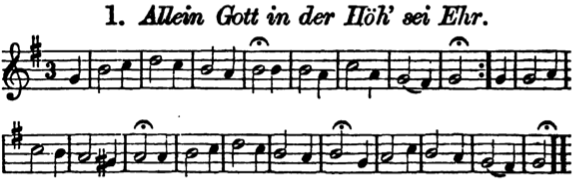
Allein Gott in der Höh sei Ehr, / dem Vater aller Gnaden!

Here is my translation of the hymn “Allein Gott in der Höh sei Ehr, / dem Vater aller Gnaden!” (E. Neumeister, 1710), from the author’s Zugang zum Gnadenstuhl, second series, for the commemoration of the Reformation. The text is a parody on Decius’ hymn of the same first line, and each stanza in the German retains the original text (of the high German). St. 1, line 5 also recalls Luther’s paraphrase of Psalm 124. In my rendering I have not used the analogous lines of Winkworth’s translation.

Mel.: Allein Gott in der Höh sei Ehr.

ALL glory‿alone to God on high,
The Father ever gracious!
The pope no more can terrify
With craft and sword rapacious.
The snare is broken, we are free
From all his wicked tyranny
That hath our souls afflicted.

2 We praise, adore, and worship Thee
For all Thy gifts unbounded,
That now we have in purity
Thy Word aright expounded.
It was to us before unknown;
We heard of human lies alone,
Which from Thy truth had turned us.

3 O Jesus Christ, Thou only Son
Of our most gracious Father,
Alas, how was Thy knowledge gone,
And faith fled altogether!
But since Thy light to us appeared,
The Antichrist no more is feared,
But in disgrace is fallen.

4 O Holy Ghost, the highest Good,
Who dost our faith awaken;
We pray Thee, grant by Jesus’ blood
That we may stand unshaken.
Preserve among us, to Thy praise
Thy Gospel pure for all our days,
And grant us all salvation!

Translation © 2025 Matthew Carver.

GERMAN

Allein Gott in der Höh sei Ehr,
dem Vater aller Gnaden!
der Pabst kann uns nicht weiter mehr
mit seinem Morden schaden.
Strick ist entzwei, und wir sind frei
von aller seiner Tyrannei,
die unsre Seelen plagte.

2 Wir loben, preisn, anbeten dich,
für deine theure Gaben,
daß wir dein Wort so mildiglich
in reiner Lehre haben.
Vor dem war sie uns nicht bekannt;
man hörte lauter Menschentand,
der uns von dir verführte.

3 O Jesu Christ, Sohn eingeborn,
dees Vaters von uns allen.
Ach! dein Erkänntnis war verlorn,
der Glaube ganz verfallen:
nun aber ist der Antichrist,
da uns dein Licht erschienen ist,
in Fall und Spott gerathen.

4 O Heilger Geist, du höchstes Gut,
du bists, durch den wir gläuben.
Gieb uns in Jesu Herz und Muth,
daß wir beständig bleiben.
Erhalt, zu deinem Preis und Ruhm,
bei uns das Evangelium,
und mach uns alle selig.

10 November 2024

Nun freuet euch und seid fröhlich

Here is my translation of the psalm paraphrase, “Nun freuet euch und seid fröhlich” (Burkard Waldis, d. 1556), based on Psalm CXXII, Lætatus sum in his, with title “A psalm of thanksgiving that God gives a place where His Word can be heard and He be worshiped rightly.” The Aeolian melody by Waldis carries the meter 87.87.447.44.77, a variant of the Long Lutheran Meter (87.87.87.877) employed by Luther for, e.g., “Es wöll uns Gott genädig sein,” which is incidentally suggested by the handwritten marginal note in the copy at Wölffenbüttel. Here, of course, Waldis adds his stamp by inserting half-line rhymes in the middle section. Given the loose, Christocentric, Reformation-themed treatment of the text and the meter agreeing with earlier Lutheran hymns, it is probable that this was among the earlier paraphrases written by Waldis during his imprisonment by the Livonian Order. I give the melody transposed down five semitones.


REJOICE therefore, and joyful be,
Dear Christians, gladly singing!
The Word of God runs mightily
In pureness clearly ringing.
We hail with cheer / its message dear
And stand on faith’s firm grounding.
We seek with haste / the doors of grace
To hear the voice sweet-sounding
Of God’s own declaration.

2 Jerusalem, God’s city fair,
Shall now be new-erected,
Which human doctrines down did tear,
When men their works selected.
Let us go hear / truth pure and clear,
Which God to all declareth:
That Christ His blood / sheds for our good
Our life in heav’n prepareth,
And bears all our transgression.

3 Thereto they come from many lands
To hear God’s will and pleasure,
And what His Holy Word commands,
Beyond man’s pow’r to measure.
Yes, Christ alone / the Law hath done,
Who from on high descended
To us to prove / the Father’s love,
In Him to us commended,
Who grace and heav’n are given.

4 When He our full salvation wrought,
From human statutes freed us,
By pow’r divine us heav’nward brought,
And did His Word bequeath us,
And brought to birth / a church on earth,
To judge profane and holy.
Her He hath giv’n / the keys of heav’n,
What she on earth decideth,
So is it to in heaven.

5 We all did err and go astray,
By doctrine false astounded,
What Antichristian popes did say
Held us in snares, confounded.
Saints’ help we sought, / indulgence bought,
To lighten purgatory,
We had enough / of all such stuff—
Lies of the devil hoary!
We’re freed by Christ our Savior.

6 We wish upon Jerusalem
Peace, vict’ry, and salvation;
For grace and comfort come from Him
Who fights for His creation;
That all may learn / and to Him turn,
A mighty host be raisèd,
A countless flock / for God our Rock,
By which His name is praisèd;
May He bestow His favor!

¶ For this let us the Lord beseech,
And ever praise Him solely,
That by His Spirit He doth teach
To us His Word so holy,
The truth reveals / and heaven seals
And makes us true believers;
And shall indeed / in all succeed,
Till we are made receivers
Of life with Him forever.

Translation © 2024 Matthew Carver.

GERMAN
Nun frewet euch und seit frölich,
Ir lieben Christen alle,
Das wort Gottes gar krefftiglich
Dringt rein mit grossem schalle,
Mit freuden han / wirs gnommen an,
Und stehn auff glaubens füssen,
tretten herfür / zur gnadenthür,
Zu hörn die stimm so süsse,
Was uns Gott selb wirt sagen.

2 Jerusalem die Gottes Statt,
Wirt jetz auffs new gebawet,
Welch menschen lehr zerrissen hat,
Da mann auff werck vertrawet,
Da gehn wir nein / zu hören rein,
Beyd jungen und die alten.
Daß Christus hat / durch seinen todt,
Beim leben uns erhalten,
Und unser schuld getragen.

3 Da kommens hin auß manchem ort,
Zu hören Gottes willen,
Und was gebeut sein heyligs wort,
Welchs niemandt kundt erfüllen.
Alleyn der Christ, / welcher da ist
Vom himel abherkommen..
Der predigt uns / des Vatters gunst,
Daß wir sind angenommen,
Für Erben uns wil schreiben.

4 Als Er hat unser heyl geschafft,
Gefreit von menschen gsetze,
Ghen himel für durch Göttlich krafft,
Sein wort ließ uns zur letze,
Und stifft hie eyn / Christlich gemeyn,
Die gut für böß kan richten.
Die Schlüssel Er / hat geben der
Was sie auff Erd thut schlichten,
Das sol vor Gott so bleiben.

5 Wir habn geirret allzu sehr,
Vom rechten weg abgangen,
Die Antichristisch Babstes lehr,
Hielt uns im strick gefangen.
Der heylgen fewr / ablaß und stewr
Solt uns im fegfewr frummen.
Und andern tandt / han wir erkant,
Daß er vom Teuffel kummen,
Davon wir jetz gefreiet.

6 Drumb wündschen wir Jerusalem
Glück, heyl und ewig siegen,
Dann gnad und trost kompt uns von dem,
Der jetz vor uns thut kriegen,
Auff das auch die / jetz noch nicht hie,
Zu im werden bekeret.
Daß Gottes herd / vermehret werd,
Dadurch sein nam geehret,
Der uns solch gnad verleihet.

¶ Dafür wir sollen ewiglich
In loben, preisen, ehren:
Daß Er sein Wort uns krefftiglich
Durch seinen geyst thut leren.
Und durch den hort / uns offenbart,
Den Er vom himel geben,
Daß Er all sach / am end hernach
Uns zum ewigen leben,
Durch seine güt gedeiet.

04 May 2024

Wie meinst dus doch, ach Herr mein Gott

Here is my translation of the psalm paraphrase, “Wie meinſtus doch, ach Herr, mein Gott” (Cornelius Becker, d. 1604), based on Psalm X, Ut quid Domine, for which hymn the melody normally assigned is “Ach Gott vom Himmel, sieh darein.”

Vierling (Biblia, 710), says, “It is a psalm of supplication and complains of the archenemy of this kingdom of Christ, that is, against the antichrist, who destroys Christendom with both force and cunning because of his covetousness and pompous life. He uses both the sword of temporal tyranny upon the body, and the net of false doctrine upon the soul. And he can do no more, as it says here (v. 7), ‘His mouth is full of cursing, deceit, and fraud.’ Cursing, that is, excommunicating and condemning; likewise, lying, that is, instituting false teaching and worship; and deceiving, that is, tricking and fooling all the world out of goods, honor, power, body, and soul. But in the conclusion, the psalm gives the consolation that this abomination will be blotted out at the end of the world (v. 16). And it pertains to the Second Commandment and to the First Petition, as do all psalms of supplication.”


O LORD my God, what meanest Thou
To stand at such a distance
And hide in time of trouble now,
When I desire assistance?
The wicked in his proud pursuit
Without all shame doth persecute
And makes the poor to suffer!

2 Together swarm the wicked horde,
New villainies devising,
And serve their shameful greed as lord,
No wicked plan despising;
In pride and wrath they God blaspheme,
His judgments they but jesting deem,
And care not what man thinketh.

3 Because Thy judgment bides its time,
They carry on transgressing
With prideful hearts in sin and crime,
The faithful poor oppressing,
And yet within their heart declare:
To curb or stop us no man dare!
There is no cause for worry!

4 The wicked naught but cursing knows,
Deceit and fraud inventing,
His tongue works mischief, toil, and woes,
To murder e’er assenting.
He seeks to shed the blood of men,
And lies in wait within his den
To catch the poor and needy.

5 Like as a lion takes his spoil
From haunts where is lying,
And as the fowl with little toil
Is caught in careless flying,
The wicked doth the good beset
And draweth him into his net
So that at last he falleth.
    
6 Within his heart he thinketh still
To do all his desiring,
Without all fear, just as he will:
God will not be requiring.
He seeth not our grave offense,
For He hath hid His countenance.
He never shall avenge it.

7 Arise, Lord God, lift up Thine hand,
Forget not the oppressèd,
The foes Thy will with might withstand.
Save those by need distressèd.
Why should the godless blaspheme Thee
And make of us a mockery,
As though Thou didst not heed us?

8 Thou see’st and knowest our distress,
’Tis in Thy hand, Lord, ever;
Thou art called by the fatherless
Their Helper and their Savior.
Then break the wicked’s mighty arm,
That wickedness may cease to harm,
And fin’lly be confounded.

9 The Lord is King forevermore,
The heathen all are perished;
God doth the faithful heart restore,
And their desires are cherished.
The poor and fatherless He aids,
Men’s mighty boast to nothing fades,
For God defends the righteous.

Translation © 2024 Matthew Carver.

GERMAN
Wie meinſtus doch, ach Herr, mein Gott,
Daß du von mir tritſt ferne,
Verbirgeſt dich zur Zeit der Noth,
Wenn ich dich hätte gerne,
Der Gottloß treibt viel Übermuth,
Was ihm gelüſt, ohn Schew er thut,
Der Elend muß ſich leiden.

2  Zuſammen tritt der Böſen Rott,
erdencken Bubenſtücke,
der ſchendlich Geitz iſt ihr Abgott,
rühmen ſich böſer Tücke.,
Aus Stoltz und Zorn ſie läſtern Gott,
ſein Gricht iſt ihnen nur ein Spot,
fragen nach keinem Menſchen.

3  Weil ſie nicht bald trifft dein Gericht
in ihren böſen Tücken,
fahren ſie fort ganz trotziglich,
den Armen zuverdrücken,
und ſprechen noch im Hertzen wol,
niemand es ihnen weren ſol,
Es wird kein Noth nicht haben.

4  Der Gottloß nichts denn fluchen kan,
Falſchheit und Trug er tichtet.,
Sein Zung richt Müh und Arbeit an,
auff Mord iſt ſie gerichtet.,
Auff Blutvergieſſen er ſich ſpitzt,
wann er in ſeinen Höfen ſitzt,
und lauret auf den Armen.

5  Gleich wie ein Lew den Raub anfellt,
aus ſeiner Höl verborgen,
und wie mit Liſt wird nachgeſtellt,
den Vögeln ohne Sorgen:
Alſo der Böß den Frommen treugt,
wann er ihn in ſein Nezte zeucht,
ſchlägt, ſtöſt, drückt ihn zu Boden.
    
6  Noch dencket er im Hertzen frey,
darff ſichs auch wol vermeſſen,
er woll forfahren ohne Scheu,
ſpricht: Gott hat es vergeſſen.,
Wie wirs treiben, das ſiht er nicht,
denn er verbirgt ſein Angeſicht.,
Er wirds nimmermehr rechen.

7  Steh auff HErr Gott, erheb dein Hand,
vergiß nicht des Elenden,
dem Feind thu kräfftign Widerſtand,
der Betrübten Noth abwende.
Warumb ſol der Gottloſen Rott,
dich leſtern, unſer haben Spott,
als ob du uns nicht achteſt?

8  Du ſiehſt und weiſt all unſer Noth,
es ſteht in deinen Händen,
die armen Wayſen dich O Gott,
ja ihren Helffer nennen.,
Dein Gricht der Frefler Macht zerſtör,
auff daß zuletzt mit Spot auffhör,
ihr ſchendlich gottloß Weſen.

9  Der HERR iſt König ewiglich,
die Heyden ſind verſtöret,
der Frommen Hertz des frewet ſich,
daß Gott ihr Seufftzen höret.
Armen und Wayſen hilfft er wol,
der Menſchen Trutz nicht gelten ſol,
weil Gott ſchützt die Gerechten.

14 January 2018

Dein armer Hauf, Herr, tut klagen

Here is my translation of the hymn / paraphrse of Psalm 10, “Dein armer Hauf, Herr tut klagen” (M. Stiefel, 1524/5). One of the lesser known hymns composed in the earliest period of Lutheran hymnody, its focus on the papacy excluded it from more general use and it was in turn omitted from later important hymnals such as Bapst (1545), arguably the culmination of Luther’s hymnodic project during his lifetime. Its meter, furthermore, does not follow the bar-form with its repetition, but rather uses the meter of the popular Latin hymn Pange lingua gloriosi. Nevertheless, for the sake of its history and provenance (it was included in the early Wittenberg Chorgesangbuch and hymnal for the laity) I haved decided to include it here. The melody is first, that of Pange lingua, and secondly, a new, proper melody by J. Walter, both being here reproduced from Zahn vol. 2, 3681–3682a (Stiefel's other hymn to be included in the earliest Lutheran hymnals was indeed based on Pange lingua). For further information, see Robin Leaver, The Whole Church Sings (Eerdmans, 2017).


LORD, Thy little flock is sighing
’Neath the Antichrist’s great might,
Who by cunning arts is trying
To conceal Thy Word from sight,
Which in these last days, forth flying,
Threatens his destruction quite.

2 For Thine advent we are yearning,
Lord, why dost Thou tarry long?
Wilt Thou not be soon returning
To release us from his wrong?
What wild beasts, art Thou discerning
Mightily comprise his throng!

3 He by haughty passions prodded,
Sends Thy servants to the flame,
Bids his works by all be lauded,
Cloaks his deeds in fairest name,
Yea, as right is he applauded
When God’s honor he would claim.

4 His own passions he doth cherish,
Yea, o’er God gives them more praise,
Makes indulgences to flourish,
Sets at naught the Maker’s grace,
And God’s Word, which souls doth nourish,
He blasphemes in countless ways.

5 He o’erflows with curse and scolding,
When a man his will disdains,
Not regarding nor beholding
If it honors or profanes,
Sin and shame as nothing holding,
Yea, e’en God he keeps in chains.

6 He above, all others under,
So he boasteth as a god,
Heeds not, Lord, Thy works of wonder,
Nor Thy might, nor vengeful rod;
Freely says, “Tear them asunder!
My opponents pay in blood!”

7 “There is none that may defy me,
God is mine, one heart we share:
Would some person seek to try me,
My great scholars soon are there!
Caesar will his sword supply me,
And defend St. Peter’s Chair!”

8 Such a man has earth seen never
Who did ban and curse as he;
Whose vast greed, through sly endeavor,
Brings all men to poverty;
While his tongue oppresses ever
Consciences that else were free.

9 He the teacher’s title carries—
Death, the art he’s mastered most:
Blows against his Church he parries
With his Ban and battle-host;
Those who question him, he buries:
Pow’r upholds his throne and boast.

10 Those who do what he’s forbidden,
Lionlike he seeks with care,
Lest some soul from him be hidden
That would dare his reach impair;
Soon that man is overridden,
And made captive in his snare.

11 So the poor man is restrainèd
By the papal ban and blast,
Or the prince’s sword ordainèd,
Burning stake, or bondage fast—
By no arts can grace be gainèd,
Then is favor’s moment past.

12 “Let us still our war be waging,”
Says hell’s vicar boastfully,
“God is with us in our raging,
Shields us from calamity;
All in which we are engaging
Shall succeed most happily.”

13 Lord, arise! Our hearts are longing,
That we may Thy judgment see!
Break his boasting, cease his wronging,
Reigning, speaking blasphemy:
“All the world, to me be thronging!
Even God resists not me.”

14 Lord, what vile abominations!
Strike and slay him with Thy sword,
Who withstands the strength of nations;
He deserves no less, O Lord!
Still Thy flock awaits with patience,
Till hellfire is his reward.

15 Now, e’en as his grasp is failing,
He puts out his largest horn,
Which he holds as most availing,
Half-spurred, on his horse is borne,
Yet his pow’r no wise curtailing:
To him still what pow’r is sworn!

16 Praise the Lord! The time’s fulfillèd,
God Himself will shepherd be!
Now ye papists shall be stillèd,
Who seduced men wickedly;
God has heard our pray’r, and willèd
That ye shall His sentence see.

17 Pope, thy pride will leave thee broken,
God will hear our plaintive cry,
Soon shall end what thou hast spoken
On all lands beneath the sky;
We see clearly ev’ry token;
This no Christian can deny.

18 God, most worthy and most glorious!
All my senses Thee extol;
When I leave this life laborious,
Keep me, Lord, in body_and soul,
Till I dwell with Thee, victorious,
Where eternal ages roll.

Translation © 2018 Matthew Carver.

GERMAN

1. Dein armer Hauf, Herr, tut klagen
großen Zwang vom Widerchrist,
der sein Bosheit hat verschlagen
wohl unter dem Wort mit List,
welchs in diesen letzten Tagen
seins Greuels Verstörung ist.

2 Dein Zukunft wir hoch begehren,
ach, wo bleibst du, Herr, so long?
Willt du uns denn nicht gewehren
und abwenden unsern Drang?
Sieh doch, wie als Wolf und Bären
die gewalt’g Rott an ihm hang.

3 Wenn er Hohmut treibt mit Toben,
brennen muß dein armer Knecht,
seinen Anschlag muß man loben,
was er tut, ist alles shclecht;
das heißt gut, so diesem Buben
muß weichen dein Göttlich Recht.

4 Seins Herzenschrein er fast preiset
über Gott mit voller Gwalt,
uns sein Gnad und Ablaß weiset,
daß dein Gnad hat kein Gestalt;
Gotts Wort, das die Seelen speiset,
verlästert er manichfalt.

5 Aus geußt er Fluchen und Schelten,
wo er fühlet Widerstand,
Acht nicht und gedenket selten,
ob da sei Ehr oder Schand;
Sünd und Schand muß hie nicht gelten,
er faßt auch Gott in sein Band.

6 Hoch will er sein und besonder,
da ist eitel Übermut,
dein Recht, Herr, und deine Wunder
sieht er nicht, noch deine Rut;
Er spricht frei, “Der muß erunder,
wer mich haßt, es kost sein Blut!”

7 “Niemand ist der mich absetzet,
Gott is mein und ich sein Buhl;
So mich jemand hie verletzet,
weck ich auf mein hohe Schul,
bald sein Schwert der Kaiser wetzet,
beschirmet Sankt Peters Stuhl.”

8 Auf Erden kein Mensch erhöret
ist, der also bann’ und schelt’,
sein Geiz durch Betrug betöret
die Menschen all um ihr Geld,
ach und weh! sein Zung zustöret
gut Gwissen in aller Welt.

9 Er will als ein Lehrer sitzen,
Würgen ist sein größte Witz,
seinen Kirchhof muß beschützen
Bannes Kraft und Heeres Spitz,
Wer ihn straft, den tut er schmitzen,
ohn Gwalt sein Stuhl hat kein Stutz.

10 Darum sieht er auf mit Sorgen
als ein Löw in seiner Hühl,
Daß ihm keiner bleib verborgen
der ihm setzen will ein Ziel;
wer solchs tut, der muß erworgen,
ihn bringt sein Netz in das Spiel.

11 Also muß der Arm verderben
durch des Bapstes Bann und Blitz,
von dem Schwert muß er do sterben,
Gefängnis, Leiden und Hitz,
gar kein Gnad mag er erwerben,
da hilft kein Kunst oder Witz.

12 “Laßt uns fechten, laß uns streiten,”
spricht der Widerchristlich Hirt,
“Hie ist Gott auf unser Seiten,
kein Unglück uns immer rührt,
unser Sach zu allen Zeiten
mit Freuden wird ausgeführt.”

13 Herr, steh auf! Uns tut verlangen,
laß herbrechen dein Gericht!
daß zubrochen werd das Prangen,
das mit Lästern hirscht und spricht,
“All Welt muß wohl an mir hangen,
Gott selbst mir nicht widerficht.”

14 Es muß den Greuel erstechen
und ertöten, Herr, dein Schwert;
Menschen Hand mag ihn nicht brechen,
er ist kleiner Straf nicht wert,
ewig Pein die muß solchs rechen,
denn wird der arm Hauf gewährt.

15 Es ist seiner Gwalt abbrochen
itzund schon das größte Horn,
noch mit einem tut er pochen,
den Hengst reit mit einem Sporn,
hat die Welt an sich geflochten,
die Gwalt ist ihm noch geschworn.

16 Lob sei Gott, die Zeit ist kommen,
er will selber sein der Hirt!
Ihr Papisten mußt erstummen,
die ihr habt die Welt verführt:
Gott hat unser Bitt vernommen,
sein Urteil euch scheiden wird.

17 Eur Stolz, der macht euch zu Schanden,
Gott wird hören unser Klag,
Bald auf Erden in den Landen
wird sich enden all Vortrag,
alle Zeichen sind vorhanden,
kein Christen das leugnen mag

18 Gott, mit allen meinen Sinnen,
ich dein Lob und Ehr hier treib.
So ich scheiden soll von hinnen,
bewahr mir, Herr, Seel und Leib,
daß ich mög den Sieg gewinnen
und ewiglich bei dir bleib.