Showing posts with label Sunday. Show all posts

12 October 2025

Erschienen ist der werthe Tag

Here is my translation of the hymn “Erschienen ist der werthe Tag” (E. Neumeister, 1710), from the author’s Zugang zum Gnadenstuhl, for Trinity XVII, a hymn on the true Christian Sabbath (see Luther’s explanation to the Third Commandment).

Mel.: Erschienen ist der herrlich Tag.

THE day hath dawned, the precious day,
On which we can with gladness say:
“This day into God’s house we go,
Where God all blessing doth bestow.”
Alleluia!

2 For there His saving Word is heard,
By which the right faith is conferred.
And we the certain way are giv’n
By which alone we come to heav’n.
Alleluia!

3 The soul’s great treasure! life’s true light!
Where sounds God’s pledge of comfort bright,
No cross and suff’ring is so sore
But His sweet Word doth quicken more.
Alleluia!

4 Who doth the fruit of lips there bring,
And heartily doth pray or sing—
All that his blessedness demands
Is given by God’s mouth and hands.
Alleluia!

5 How beauteous fair, God’s worship-hour,
That dost with every blessing flow’r!
With joy I hail and think of thee,
And have all that can comfort me.
Alleluia!

6 Praise God! who hath such thoughtful care
And made this day for our repair.
Oh, may we well the day employ,
That we God’s favor may enjoy!
Alleluia!

7 One thing I of the Lord inquire
That He would grant me my desire,
And keep His precious Sabbath day
Within my heart and soul for aye.
Alleluia!

8 And when He sets me free at last
From all toils of life here past,
Then will I go into that rest
That never ends, in heaven blest.
Alleluia!

Translation © 2025 Matthew Carver.

GERMAN

Erschienen ist der werthe Tag,
da man mit Freuden sagen mag:
Wir gehen heut in Gottes Haus,
da theilt Gott allen Segen aus.
Halleluja!

2 Da wird sein heilsam Wort gehört,
das uns den rechten Glauben lehrt,
und zeiget die gewisse Bahn,
wo man in Himmel gehen kann.
Halleluja!

3 O Seelenschatz! o Lebenslicht!
wo Gott uns allen Trost verspricht.
Kein Kreuz und Leiden ist so schwer;
sein süßes Wort erquickt noch mehr.
Halleluja!

4 Wer auch die Frucht der Lippen bringt,
und herzlich betet oder singt,
dem wird, was er für Heil begehrt,
durch Gottes Mund und Hand gewährt.
Halleluja!

5 Ei nun, du schöner Gottesdienst,
wie du von lauter Segen grünst,
so schau ich dich mit Freuden an,
und habe, was mich trösten kann.
Halleluja!

6 Gott Lob! der uns so wohl bedacht,
und diesen Tag zur Ruh gemacht.
Ach laßt uns ihn nur recht begehn,
daß wir in Gottes Gnade stehn.
Halleluja!

7 Eins nur, eins bitt ich von dem Herrn;
ich wills, er thuts auch herzlich gern,
daß er stets seinen Sabbathstag
in meiner Seele halten mag.
Halleluja!

8 Und wenn er mich zuletzt befreit
von aller Arbeit dieser Zeit,
so geh ich in dieselbe Ruh,
die ewig ist, gen Himmel zu.
Halleluja!


24 February 2024

Ich bin ein armer Sünder

Here is my translation of the Repentance hymn, “Ich bin ein armer Sünder” (Johann Lassenius, d. 1692), in GGELB #260 with melody assignment “Herlich thut mich verlangen.” Fischer omits it from his lexicon. It seems to have been first published in the author’s Biblischer Weyrauch (1687) with title “On Sunday Morning, Repentance hymn. Mel. Erhör O Herr! mein Bitten.” The Ohio hymnal text matches almost exactly that form, with the noted minor exceptions.


I AM a sinner lowly
And full of all disgrace,
Of death deserving solely,
Like all of Adam’s race.
Alas, that death undying!
Oh, whither shall I flee?
I see within me lying
My great calamity.

2 In all my life and being,
No good do I possess,
My sins are all I’m seeing,
My debts are numberless.
My conscience is outspoken
And sternly chastens me,
That I’ve the cov’nant broken
With God so wickedly.

3 Where shall I go to mend me?
Who in this troublous day
Will his assistance send me,
And be my help and stay
In this my tribulation?
My life against me cries,
My Judge speaks condemnation;
See how this wretch here lies!

4 O God of grace unending,
Here lies Thine Ephraim
Beneath great anguish bending,
Before Thy fury grim.
Now is the time! Remember
Thy love and faithfulness,
Snuff not his life’s weak ember!
Who comes in faith’s distress.

5 Yes, Lord, I come imploring,
I call and cry to Thee,
Now let Thy love be pouring,
Forgive my sins to me,
On earth a worm so lowly,
That else were lost and dead.
Oh, make me saved and holy,
By Jesus Christ my Head.

6 Behold His sore affliction,
The wounding of His side,
His blood and cruxifixion,
Hear how in death He cried:
“Forgive them their transgressions,
For them My blood I shed;
O Father, have Thou patience,
And take Me in their stead!”

7 So let me know Thy favor,
Dear Father! For the blood
And death of Christ my Savior,
Make all my trespass good.
Show to my soul the writing
Against me blotted out,
And me, to my delighting,
Released from sin and doubt.

8 Then with all due thanksgiving
Shall life and spirit be
For Thee an off’ring living,
And I will ceaselessly
Thy faithful servant prove me
As long as life I have,
And naught from Thee shall move me
Till I lie in the grave.

Translation © 2024 Matthew Carver.

GERMAN
Ich bin ein armer Sünder,
voll Jammer und voll Noth,
wie alle Adamskinder,
und hab verdient den Tod,
den ewgen Tod; Ach wehe!
Wo soll ich fliehen hin?
Weil ich mein Unglück sehe,
und voller Schanden bin.

2 Es ist an meinem Leben
nichts Gutes überall,
bin aller Sünd ergeben,
die Schuld ist ohne Zahl;
es sagt mir mein Gewissen,
und stehet wider mich,
daß ich den Bund zerrissen
mit Gott so freventlich.

3 Wo soll ich mich hinwenden?
Wer wird in dieser Zeit
mir seinen Beistand senden?
Wer stehet mir zur Seit
in diesen schweren Nöthen?
Mein Leben klagt mich an,
mein Richter will mich töten;
wo bleib ich armer Mann?

4 Ach Vater aller Gnaden!
Hier liegt dein Ephraim,
mit großer Angst beladen,
erschreckt vor deinem Grimm. [erschrickt]
Nun ist es Zeit, gedenke
an deine Lieb und Treu,
und ihm das Leben schenke!
Er kommt mit Leid und Reu.

5 Ja, Herr! ich komm und bitte,
ich ruf und schrei zu dir,
mit Huld mich überschütte,
vergib die Sünde mir,
mir armen Wurm der Erden,
der sonst verloren ist;
ach laß mich selig werden
von wegen Jesus Christ.

6 Sieh an sein bitter Leiden, [bittres]
die Wunden seiner Seit,
sein Blut und Kreuzesscheiden;
hör, wie er dorten schreit: [er damals]
Vergib, vergib die Sünden
dem Volk der Missethat!
Laß dein Zorn, Vater! schwinden,
schlag mich an ihrer Statt.

7 So laß mich denn genießen,
o Vater! deiner Huld;
um Jesu Blutvergießen
vergib mir meine Schuld.
Laß meine Seel empfinden,
daß ich der Handschrift sei
entschlagen, und der Sünden
geworden wieder frei.

8 So soll mein Geist und Leben
mit aller Dankbarkeit
sich dir zum Opfer geben!
Ich will auch jederzeit
dein Knecht und Diener bleiben
solang ichs Leben hab;
mich soll nichts von dir treiben,
bis daß ich geh ins Grab.


02 January 2024

Nun danken wir dir, lieber Herr

Here is my translation of the post-preaching hymn, “Nun danken wir dir, lieber Herr” (Urban Pierius, d. 1616), in GGELB #8 with melody assignment “Kommt her zu mir, spricht Gottes Sohn.” Fischer has not entry for it. I find it in first in Lobwasser’s Gesänge (1646) with title and ascription “Song of Dr. Urbanus Pierius, after the Children’s Lesson. In melody: O Mensch bewein dein Sünde groß.” Thus it was sung as one stanza. It later appears in the hymn appendix of the Lippe Bible (1719), Rinteln Gsb 1725, Ev. Psalter 1737, Zollikofer 1738, Eisenach Gsb 1753ff., and later editions of the Heidelberg Catechism through the Lobwasser Psalter often included. Pierius himself, a theologian at Frankfurt/Oder and Wittenberg and superintendent in Brandenburg and Saxon areas, was suspected as a crypto-Calvinist.


WE thank Thee, Lord, for Thy dear Word
And doctrine true therein conferred
And taught to us most purely;
We pray Thee of Thy mercy now,
With constancy our hearts endow,
To hold it ever surely.

2 To serve Thee, Lord, our hearts prepare;
Our weakness aid, Thy Spirit e’er
Make strong in operation,
That we in faith may fruitful be
And of Thy Word’s great potency
By works give demonstration.

Translation © 2024 Matthew Carver.

GERMAN
Nun danken wir dir, lieber Herr,
für dein Wort und der Wahrheit Lehr,
die uns ist vorgehalten.
Wir bitten dein Barmherzigkeit,
verleih uns auch Beständigkeit,
daß wir fest dabei halten.

2 O Herr, hilf unsrer Blödigkeit,
dir zu dienen mach uns bereit,
den Geist in uns wollst stärken, […thu stärken]
daß wir im Glauben fruchtbar sein,
dazu die Kraft des Wortes dein
beweisen mit den Werken.

01 January 2024

Eins, das bitt ich mir vom Herrn

Here is my translation of the Sunday hymn, “Eins, das bitt ich mir vom Herrn” (Erdmann Neumeister, d. 1756), in the Gesangbuch für Gemeinden des Evangelisch-Lutherischen Bekenntnisses (1870ff.), henceforth GGELB, #7, with melody assignment “Singen wir aus Herzensgrund.” An exposition of Psalm 27, it first appears in the author’s Zugang zum Gnadenstuhl, second series, for Trinity XVII.


ONE thing, Lord, I ask of Thee,
One I long for heartily:
That I might for all my days,
Giving thanks and singing praise,
In Thy godly house reside,
And in serving Thee abide,
Ever after glorified!

2 Lord, Thy Spirit doth inspire
For that place a deep desire,
Where Thy praise and glory dwell.
Where Thy name is throned as well,
Where Thy voice by ear is caught,
Where Thy word of life is taught,
And to hearts Thy comfort brought.

3 Soul and body sing for joy,
Heart and lips Thee glorify,
When shall come at last the day
When as Thy dear child I may
Stand within Thy courts aglow,
And into Thy service go,
Which with pleasant beauty show.

4 O my Light, my God and Lord,
Guide me by Thy mighty Word,
And my will and heart renew,
That I may Thy pleasure do;
And my length of days may be
Consecrated unto Thee,
Serving Thee in sanctity.

5 Purely let my faith abound,
Fruitful in the Spirit found;
To all virtues bring Thou me
Which are pleasing unto Thee.
In Thy grace assist Thou me
Even in the cross to be
Glad to serve Thee faithfully.

6 When my course at last is done,
Let me soar beyond the sun,
Thee to serve with perfect heart,
Where our Temple true Thou art,
And the saints before Thy sight,
Filled with holiness and light,
Alleluias e’er indite.

Translation © 2024 Matthew Carver.

GERMAN

Eins, das bitt ich mir vom Herrn!
Eins, das hätt ich herzlich gern:
daß ich möchte lebenslang
unter Dank und Lobgesang
in dem Hause Gottes ein,
und mich seines Dienstes freun,
mir zum Heil und Wohlgedeihn.

2 Herr, durch deines Geistes Trieb
hab ich den Ort herzlich lieb,
da dein Lob und Ehre wohnt;
da dein Name herrlich thront,
da man deine Stimme hört,
die uns Lebensworte lehrt,
und uns allen Trost beschert.

3 Leib und Seele freuen sich,
Herz und Lippen preisen dich,
wenn die Tage kommen sind,
da ich als dein liebes Kind,
kann in deinen höfen stehn,
und zum Gottesdienste gehn,
der so lieblich und so schön.

4 O mein Gott, mein Licht, mein Hort,
richte durch dein kräftig Wort
meinen Willen also zu,
daß ich deinen Willen thu;
und die ganze Lebenszeit
dir in wahrer Heiligkeit
sei zum Gottesdienst geweiht.

5 Laß den Glauben reich und rein
an der Frucht des Geistes sein.
Leite mich in allem dem,
was dir lieb und angenehm.
Stehe mir in Gnaden bei,
daß ich willig und getreu
auch im Kreuz dein Diener sei.

6 Endlich nach vollbrachten Lauf,
nimm mich in den Himmel auf,
wo dein Dienst vollkommen ist,
und du selbst der Tempel bist,
da man schaut dein Angesicht,
und voll Heiligkeit und Licht
ewig Halleluja spricht.

29 June 2023

O Christe, Wahrheit und Leben

Here is my translation of the Post-Gospel hymn, “O Christe, Wahrheit und Leben” (Michael Weiße, d. 1534), in ELGB #215, first appearing in the Kirchengeseng 1531 (Bohemian Brethren). The proper melody (also used for the hymn “Begehren wir mit Innigkeit”) I include here from the 1566 edition and Zahn.


O CHRIST, the Truth and Life, hear us!
We pray Thee to help and cheer us,
Send us down Thy Spirit
With His gifts of heav’nly merit,
That Thy pure Word’s proclamation
May fill every nation.

2 Grant grace that the words preceding
May have their right sense and reading,
In Thy servant’s preaching,
Heart and spirit deeply reaching,
To Thy name’s honor and glory.
Amen! we implore Thee.

Translation © 2023 Matthew Carver.

GERMAN
O Christe, Wahrheit und Leben,
wir bitten, Du wollest uns geben,
Deinen Geist von oben
mit seinen heiligen Gaben,
das Dein Wort rein hie auf Erden,
mög' verkündigt werden.

2 O gieb, das die Red vorhanden,
recht erklärt werd und verstanden,
laß es ihr gelingen,
und sie unser Herz durchdringen,
zu Lob und ehr' Deinem Namen,
darauf sprechen wir Amen.


28 June 2023

Gepreiset seist du, Jesu Christ

Here is my translation of the Sunday hymn, “Gepreiset seist du, Jesu Christ” (Georg Philipp Harsdörfer, d. 1658), in ELGB #210, first appearing in Dilherr’s Gsb, Bey 1000 Alte und Neue Geistliche Psalmen, Lieder und Gebete (Nuremberg, 1654). The appointed melody is “Nun freut euch, lieben Christen gmein.”


PRAISE be to Thee, Lord Christ, addressed,
Now at the day’s appearing,
Which is our blessed day of rest,
For God’s deserved revering.
Away with human trifles vain!
Let no unrighteous thing remain,
Be still, all human labors.

2 Let heart and mind be for today
To God Most High commended;
Let carnal things be put away,
God’s service be attended,
That He may by the Spirit’s might
Perform His work of grace aright
Within us and upon us.

3 God’s Word attend today with care,
With reading, pray’r, and singing;
Let us to God our Lord be e’er
The lips’ true off’ring bringing.
Come to the altar of the Lord,
Let Sabbath-hymns with one accord
Sound in the glad assembly.

4 Today Christ Jesus truly rose,
From realms of eath awaking,
Of all the cunning of His foes
Disgrace and mock’ry making.
He took death’s dread and pow’r away
And unto us restored this day
What we, alas! had squandered.

5 So also must we Christians rise
From sin, all vices ceasing,
And from henceforth look to the prize,
And take the way God-pleasing,
That yonder in His kingdom blest
We may enjoy the longed-for rest
Of the eternal Sabbath.

Translation © 2023 Matthew Carver.

GERMAN
Gepreiset seist Du, Jesu Christ,
daß nun der Tag erschienen,
der unser süsser Ruh-Tag ist,
dem großen Gott zu dienen.
Hinweg mit aller Eitelkeit!
hinweg mit Ungerechtigkeit!
laßt Hände-Arbeit liegen.

2 Dem Höchsten Herz, Gemüth und Sinn
laßt heute sein ergeben:
legt das, was fleischlich von euch hin,
dient Gott mit eurem Leben;
auf daß Er durch des Geistes-Stärk.
hab in uns seiner Gnaden-Werk,
und stetig ob uns walte.

3 Hört heute fleißig Gottes Wort
mit Beten, Lesen, Singen:
lasst uns dem Herren fort und fort
der Lippen-Opfer bringen.
Kommt, tretet zu des Herrn Altar,
und lasset mit der frohen Schaar
ein Sabbath-Lied erklingen.

4 An diesem Tag ist Jesus Christ
vom Tode auferstanden,
und hat des bösen Feindes List
hiedurch gemacht zu Schanden;
Er hat dem Tode seine Macht
genommen und uns wiederbracht
was leider! mar verloren.

5 Wir Christen müssen gleicher Weis
auch von der Sünd aufstehen,
und künftig nun mit allem Fleiß
auf guten Wegen gehen,
auf daß wir dorten immer zu
die höcherwünschte Sabbaths-Ruh
im Himmelreich begehen

30 November 2022

Nun bricht die finstre Nacht herein

Here is my translation of the Sunday Evening hymn, “Nun bricht die finstre Nacht herein” (Caspar Neumann, d. 1715), from Ev.-Luth. Gesangbuch #345, first appearing in the author’s Vollständige Kirchen- und Haus-Music, 9th ed., from which a couple minor variants are noted in square brackets. While a partial translation by Miss Alice Manington exists, I was inclined to make my own partly because of the anglophilic meter, partly because of unsatisfying quirks in Manington’s translation; however, I include hers below as well. Mostly the original readings are better, except that in stanza 10, for which I preferred the reading from the Wisc. Hymnal. (Breslau, ca. 1699). The appointed melody is “Nun sich der Tag geendet hat”).


NOW gloomy night doth press its way,
The glow of day is dead,
And yet, my heart, to sleep delay,
Speak first to God instead.

2 O God, great Ruler of the world,
Whom none with eyes can see:
From heaven Thou dost me behold;
My sigh let come to Thee!

3 The day, with which I now am through,
Was specially Thine own;
To Thee still be it hallowed too
Till night is fully grown.

4 Too easily I fail in this,
For I am flesh and blood,
And frequently I go amiss,
Although the will be good.

5 Therefore Thy Mercy-seat I seek;
Our debts regard Thou not!    
Remember that Thy Son so meek
My satisfaction wrought.

6 Inscribe upon our hearts each word
Which we have learned today,
And let all those whose ears have heard
Obedient to Thee stay.

7 This too I pray: preserve Thy Word
And keep us in Thy grace,
That as is due, we serve Thee, Lord,
Forever in this place.

8 The meanwhile to my rest I wend;
O Father, lend Thine aid,
Me by Thine angel watch defend
Around my bed arrayed.

9 On all bestow a peaceful night
Who Christlike lived today,
And set the thoughtless man to right
Who strove against Thy way.

10 And if it please Thee, O my God,
Let me awake this morn,
That still my duty on life’s road
May to its end be borne. 

11 And finally, when Thou shalt call,
To heaven bring me in,
There my eternal Sabbath shall
In light divine begin.

Translation © 2022 Matthew Carver.

MANINGTON’S TRANSLATION (alt.)

SOON night the world in gloom will steep,
Fast wanes the light of day;
Yet, ah! my heart, thou canst not sleep,
Go first to God and pray.

2 O Lord and God, so high and great,
No man Thy face can see;
’Neath Thy broad tent of grace I wait;
Hear, for I cry to Thee.

3 The day, now numbered with the past,
Hath born Thy holy name,
The truths it told, God–these should last,
Though earthly Sabbaths wane.

4 Perchance this has not been the case,
I am but flesh and blood,
And evil thoughts full of give chase
To what man thinketh good.

5 Now that I seek Thy mighty throne,
Think not upon my sin;
Let Jesus for the debt atone,
All fullness dwells in Him.

6 Write what we’ve learnt within this day
Upon our hearts, and see
That they in faith who’ve listened may
Obedience give to Thee.

8 Now that I lay me down to sleep,
O Father, be Thou near;
Thy angels send, a watch to keep,
And drive away all fear.

11 And lastly, when my time shall come,
Then take me up to Thee;
For in Thy kingdom’s light I shall
Eternal Sabbath see.


GERMAN
Nun bricht die finstre Nacht herein,
des Tages Glanz ist tod;
jedoch, mein Herz, schlaf noch nicht ein,
geh, rede vor mit Gott.

2 O Gott, du großer Herr der Welt,
den Niemand sehen kann!
du siehst ja mich in deinem Zelt,
hör auch mein Seufzen an.

3 Der Tag, den ich nunmehr vollbracht,
der war besonders dein;
drum hätt er auch bis in die Nacht
dir sollen heilig sein.

4 Vielleicht ist dieses nicht geschehn;
denn ich bin Fleisch und Blut,
und pfleg es öfters zu versehn,
wenn gleich der Wille gut.

5 Nun such ich deinen Gnadenthron,
sieh meine Schuld nicht an, [sieh unsre…]
und denke, daß dein lieber Sohn
für mich genug gethan.

6 Schreib alles, was man heut gelehrt,
in unsre Herzen ein,
und lasse die, so es gehört,
dir auch gehorsam sein.

7 Erhalte ferner noch dein Wort,
und thu uns immer wohl,
damit man stets an diesem Ort
Gott diene, wie man soll.

8 Indessen such ich meine Ruh;
o Vater, steh mir bei […uns bei,]
und gieb mir deinen Engel zu,
daß er mein Wächter sei.

9 Gieb allen eine gute Nacht,
die christlich heut gelebt, [die heute recht…]
und bessre den, der unbedacht
hat wider dich gestrebt.

10 Wofern es dir, mein Gott gefällt, [Wofern dir auch mein Thun…]
so hilf mir morgen auf,
daß ich noch ferner in der Welt
vollbringe meinen Lauf.

11 Und endlich führe, wenn es Zeit,
mich in den Himmel ein;
da wird in deiner Herrlichkeit
mein Sabbath ewig sein.


29 November 2022

Wie selig ist ein Ort zu nennen

Here is my translation of the Sunday hymn, “Wie selig ist ein Ort zu nennen” (Benjamin Schmolck, d. 1737), from Ev.-Luth. Gesangbuch #343 (which attributes it to the Lüneburg hymnal), earlier appearing in the author’s  Gott-geheiligtes Buß-Opfer (1736) in 8 stanzas, with the title “Home Devotion at the Reading of a Sermon,” thus originally for domestic use. The text seems to countenance those who for some reason, especially persecution (perhaps living in a Catholic or Calvinist area), cannot attend an orthodox Lutheran church. Fischer does not mention the hymn. I restore here the omitted 3rd stanza and include in square brackets the original wording where it departs from the revised form in the Wisconsin hymnal (inherited from the Pennsylvania hymnal). The appointed melody is “Wer nur den lieben Gott läßt walten.”


HOW blessed is the habitation
Where but the Word of God doth sound!
Where Light and Right* give lumination,
And Zion is not des’late found:**
The off’rings of the saints are there,
And light and balm in ample share.

2 But ah, alas! that sad location
Where Words of Life are seldom heard,
That all too common desolation
Without a trace of God or Word!
There oft is seen a weeping eye,
Where far from God it seems to lie.

[3 Be of good cheer! A Bethel gladdened
Poor Jacob in the wilderness!
Where went the earliest saints when saddened
By heathen tyrants’ harsh duress?
In tunneled crypts amid the tombs,
There were their temples’ hallowed rooms.]

4 Who then would doubt or question ever
That God’s own house is builded here?
Where’er men seek God’s Word and favor,
He makes His chapel to appear,
And little though that church may be,
To Him ’tis utter sanctity.

5 Thus do we gather in the Spirit,
Thus lift our hymns to God on high,
Thus off’ring make by Jesus’ merit,
Which God beholds with gracious eye,
Thus do we read and well discern
What from God’s Word we ought to learn.

6 Ah, Lord! grant that Thy Word may flourish,
Nor vainly on our ears be spilled;
Let us rejoice in crumbs that nourish,
Though elsewhere tables full are filled.
Fill Thou our cup in simple wise
With that which truly edifies.

7 Keep us unmoved on faith’s Foundation—
Him Thou hast called the Cornerstone—
To make of Thee our bold confession
With heart and not with lips alone.
When worldly persecutions press,
Grant us, O Lord, true steadfastness.

8 At last build Thou a temple living
Within our soul for Thy abode,
Then shall amid this vale of grieving,
A pleasant Sabbath be bestowed,
Till to yon temple we are gone
And stand before the Lamb’s high throne.

*A reference to the Urim and Thummim.
**Lam. 5:18.


Translation © 2022 Matthew Carver.

GERMAN

1 Wie selig ist der Ort zu nennen, […ein Ort zu nennen,]
wo Gottes Wort in Schwange geht,
wo Licht und Recht ganz helle brennen,
und Zion niemals wüste steht!
Da man im Schmuck der Heiligkeit [Da opfert man im heilgen Schmuck]
dem Herren opfert allezeit. [und findet Licht und Trost genug.]

2 Weh aber! wo die Lebensworte, [Ach aber…]
so rar und theuer worden sind,
daß man an solchem wüsten Orte […manchem wüsten Orte]
von Gott nur dunkle Spuren findt: […nicht einen Stapfen findt;]
wie billig wird der Ort beweint, [da sieht man wie das Auge fließt,]
wo Gottes Wort entfernet scheint! [weil Gott so ferne worden ist.]

[3 Doch nur getrost! auch in der Wüsten
trifft Jacob wohl ein Bethel an.
Wo waren denn die ersten Christen,
als sie den Heiden unterthan?
sie schlossen sich in Grüften ein,
da mußten ihre Tempel sein.]

4 Wir dürfen seinen Zweifel tragen, [Wer wollte denn nun…]
als wär allhie nicht Gottes Haus; [ob wäre hier…]
wo wir nach Gottes Worte fragen,
da macht er eine Kirche draus; [macht er gar bald ein Kirchlein…]
sie sei nun zahlreich oder klein; [es sei dasselbe noch so klein,]
so muß es ihm doch heilig sein.

5 So treten wir im Geist zusammen,
so singen wir des Herren Lied,
So bringen wir die Opferflammen,
Auf welche Gott in Gnaden sieht.
So lesen wir und hören an,
was Gottes Wort uns lehren kann.

6 Ach Herr! gieb selber das Gedeihen,
laß doch kein Wort vorüber gehn, [damit kein Wort vorüber geht;]
laß uns die Seelenspeis erfreuen, [daß wir uns bei den Brocken fr.]
laß unser Herz erquicket stehn. [wenn anderwärts der Tisch voll steht.]
Gieb unsrer Einfalt deutlich ein, [Flöß uns in…]
das,was uns kann erbaulich sein.

7 Erhalt uns bei dem Glaubensgrunde,
den du den Eckstein hast genennt:
daß man dich nicht nur mit dem Munde,
auch mit dem Herzen selbst bekennt,
Wenn uns die Welt Verfolgung dräut,
so gieb, o Herr! Beständigkeit.

8 Ja, bau du selbst in unsrer Seele [Und endlich bau in unsrer Seelen]
dir ein lebendig Gotteshaus,
so wird in dieser Jammerhöhle […n]
ein angenehmer Sabbath draus:
bis wir in jenen Tempel gehn
und vor des Lammes Stuhle stehn.

28 November 2022

Das ist eine selge Stunde

Here is my translation of the the Sunday / Jesus hymn, “Das ist eine selge Stunde” (Ernst Gottlieb Woltersdorf, d. 1761), from Ev.-Luth. Gesangbuch #340, originally in the author’s Einige neue Lieder oder Evangelische Psalmen, 2nd collection (Jauer, 1752), titled “A brief description of blessed hours.” The appointed melody is “Alle Menschen müssen sterben.”


BLESSED hour of contemplation,
Jesus, when on Thee we think,
And the heart from her foundation
Deep within Thy wounds we sink,
And know nothing but the Savior,
Seek Him, find Him, name Him ever!
This doth all our time possess
With the highest blessedness.

2 Jesus, here Thy fount is flowing,
Filling hearts with grace divine;
Bright Thy Sun on us is glowing,
That our hearts with faith may shine.
Thus with blessings all abounding
From Thy fountain sweetly sounding,
’Tis Thy wish and earnest will
That we ever draw our fill.

3 Lord, let Thy remembrance holy
Be in us this blessed hour,
In heart, mouth, and spirit solely
Live and reign with matchless pow’r;
Let us never once ignore Thee,
As dear Mary sat before Thee
Still, Thy sayings to attend;
Hearts to Thee, O Savior, bend.

Translation © 2022 Matthew Carver.

GERMAN
Das ist eine selge Stunde,
Jesu, da man dein gedenkt,
und das herz von Herzensgrunde
tief in deine Wunden senkt.
Wahrlich, nichts als Jesum kennen,
Jesum suchen, finden, nennen:
das erfüllet unsre Zeit
mit der höchsten Seligkeit.

2 Jesu, deine Gnadenquelle
fließt so gern ins Herz hinein.
Deine Sonne scheinet helle;
unser Glaubenslicht zu sein.
Und bei aller Segensfülle,
ist dein Wunsch und ernster Wille:
daß man, weil dein Brünnlein voll,
unaufhörlich schöpfen soll.

3 Nun, so laß auch diese Stunde
dein Gedächtniß in uns sein!
in dem Herzen, in dem Munde
leb und herrsche du allein.
Laß uns deiner nie vergessen,
Wie Maria still gesessen,
da sie deinen mund gehört:
mach das Herz dir zugekehrt.

27 November 2022

Höchster Gott, wir danken dir

Here is my translation of the Divine Service/Post-Sermon hymn, “Höchster Gott, wir danken dir” (Johann Adam Haßlocher, d. 1726), from Ev.-Luth. Gesangbuch #336, originally appearing in the posthumous Zeugnisse der Liebe zur Gottseligkeit (Wetzlar, 1727) edited by P. C. Schlosser. The appointed melody is “Liebster Jesu, wir sind hier.”


GOD Most High, our thanks to Thee
For Thy Word which Thou hast given;
Grant us grace that by it we
Holy live, as unto heaven;
Give our faith strong confirmation,
Active in love’s operation.

2 Thou our God and Father art,
Teaching us our duteous mission;
Needful grace thereto impart,
To the knowledge add volition,
And, successful pow’r instilling,
Add the doing to the willing.

3 Give us, ere we homeward wend,
Thy paternal benediction,
Over us Thy hands extend,
Lead us in Thy faith’s conviction
In Thy way of blessed wonder,
Till we rise more blessed yonder.

Translation © 2022 Matthew Carver

GERMAN
Höchster Gott, wir danken dir,
Daß du uns dein Wort gegeben,
Gieb uns Gnade, daß auch wir
Nach demselben heilig leben;
Und den GLauben also stärke,
Daß er thätig sei im Werke.

2. Unser Gott und Vater du,
Der uns lehret was wir sollen,
Schenk uns deine Gnad dazu,
Gieb zum Wissen auch das Wollen,
Laß es ferner noch gelingen,
Gieb zum Wollen das Vollbringen.

3. Gieb uns, eh wir gehn nach Haus,
Deinen väterlichen Segen,
Breite deine Hände aus,
Leite uns auf deinen Wegen,
Laß uns hier im Segen gehen,
Dort gesegnet auferstehen.

26 November 2022

Vater aller Gnaden

Here is my translation of the Sunday hymn, “Vater aller Gnaden” (Gottfried Meißner, d. 1690), from Ev.-Luth. Gesangbuch #332. Included in Crüger’s 1712 ed. of Praxis, it is to be distinguished from “Vater aller Ehren” a hymn on the Our Father set to the same melody and first appearing in Freylinghausen. Fischer identifies our hymn as to be sung “before the Sermon,” thus for the Preaching Entrance. Some hymnals include a reference to Sirach 6:35: “Hear gladly the word of God, and mark the good sayings of Wisdom.” The appointed melody is “Jesu, meine Freude.”


FATHER of all graces,
Who from divers places
Bid’st us come today,
Where Thy Word is spoken,
And true faith awoken
In the heav’nly Way;
To us show
Thy face’s glow,
Light our way with ray abounding
Through the dark surrounding.

2 Jesus, Hope most holy
Of all sinners lowly
Sighing after Thee;
Smiles of mercy lend us,
Of our sickness mend us,
Lest we cease to be!
Heart and mind
Let be inclined
Heavenwards, to live forever
Unto Thee, dear Savior.

3 Spirit of salvation,
Mourners’ consolation!
Hearts’ most welcome Guest!
Come and dwell inside us,
Precious gifts provide us,
And refreshment blest:
E’en this hour
Grant by Thy pow’r
That we may in heart be turnèd,
By what here is learnèd.

Translation © 2022 Matthew Carver.

GERMAN
Vater aller Gnaden!
der du hast geladen
uns an diesen Ort,
dein Wort anzuhören,
uns den Weg zu lehren
zu der Himmelspfort:
zu uns richt dein Angesicht,
das uns leucht vor unsern Füßen
in den finsternissen.

2 Jesu, Trost der Sünder!
sieh, wie deine Kinder
kläglich nach dir sehn;
blick uns an in Gnaden,
heil den Seelenschaden,
weil wir sonst vergehn:
Sinn und Herz neig himmelwärts,
daß es einig bleib ergeben,
ewig dir zu leben.

3 Geist des Hochgeliebten!
Tröster der Betrübten!
schönster Herzensgast!
komm mit deinen Gaben
inniglich zu laben,
was du Theures hast.
Gieb jetzund in dieser Stund,
daß dein Diener uns mag lehren,
was uns kann bekehren.

25 November 2022

Licht vom Licht, erleuchte mich (supplement)

Here is my supplemental translation for “Light of Light, Enlighten Me” (C. Winkworth, 1858, 1863) a translation of the Sunday Morning hymn “Licht vom Licht, erleuchte mich” (Benjamin Schmolck, d. 1737), which omitted stanza 7, as do the translations of Buckoll and Dunn. Winkworth’s translation appeared, in either 6, 5 (omitting also st. 5), or 4 (further omitting st. 3), in the Lutheran Hymnary, the Ev. Luth. Hymnal, Hymns for the Use of Evangelical Lutheran Congregations, and the Service Book and Hymnal of the LCA, among others. The German text, included in Ev.-Luth. Gesangbuch #331, first appears in the author’s Andächtige Herze (Breslau/Liegnitz, 1715). The appointed melody is “Meinen Jesum laß ich nicht.”


LIGHT of light, enlighten me,
Now anew the day is dawning;
Sun of grace, the shadows flee,
Brighten Thou my Sabbath morning;
With Thy joyous sunshine blest,
Happy is my day of rest!

2 Fount of all our joy and peace,
To Thy living waters lead me;
Thou from earth my soul release,
And with grace and mercy feed me;
Bless Thy word, that it may prove
Rich in fruits that Thou dost love.

3 Kindle Thou the sacrifice
That upon my lips is lying;
Let Thy wisdom light mine eyes,
That, from every error flying,
No strange fire may in me glow
That Thine altar doth not know.

4 Let me with my heart today,
Holy, holy, holy singing,
Rapt awhile from earth away,
All my soul to Thee upspringing,
Have a foretaste, inly giv’n,
How they worship Thee in heav’n.

5 Rest in me and I in Thee,
Build a paradise within me;
Oh, reveal Thyself to me,
Blessed Love, who diedst to win me!
Fed from Thine exhaustless urn,
Pure and bright my lamp shall burn.

6 Hence all care, all vanity,
For the day to God is holy:
Come, Thou glorious Majesty,
Deign to fill this temple lowly;
Naught today my soul shall move,
Simply resting in Thy love.


7 Greater Thou than Solomon,
Let me of Thy wisdom savor;
I Thy Mercy-seat will own
And will, kneeling, honor ever,
Till on me Thy sun shall break,
And the fairest Sunday make.

Stanzas 1–6, tr. C. Winkworth, 1863, alt.
Translation st. 7 © 2022 Matthew Carver.


GERMAN

Licht vom Licht, erleuchte mich
bei dem neuen Tageslichte,
Gnadensonne, stelle dich
vor meine muntres Angesichte;
wohne mir mit Glanze bei,
daß mein Sabbath heilig sei.

2 Brunnquell aller Süßigkeit,
laß mir deine Ströme fließen,
mache Mund und Herz bereit,
dich in Andacht recht zu küssen,.
Streu das Wort mit Segen ein,
laß es hundertfrüchtig sein.

3 Zünde selbst das Opfer an,
das auf meinen Lippen lieget,
sei mir Weisheit, Licht und Bahn,
daß kein Irrthum mich betrüget,
und kein fremdes Feuer brennt,
welches dein Altar nicht kennt.

4 Laß mich heut und allezeit
Heilig,Heilig, Heilig! singen,
und mich in die Ewigkeit
mit des Geistes Flügeln schwingen.
Gieb mir einen Vorschmack ein,
wie es wird im Himmel sein.

5 Ruh in mir und ich in dir,
bau ein Paradies ins Herze.
Offenbare dich doch mir,
und geuß meiner Andachtskerze
immer neuens Oele zu,
o du Liebesflamme du.

6 Dieser Tog sei dir geweiht,
weg mit allen Eitelkeiten!
Ich will deiner Herrlichkeit
einen Temple zubereiten:
nichts sonst wollen, nichts sonst thun,
als in deiner Liebe ruhn.

7 Du bist mehr als Salomon,
laß mich deine Weisheit hören;
ich will deinen Gnadenthron
mit gebeugten Knien ehren,
bis mir deine Sonne lacht
und den schönsten Sonntag macht.   

24 November 2022

Zions Burg ist meine Freude

Here is my translation of the Sunday hymn, “Zions Burg ist meine Freude” (Gottfried Meißner, d. 1690), from Ev.-Luth. Gesangbuch #330. (Anna Hoppe’s translation for Northwestern Lutheran 1926 is included below.) Fischer omits it from the list of the Meißner’s works. The earliest instance available to the translator is Johann Crüger’s Praxis, 1708 ed., without ascription. “G. (or Georg, or Gottfried) Meißner” appears in slightly later books, e.g., Wagner’s Pomeranian hymnal of 1735, and Bollhagen’s Heiliges Lippen- und Herzens-Opffer (Stettin, 1789). More recently, in Kirchl. Zeitschr. 4 (1878), p. 174, it is designated for the congregational hymn upon entering the church at a Dedication of a new church. The appointed melody is “Zion klagt mit Angst und Schmerzen.”


ZION’S mountain is my pleasure,
My delight, God’s city fair,
Pasture fresh in ample measure,
Balm of souls beyond compare!
Here, therefore, I take my place,
To behold its beauteous grace,
And to praise my Rock and Tower
For His wonders, might, and power.

2 Now, my God, let supplication,
Teaching, hearing, hymnody—
Every sacred operation—
Solely for Thy glory be!
And, as in Thy house I go
Here on earth, this too bestow:
That I may go hence to glory,
And with joy abide before Thee.

Translation © 2022 Matthew Carver.
 

HOPPE:

Zion’s Fortress is my Treasure, -
Glorious City of my God!
Here my soul finds endless pleasure,
Pastures green adorn its sod!
When I view its splendor bright,
And behold God’s power and might,
My heart thrills with pure elation
At the wonders of salvation.

Sweetest praises to Thee bringing,
Zion lauds Thee, O Most High!
Teaching, hearing, praying, singing
Thy blest Courts do sanctify.
To and from Thy House I go;
If such joy I here may know,
With what bliss shall I adore Thee
When in Heav’n I stand before Thee?


GERMAN

Zions Burg ist meine Freude,
mein Lust ist Gottes Stadt,
in derselben find ich Weide
und für meine Seele Rath;
drum erscheine ich allhier
anzuschauen seine Zier,
und zu preisen Gottes Werke,
seine Wunder, Macht und Stärke.

2 Nun, mein Gott! laß Beten, Singen,
Lehren, Hören und was mehr,
nur zu deinem Lob erklingen;
doch auch dieses mir gewähr,
daß, wie ich in deinem Haus
jetzo gehe ein und aus,
also ich auch dort mög gehen,
und mit Freuden vor dir stehen.

23 November 2022

Halleluja! schöner Morgen

Here is my composite of the translations for the Sunday Morning hymn “Halleluja! schöner Morgen” (Jonathan Krause, d. 1762), from Ev.-Luth. Gesangbuch #327, originally in the author’s Gnade und Wahrheit Gottes (1739). Stier highly praises the hymn as one of the best for the beginning of the service. In most common usage is Borthwick’s cento of 4 stanzas, usually, without rhymes in the first and third lines. I present here my composite of Manington and Massie (both use rhymes or near-rhymes in the first and third lines) and include the original renderings below as well. The appointed melody is “Gott des Himmels und der Erden.”


HAllelujah! fairest morning,
Fairer far than man can say;
Sorrows flee when thou art dawning,
For thou art a welcome day,
Sent the inmost soul to bless
With thy matchless loveliness!

2 Sweetest rest-day for the weary,
Sunday, full of endless light,
Brilliant day in shadows dreary,
Stream with blessings ever bright.
Hours of all eternal gain,
Chasing all my grief and pain:

3 Ah, I savor there th’ excelling
Grace of God, like early dew,
Beck’ning from my earthly dwelling
To the Father’s pastures true,
Where in verity ’tis told:
“Morning hours have lips of gold.”

4 Rest, my earthly toils enslaving!
This day has a task more blest!
All thy needful strength I’m craving,
That my soul in God may rest;
This day brings no work for me,
But for God I’ll toiling be.

5 What fair dress shall beautify me,
That I may God’s praise declare?
Jesus will the robe supply me—
This I to His honor wear;
Jesus’ blood and righteousness
Are the fairest Sunday dress.

6 I, today, in Zion’s stillness,
Will my every hour employ;
For from thence I reap the fulness
Heav’nly pastures can supply,
When Christ feeds this soul of mine
With the Word of life divine.

7 Lord, awaken all sensation,
And prepare Thyself my heart,
Teach me and give consolation,
To Thy manna zest impart,
Let the sounding of Thy Word
Deep within my heart be heard.


8 Bless Thy servants’ faithful preaching,
Touch their lips with fire: embrace
All who listen to their teaching
In Thy Covenant of Grace,
That, whene’er we pray and sing,
To Thy heart the sound shall ring.

 9 Let this Sunday, when ’tis ending,
See the peace it woke, I pray;
Bless and plant, through grace descending,
Lord God of the Sabbath day!
Till in days to come I see
Sabbath hours eternally.

Composite © 2022 Matthew Carver. 


Borthwick 1858 etc, omitting st. 5, 7, 8:

ALLELUIA, fairest morning,
Fairer than our words can say!
Down we lay the heavy burden
Of life’s toil and care today,
While this morn of joy and love
Brings fresh vigor from above.

2 Sunday full of holy glory,
Sweetest rest-day of the soul!
Light upon a world of darkness
From thy blessèd moments roll!
Holy, happy, heav’nly day,
Thou canst charm our grief away.

3 Now, I taste my Father’s goodness,
Falling like the morning dew,
While of pastures even fairer
I would take a distant view; 
Where my Shepherd’s flock I see, 
Where my dwelling soon shall be! 

4 Oh, be silent, earthly turmoil!
I have work more sweet and blest,
And each thought would gather homeward
On this happy day of rest:
Thus with clearer faith to see
All my Lord has done for me.

6 In the gladness of His worship
I will seek my joy today; 
It is then I learn the fulness
Of the grace for which I pray,
When the word of life is giv’n,
Like the Savior’s voice from Heav’n.

9 Let the day’s sweet hours be ended
Pray’rfully, as they’ve begun,
And Thy blessing, Lord, be granted,
Till earth’s days and weeks are done;
That at last Thy servant may
Keep eternal Sabbath day.


Massie, Day of Rest (1876), p. 35, omitting st. 3, 6

HAllelujah! day of gladness
Sweeter far than words can say,
Not a thought of care and sadness
Can disturb my breast this day;
For it fills my soul with bliss
By its matchless loveliness.

2 Refuge of the sad and weary,
Balm for every wounded breast,
Light in places dark and dreary,
Day which God Himself hath blest,
Sabbath hours! whose cheerful ray
Drives all sorrow far away.

4 Hush all sounds of noisy pleasure,
Cease from toil, ye busy hands;
On this day your strength and leisure
For Himself the Lord demands:
God’s own work alone can be
Fitting on this day for me.

5 What, my God, is the adorning
Which Thou dost from me require?
Pride may deck herself this morning
With bright gems and gay attire:
Lord, adorn me with the dress
Of Thy spotless righteousness!

7 Waken every holy feeling,
Penetrate mine inmost part,
Holy Spirit, come with healing,
Open Thou Thyself, my heart,
That the Word of Life may find
Ready access to my mind.

8 Bless Thy servants’ faithful preaching,
Touch their lips with fire: embrace
All who listen to their teaching
In Thy Covenant of Grace;
Let us when we sing and pray,
From the heart an Amen say!

9 Grant that as we have begun it,
We may also end the day;
Bless Thy Word, and shed upon it
Plenteous grace, that so we may,
Lord, with Thee, when life shall end,
An eternal Sabbath spend.


Alice Manington, Footprints of the Holy Dead, p. 140ff. (omits st. 8).

HAllelujah! beauteous morning,
Brighter than man dare to say;
Sorrows flee when thou art dawning,
For thou art a holy day,
Sent the inmost soul to bless
With thy meed of loveliness!

2 Sweetest rest-day for the weary,
Sunday, full of endless light,
Piercing gloom with rays so cheery,
Stream with blessings ever bright.
Hours of all eternal gain,
Chasing every grief and pain:

3 Of God’s ceaseless goodness telling,
Falling like the early dew,
Beck’ning from my earthly dwelling
To the Father’s pastures true.
Where, in verity, ’tis told:
“Morning hours have lips of gold.”

4 Rest, today, my toil enslaving,
For I’ve other work in store;
All thy needful strength I’m craving,
That my soul on high may soar!
This day brings no work for me,
But for God I’ll toiling be.

5 What dress shall I wrap around me,
That I may God’s praise declare?
Jesus Christ a Robe has found me—
This I to His honor wear;
Jesus’ blood and righteousness
Is my all enduring dress.

6 I, today, in Zion’s stillness,
Will my every hour employ;
For from thence I reap the fulness
Heav’nly pastures can supply,
When Christ feeds this soul of mine
With the bread of life divine.

7 God, arouse my thoughts within me,
Bare to truth my heaving breast;
Let Thy Word sweet comfort bring me,
Give unto Thy manna zest,
That Thy Word, each living sound,
May within my heart rebound.

9 Let this Sunday, when ’tis ending,
See the peace it woke, I pray;
Bless and plant, through grace descending,
Lord God of the Sabbath day!
Till in days to come I see
Sabbath hours eternally.


GERMAN

Hallelujah, schöner Morgen!
schöner als man denken mag:
heute fühl ich keine Sorgen;
denn das ist ein lieber Tag,
der durch seine Lieblichkeit
recht das Innerste erfreut.

2 Süßer Ruhetag der Seelen,
Sonntag, der voll Lichtes ist,
heller Tag in dunkeln Höhlen!
Zeit in der der Segen fließt!
Stunde voller Seligkeit:
du vertreibst mir alles Leid.

3 Ach, wie schmeck ich Gottes Güte
recht als einen Morgenthau;
die mich führt aus meiner Hütte
zu des Vaters grüner Au:
da hat wohl die Morgenstund
edlen Schatz und Gold im Mund.

4 Ruht mir, meine Weltgeschäfte!
Heute hab ich sonst zu thun;
denn ich brauche alle Kräfte,
in dem höchsten Gott zu ruhn;
Heut schickt keine Arbeit sich,
als nur Gotteswerk, für mich.

5 Wie soll ich mich heute schmücken,
daß ich Gott gefallen mag?
Jesus wird die Kleider schicken,
die ich ihm zu Ehren trag.
Sein Blut und Gerechtigkeit ist
da schönste Sonntagskleid.

6 Ich will in der Zionsstille
heute voller Arbeit sein;
denn da sammle ich die Fülle
vonden höchsten Schätzen ein,
wenn mein Jesus meinen Geist
mit dem Wort des Lebens speist.

7 Herr, ermuntre meine Sinnen
und bereite selbst die Brust;
laß mich Lehr und Trost gewinnen,
gieb zu deinem Manna Lust,
daß mir deines Wortes Hall
recht tief in mein Herze fall.

8 Segne deiner Knechte Lehren,
öffne selber ihren Mund,
Mach mit Allen, die dich hören,
heute deinen Gnadenbund,
daß wenn man hier bet’t und singt,
solches in dein Herze dringt.

9 Gieb, daß ich den Tag beschließe,
wie er angefangen ist.
Segne, pflanze und begieße,
der du Herr des Sabbaths bist;
bis ich einst auf jenen Tag
ewig Sabbath halten mag.


22 November 2022

Mein Gott, die Sonne geht herfür

Here is my translation of the Sunday Morning hymn, “Mein Gott, die Sonne geht herfür” (Benjamin Schmolck, d. 1737), from Ev.-Luth. Gesangbuch #325, originally from the author’s Der lustige Sabbath (1712), in the appendix of weekly morning and evening hymns. Fischer records J. P. Lange (Reformed scholar) as calling it “a legal[istic] meditation without lyrical power.” In its simplicity and meter it is reminiscent of ancient office hymns. The appointed melody is “O Jesu Christ, meins Lebens Licht,” which in Layriz is “Herr Jesu Christ . . .”


MY God, the sun arises now,
In me the very Sun be Thou,
The Sun of righteousness within
To drive away the shades of sin.

2 For Thee my first bring,
My heart belongs to Thee, my King,
Oh, come Thyself and dwell in me,
This temple sanctify for Thee!

3 Grant me to keep my way from sin,
Ere to Thy temple I go in
With all Thy faithful Christian band,
That holy I before Thee stand.

4 Prepare my heart and mouth and hand
And make me wise to understand,
That I Thy Word devoutly hear,
And so Thy glorious name revere.

5 All firmly in my heart enthrone,
Lest I a hearer be alone,
Meanwhile Thy strength bestow on me,
That I a doer too may be.

6 Help me throughout this holy day
With soul and body rest alway,
Let me the worldlings’ way forsake,
Who sinfully Thy Sabbath break.

7 So will I go rejoicingly
Within Thy house to be with Thee
My heart with fitting garments dressed,
O Holy Trinity most blest!

Translation © 2022 Matthew Carver.

GERMAN
Mein Gott, die Sonne geht herfür,
sei du die Sonne selbst in mir,
die Sonne der Gerechtigkeit,
vertreib der Sünden Dunkelheit.

2 Mein erstes Opfer ist dein Ruhm,
mein Herz ist selbst dein Eigenthum.
Ach kehre gnädig bei mir ein, [Ach kehre selbsten…]
du mußt dir selbst den Tempel weihn.

3 Gieb, daß ich meinen Fuß bewahr,
eh ich mit deiner Kirchenschaar
hinein zum Hause Gottes geh, [zum Hause Gottes wallen…]
daß ich da heilig vor dir steh. [daß ich auch…]

4 Bereite mir Herz, Mund und Hand [Bereite Herze…]
und gieb mir Weisheit und Verstand,
daß ich dein Wort mit Andacht hör,
zu deines großen Namens Ehr.

5 Schreib Alles fest in meinen Sinn,
daß ich nicht nur ein Hörer bin;
verleih mir deine Kraft dabei, [Verleihe deine…]
daß ich zugleich ein Thäter sei.

6 Hilf, daß ich diesen ganzen Täg
mit Leib und Seele feiern mag;
bewahr mich vor der argen Welt,
die deinen Sabbath sündlich hält.

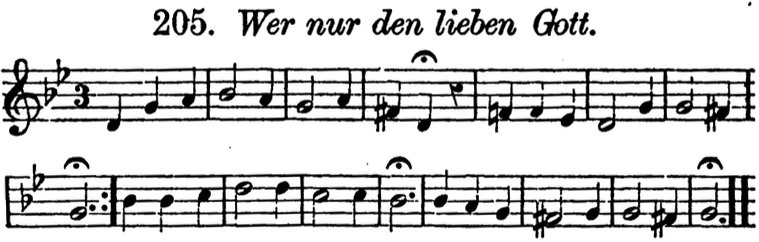
7 So geh ich denn mit Freuden hin,
wo ich bei dir zu Hause bin,
mein Herz ist willig und bereit,
o heilige Dreieinigkeit!

22 July 2022

So walt es Gott! Das ist die Straße

Here is my translation of the Sunday hymn “So walt es Gott, das ist die Straße” (B. Schmolck, d. 1737), which is titled “Pilgrim-hymn of those who are traveling to church.” As a fitting meditation on why God calls believers to assembly, and in preparation for the divine service, it bears similarities, logically, to Schmolck’s “Thut mir auf die schöne Pforte” (C. Winkworth: “Open now Thy gates of beauty”), echoing some of the same themes and phrases. The text is not in most hymnals. It comes to our attention from Friedrich Lochner, who mentions it a least twice: first, in Der Lutheraner, vol. 16 (1860), no. 21, p. 167, where he quotes it in full with his own introduction, ascribing it tentatively to Sigismund von Birken and suggests the melody “O daß ich tausend Zungen hätte” (as well as noting the possibility of using “Wer nur den lieben” and “Wer weiß wie nahe”); second, in his Liturgische Formulare (1895), where, ascribing it again von Birken (d. 1681), he recommends stanzas 1–3, 5–6, 12 for his service of Church Consecration (Dedication) at the closing of the first part of the service. There he suggests the melody “O daß ich tausend Zungen hätte,” specifying König (“c a c d c b a g a”). Despite Lochner’s ascription to von Birken (a fault in his source, a “Breslau hymnal”), the earliest instance of the hymn appears in Heiliges Öl in die Flammen öffentlicher Kirchen-Andacht aus weiland Herrn Benjamin Schmolckens . . . gesammleten geistlichen Liedern (Breßlau / Leipzig: Pietsch, 1741), a collection of Schmolck’s hymns produced by his successor in the office, Gottfried Balthasar Scharff. Here, the melody “Wer nur den lieben Gott läßt walten” is appointed.


COME, in God’s name! this road shall speed us
The way that doth to Zion tend;
Ye pilgrims, come, as God doth lead us
Here in our earthly life to wend!
O soul, doth it not fair appear,
To walk with God’s own people here?

2 E’en as the hart seeks for the river,
With waters cool to slake its thirst,
So hasten we our footstep ever
Where God’s own waters are dispersed;
For this our spirit’s thirst can be
Quenched only by the Trinity.

3 Ye eyes, look for that chosen station
Where God doth keep His hearth and flame;
Ye lips, prepare devout oration,
And offer incense to His name;
Ye hearts, see that ye ready are:
The Friend of hearts no more is far.

4 I greet thee yet, ere sight is given,
Thou house, which heart and spirit prize!
Thou vault of star-adorned heaven,
Thou manger, where my Jesus lies,
Thou mount on which His cross doth stand,
Thou gate that leads to heaven’s land.

5 Spread wide, Jerusalem, the portal,
Admit thy people to the Lord;

Let sound the voice in choir immortal,

The hymn, Thrice Holy, be outpoured.

Yet hear: It is the Lord’s abode,

Wherefore from sin be ye unshod.

6 O bless and prosper our endeavor,

Most Holy Trinity, we pray!

Let us bring hearts repentant ever,

And grieving for our sinful way;

Let our first word be rendered thus:

O Lord, be merciful to us!

7 Let us cast off while we are going
What in God’s House may hindrance prove,
But grant us, Lord, by Thy bestowing,
Upon that perfect way to move,
Which to no idle thinking cedes,
But only to Thy heaven leads.

8 Distill for us Thy Manna holy
And keep all loathing far from sight,
That we regard Thy myst’ry duly
And find our pleasure in Thy light;
Oh, to our eyes Thy power send,
And we with profit will attend.

9 Grant that the Law may strike as thunder,
To make our hearts contrite indeed,
And let there flow the balm of wonder
When in the cross we comfort need;
Then doth the Gospel Word abide
The soul’s delight most true and tried.

10 Grant that no sleep the mind may darken,
Nor idle gossip us assail:
Let ear and heart to pastors hearken,
That all their words may us avail;
By Thy good Spirit do Thou seal
What He hath bid them to reveal.

11 Though hearing, pray’r, or hymn employ us,
So let it be Amen with Thee!
And should the foe seek to annoy us,
Curb Thou his vile activity!
Yea, that we make a valiant stand,
The Spirit’s sword put in our hand.

12 By Thee the work shall well be tended—
It is alone Thy work of grace;
So bring us through the portal splendid
Into that holiest holy place,
That, entering Thy temple, we
May in all truth Thy temple be.

Translation © 2021–22 Matthew Carver.

GERMAN

So walt es Gott, das ist die Straße,
die uns den Weg nach Zion führt.
Ihr Pilger, kommt in solcher Maße,
wie uns zu wandern hier gebührt.
O Seele, steht es nicht so schön,
mit Gottes Haufen wallen gehn?

2 Ein Hirsch lauft nach den kühlen Flüßen,
daß er den Durst mit Wasser stillt;
so eilen wir mit unsern Füßen
dahin, wo Gottes Brünnlein quillt:
denn unserer Seelendurst allein
kann nur mit Gott gestillet sein.

3 Ihr Augen, seht nach jener Stätte,
wo Gott sein Heerd und Feuer hält.
Ihr Lippen, schickt euch zum Gebete,
brennt Weirauch an, der Gott gefällt.
Und ihr, ihr Herzen, seid bereit,
der Herzensfreund ist nicht mehr weit.

4 Ach, sei gegrüßet in die Ferne,
du Haus, das Herz und Geist vergnügt;
du Kirchenhimmel voller Sterne;
du Krippe, wo mein Jesus liegt;
du Berg, den Christi Kreuze ziert;
du Pforte, die gen Himmel führt.

5 Schleuß auf, Jerusalem, die Tore,
und laß dein Volk zum Herren ein:
die Stimme schallt schon in dem Chore,
das muß ein Dreimal-Heiliig sein.
Doch hört, es ist des Herren Haus,
drum zieht die Sündenschuh vor aus.

6 O laß den Gang uns wohl gelingen,
du heilige Dreifaltigkeit!
daß wir dir solche Lieder bringen,
die voller Buß und Sündenleid;
denn unser erstes Wort wird schrein:
Du wollst uns, Herr genädig sein.

7 Wir wollen auf den Weg hier werfen,
was uns im Tempel hindern kann:
Du aber wirst die Sinne schärfen,
zu gehn auf einer solchen Bahn,
da man aus Eitle nicht gedenkt,
und sich allein zum Himmel lenkt.

8 Wirst du uns Manna lassen thauen,
solaß den Eckel ferne sein;
daß wir in dein Geheimnis schauen,
und uns in deinem Licht erfreun;
tu selbsten uns die Augen auf,
so merken wir nit Nutzen drauf.

9 Läßt das Gesetze Donner schießen,
so mach das Herze recht zerknirscht:
Laß aber auch den Balsam fließen,
wenn uns im Kreuz nach Troste dürst.
So bleibt das Evangelium
der Seelen bestes Eigentum.

10 Laß keinen Schlaf den Sinn verdüstern,
kein faul Geschwätze fecht uns an:
neig Ohr und Herz zu unsern Priestern,
daß uns kein Wort entfallen kann.
Versiegle das durch dienen Geist,
was dieser Geist sie reden heißt.

11 Wir singen, beten oder hören,
so laß es Amen bei dir sein.
Will uns der Satan sonst verstören,
so halte seiner Bosheiti ein;
ja gib uns selbst zum Widerstand
das Schwert des Geistes in die Hand.

12. Wohlan, du wirst das Werk vollführen,
weil es ja dein Werk ist allein.
So führ uns durch die Kirchentüren
ins Allerheiligste hinein:
So bald wir gehn in Tempel ein,
so laß uns selbsten Tempel sein.


22 September 2015

Herr des Sabbaths, dein Gesetze

Here is my translation of the hymn “Herr des Sabbaths, dein Gesetze” (Benjamin Schmolck, †1737). It is given in the Gotha hymnal for Trinity XVII and is clearly based on the Gospel. The appointed tune in the Gotha hymnal (1729) is “Liebe die du mich zum Bilde.” This could have meant any number of tunes. A common tune associated with Scheffler’s text now is “Darmstadt” or “Komm, o komm, du Geist des Lebens.”


LORD and Master of the Sabbath,
Thou hast made the day of rest,
And decreed this blessed habit,
With Thy Word to fill our breast,
Willing that we thus may be
From all other labor free.

2 Is Thy Law no longer binding?
How should I regard this test,
Thee in blessed business finding,
Not by merely being guest,
But by lab’ring in Thy plan
To relieve the ailing man?

3 Well I know these works behooved Thee,
Righteous, holy they must be;
Love and need it was that moved Thee
To this blest activity.
That no Sabbath breaks indeed
Which is done for love and need.

4 Grant me rightly this to ponder
And, at ev’ry feast of Thine,
To attend Thy works of wonder
With a heart for things divine,
That my worship may not be
Works of men and vanity.

5 Let the soul be firstly sated,
Ere the body take its bread,
Heal me in the manner stated,
Stand, Physician, at my bed;
For Thy Word both heals the soul
And can make the body whole.

6 Such a sickness fills my spirit,
For my sinful nature fails,
Dead to any good or merit;
’Tis Thy cure alone avails;
Heal me, touch me with Thy hand,
That I may uprightly stand.

7 Let my love by Thy renewing
To my neighbor be exprest,
Let me grow in all well-doing—
For it were a sinful rest
Such a Sabbath to approve
Idle to the works of love.

8 Let me not be self-exalted
Since Thou dost oppose the proud,
But to live a life unfaulted,
In that lowly meekness bowed,
Which, while in its lowly place,
Yet rejoices in Thy grace.

9 Though the world, most highly seated,
May appoint the depths for me,
I will count myself well treated,
Since they did the same to Thee;
Thou wilt bid me at the end:
“Come, move higher up, My friend!”

Translation © 2015 Matthew Carver.

GERMAN

1 Herr des Sabbaths, dein Gesetze
setzt mir einen Ruhetag,
da ich deines Wortes Schätze
ungestöret sammlen mag,
und will haben, daß er frei
sonst von aller Arbeit sei.

2 Ist denn dein Gebot nicht kräftig,
und wie soll ich es verstehn?
seh ich dich doch selbst geschäftig,
nicht allein zu Gaste gehn,
sondern auch im Werke sein,
einen Kranken zu befrein.

3 Doch ich sehe deine Taten
als gerecht und heilig an.
Lieb und Not hat dir geraten,
was du damals hast getan:
denn das bricht den Sabbath nicht,
was aus Lieb und Not geschicht.

4 Laß mich dieses recht bedenken,
und, so oft dein Tag erscheint,
dir ein solches Herze schenken,
welches dich rechtschaffen meint;
daß mein Gottesdienst nicht sei
Menschentand und Heuchelei.

5 Gib zuvor der Seelen Speise,
eh der Leib sein Brot geneußt,
heile mich in gleicher Weise,
weil du Artzt und Helfer heißt:
denn ein Wort durch deinen Mund
machet Leib und Seel gesund.

6 Ich bin geistlich wassersüchtig,
meine sündliche Natur
ist zu keinem Guten tüchtig:
ach, nimm mich in deine Cur,
greif mit deiner Hand mich an,
daß ich wieder wandeln kann.

7 Aber laß auch meine Liebe
meinem Nächsten Gutes tun,
daß ich mich im Wohltun übe;
denn das hieße sündlich Ruhn,
einen Sabbat zu begehn
und im Lieben müßig stehn.

8 Gib, daß ich mich nicht erhebe,
denn du bist der Hofart feind;
sondern in der Demut lebe,
die ihr selbst geringe scheint,
doch in ihrer Niedrigkeit
deiner Gnade sich erfreut.

9 Will die Welt sich oben setzen,
stellt mich aber unten an,
so kann ich mich glücklich schätzen,
weil sie dir es auch getan.
Dorten folgt die Stimme drauf:
Komme, Freund, und rück hinauf.