Showing posts with label buffalo synod. Show all posts

16 April 2025

Ach stirbt denn so mein allerliebstes Leben?

My next “new” hymn translation from Lochner’s Passion-book was “Ach stirbt denn so mein allerliebstes Leben?” (G. W. Sacer, 1661), of which stanzas 1–2, 4–5 were used in Devotion 58 (“The Miraculous Signs Following Jesus’ Death”). The hymn, also found in the second, enlarged edition of the Buffalo Synod hymnal (Ev.-Luth. Gsb) #90, is found in an earlier translation on this blog from 2023 (included below). With about 1,500+ hymn translations, sometimes one slips through the cracks and I re-do it.


Mel.: Ach Gott, erhör mein Seufzen und Wehklagen
 

ALAS, shall thus my dearest Life be dying?
Yea, it is done, He makes His final sighing.
  My Lord is dead,
  O grief! O dread!
Can any man in pain like mine be lying?

2 The Dayspring from on high His setting keepeth,
The early-hunted Hind to slumber creepeth.
  Let tears not fail!
  My Crown bewail!
Oh, that I could not join Him where He sleepeth!

3 The Father’s Word, believers’ Hope unshaken,
The Prince of vict’ry dies a worm forsaken;
  The Prize divine
  Of David’s line,
The Rose of Sharon, from the world is taken.

4 He lieth stiff,  at whom hell stands affrighted,
Before whom heaven high bows down delighted;
  The soul’s great Friend,
  Death’s Bane and End
Is laid by death within the tomb benighted.

5 Ye graves, be split! Ye flinty rocks, be broken!
Be dim, thou sun! Earth shake, thy grief betoken!
  O sky, O sea—
  Star-canopy—
All creatures, to your Lord’s lament be woken!

6 The Shepherd for His sheep in death must tarry;
Come, Joseph, to the tomb thy Savior carry,
  And let the shroud
  Be rich endowed
With spices, His dear body well to bury.

7 My Jesus, my thoughts also will be with Thee,
I too with richest spices will enwreathe Thee
  Of sorrow true;
  My heart make new,
This for Thy tomb, O Savior, I bequeathe Thee.

8 Oh, seal this tomb, Lord, by Thy gracious Spirit!
Let faith therein rock’s constancy inherit.
  Abide in me,
  Let me on Thee
And on Thy truth reflect with faith’s true merit.

Translation © 2025 Matthew Carver.

CARVER (2023)
ALAS! The Life most dear to me is ended!
The deed is done, His Spirit is commended.
My God is dead.
O woe and dread!
Is any man with grief like mine attended?

2 At eve the Dayspring from on high is retireth,
The early-hunted Hind at last expireth,
Oh, weep with me!
My Crown is He!
To die with Him—that most my heart desireth!

3 The Father’s Word, the faithful’s Prince victorious,
Our Lord of Glory, suffers death inglorious!
Heav’n’s Glory fair,
The Branch and Heir,
And Sharon’s Rose is plucked away before us.

4 Now still is He who fear in hell doth waken,
Before whom heavens bow and earth is shaken,
The soul’s great Friend,
Death’s mortal End,—
From death into the inky tomb is taken.

5 Ye tombs, then break! Ye solid rocks, be splitting!
Ye mountains quake! And sun, thy light be quitting!
Star, sky, and sea,
And all that be,
Lament your Lord with weeping unremitting!

6 The Shepherd for His sheep to death is wearied;
Come, Joseph, let His body thus be carried
With gentle hands
In spice and bands,
Within the tomb, that He may be well buried.

7 My Jesus Christ, I too would thank Thy favor,
Would give to Thee the spice of faith’s behavior:
Repentance true.
My heart anew
Will bury Thee within this tomb, dear Savior.

8 To seal this tomb, Thy Spirit send from yonder;
Let faith be firmly set, and love grow fonder.
Abide in me;
Let me in Thee
And in Thy faithfulness devoutly ponder.


GERMAN
Ach! stirbt denn so mein allerliebstes Leben?
Ja, es ist hin, der Geist ist aufgegeben;
mein Gott ist todt,
o Angst! o Noth!
kann Jemand auch, wie ich, in Kummer schweben?

2 Am Abend stirbt der Aufgang aus der Höhe,
es leget sich das früh gejagte Rehe.
Ach! weint mit mir!
klagt meine Zier!
ach! daß ich nicht mit Ihm zur Erden gehe!

3 Des Vaters Wort, der Schutz und Trutz der Frommen,
der Siegesfürst ist schmählich umgekommen.
Des Himmels Preis,
des Davids Reis,
die Ros' im Thal ist von der Welt genommen.

4 Der ist erstarrt, für dem die Höll' erschricket,
für welchem sich der hohe Himmel bücket;
der Seelen-Freund,
des Todes Feind
wird von dem Tod ins finstre Grab gezücket.

5 Ihr Gräber brecht, ihr harten Felsen splittert,
du Sonn' erblaß, ihr Erden-Klüfte schüttert!
du Luft, du Meer,
du Sternen-Heer,
klagt euren Herrn, ihr Element zittert.

6 Der Hirt ist todt für die geliebte Heerde;
komm, Joseph, komm, und bring Ihn zu der Erde;
gieb her Gewand mit milder Hand,
gieb Salben, daß Er wohl begraben werde.

7 Mein Jesu Christ, auch ich will Dich bedenken,
ich will Dir Herr die Specereien schenken
der wahren Reu,
mein Herz wird neu,
in dieses Grab will ich Dich Heiland senken.

8 Dies Grab soll mir Dein guter Geist versiegeln,
der Glaube soll mir's fest und wohl verriegeln.
Bleib Du in mir,
las mich in Dir
und Deiner Treu andächtiglich bespiegeln.

17 February 2024

Mein Abba kommt vor deinen Thron

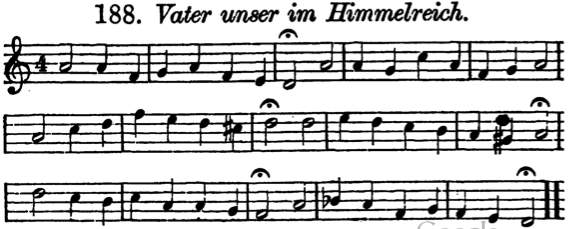
Here is my translation of the prayer hymn, “Mein Abba kommt vor deinen Thron” (Benjamin Schmolck, d. 1737), in GGELB #233 with melody assignment “Vater unser im Himmelreich.” I also find it in ELGB 2nd ed. (Buffalo Synod), #278. It first appears in the author’s Lustiger Sabbath (1712) with title “XLVI. The Key to Heaven and the Heart of God, on Rogate Sunday.” Several similarities are notable to the hymn “Getreuer Heiland, hilf mir beten” by Schmolck’s younger acquaintance, Christoph Pfeiffer.


MY Abba-cry comes nigh Thy throne
O Father, through Thy Son alone,
Who in my mouth hath set the word
And my request to Thee referred.
In Jesus’ name my cry is cried
Until Thy heart is opened wide.

2 In Jesus’ name I take my place
My God! before Thy door of grace.
For Jesus so instructed me,
Who said, with twofold “Verily,”
If in this name I make my cry,
My pray’r shall then be heard on high.

3 In Jesus name my plea I bring,
Since I can name no greater thing,
Thy fond paternal heart to break
Than when my mouth that name doth speak.
He constantly recalls to Thee
Thy lovingkindness fatherly.

4 In Jesus’ name I carry on,
And this my watchword is alone,
So that, should grief my lips restrain,
This name before Thee doth remain
And show that heart’s distress can prove
A mighty pray’r, Thy heart to move.

5 In Jesus’ name I all include
Which shall for me be blest and good.
For in this word I pow’r perceive
To which both soul and body cleave.
When armed with this I seek Thy face,
I find abundant grace for grace.

6 In Jesus’ name I soar above
To heaven, to Thy heart of love;
It gives me wings that I may fly
And pierce the clouds to realms on high,
And as I speak, it brings my plea
And sets it in Thy memory.

7 In Jesus’ name I call to mind
The sonship once to me consigned:
The Father Thou, the child am I,
And Thou wilt never lose my sigh.
When groans Thy Spirit in my breast,
Then mercy Thou rememberest.

8 In Jesus’ name I hold to Thee
Thy Son’s dread wounds and death for me;
His blood than Abel’s better cries,
’Tis oil to make life’s flame arise.
Yea, if Thou shouldest me ignore,
Then were He Jesus Christ no more.

9 In Jesus’ name I have e’en now
The foretaste of Thy fav’ring love.
Before I can or would implore
Thou hearest what I ask, and more,
Before I cry, O Lord, to Thee,
The ready answer comes to me.

10 In Jesus’ name I carry on
Until I a hearing may be won;
If Thou seem deaf, I still am bold,
As long as Jesus Word doth hold,
I know Thou wilt remain my Friend,
And, seeming deaf, my pray’r attend.

11 In Jesus’ name I hereby close
My sigh, and there let it repose.
My pray’r a sure Amen shall be;
This word shall never lie to me,
But perfect light of joy in heav’n,
Since Jesus’ name doth say Amen.

Translation © 2024 Matthew Carver.

GERMAN
Mein Abba kömmt vor Deinen Thron
zu Dir, o Vater, durch den Sohn,
der mir das Wort in Mund gelegt,
und mein Gebete für Dich trägt,
ich ruf in Jesu Namen an,
bis mir Dein Herz wird aufgethan.

2 In Jesus Namen steh ich hier,
mein Gott! für Deiner Gnaden-thür.
So hat mich jesus unterricht't,
der zweimal wahrlich! wahrlich! spricht:
Wenn ich in diesem Namen schrei,
daß mein Gebet erhöret sei.

3 In Jesus Namen heb' ich an,
weil ich nichts größ'res nenne kann,
das Dir das Vater-Herze bricht,
als wenn mein Mund den Namen spricht.
Denn der erinnert Dich all'zeit,
der väterlichen Gütigkeit.

4 In Jesus Namen fahr ich fort,
und dieses ist mein Losungs-Wort,
das, wenn vor Angst mein Mund gleich schweigt,
Dir dennoch dieser Name zeigt,
das auch des Herzens-Angst allein,
ein stark Gebete könne sein.

5 In Jesus Name schließ ich ein,
was mir kann gut und selig sein.
In diesem Worte steckt die Kraft,
daran so Leib als Seele haft't.
Wenn ich mit dem gewaffnet bin,
so nehm ich Gnad' um Gnade hin.

6 In Jesus Namen schwing ich mich
ganz Himmel-an zunächst bei Dich.
Er bindet mir die Flügel an,
daß ich die Wolken brechen kann,
und mein Gebet, sobald es klingt,
zu Dir in Dein Gedächtniß dringt.

7 In Jesus Namen halt ich Dir
die mir geschenkte Kindschaft für.
Bist Du der Vater, ich das Kind,
so geht kein Seufzer in den Wind:
Sobald Dein Geist im herzen schreit,
gedenkst Du der Barmherzigkeit.

8 In Jesus Namen stell ich Dir,
des Sohnes Tod und wunden für;
Sein Blut schreit mehr als Abels Blut,
und das ist Oel in meiner gluth.
Ja gäbest Du mir kein Gehör,
so wär Er auch nicht Jesus mehr.

9 In Jesus Namen trag ich schon
den Vorschmack Deiner Gunst davon.
Eh' ich noch beten will und kann,
so hörst Du schon meine Schreien an;
eh' ich noch rufe, Herr! zu Dir,
so kuommt die Antwort schon zu mir.

10 In Jesus Namen halt ich an,
bis ich Erhörung finden kann.
Verstelle Dich nur, wie Du willt,
so lange Jesus Wort was gilt,
so lange bleibst Du auch mein Freund,
obgleich Dein Ohr verschlossen scheint.

11 In Jesus Namen schließ ich drauf
den angefang'nen Seufzer-lauf.
Meine Bitten wird ein Amen sein,
und ein vollkommner Freudenschein.
Denn dieses Wort betrügt mich nicht,
weil Jesus Namen Amen spricht.

24 August 2023

Laß ab von Sünden alle

Here is my translation of the Judgment Day (Return of Christ) hymn, “Laß ab von Sünden alle” (Johann Rist, d. 1667), in ELGB #490, first appearing in the author’s Neuer himlischer Lieder (Lüneburg, 1651), part 4, with title: “Earnest meditation on the certainty of the approaching Last Day and what manner of judgment shall be undertaken,” originally in 13 stanzas with the melody “Wacht auf ihr Christen alle.” (It was later reduced to ten stanzas.) The melody appointed in the Buffalo Synod hymnal is “Ach Herr, mich armen Sünder,” i.e., “Herzlich thut mich verlangen.”


DEPART from all transgression,
Depart and do not doubt
That Christ in dread procession
Comes with the trumpet shout.
His judgment seat is ready,
The Lord comes openly;
He comes with progress steady
With countless company.

2 Oh, tremble, soul complacent,
This is the final day,
Thy limbs, from slumber hastened,
Shall leave the grave’s decay.
Thou shalt arise in wonder,
And hear with fearful heart
As Christ Himself shall sunder
The wheat and chaff apart.

3 Well, if thou art adornèd
In faith that is no lie;
Thou shalt not then be scornèd
But rise to Christ on high.
Yet if thy heart aggrieve thee
Beneath the yoke of sin,
Hell yawning shall receive thee,
And Satan cast thee in.

4 What shall the Judge be doing?
Yea, more than Judge is He,
Who, while the case reviewing,
A Witness true shall be.
Then shall thy heart be shaken,
When on the platform there,
All secret deeds mistaken
The Judge will then lay bare.

5 How wilt thou stand and save thee
Before His wrath that morn,
When He shall show thee gravely
His stripes and crown of thorn
And all the wounds unsightly,
O wretch, He bore for thee:
And Christ will ask thee rightly,
O man, Why struck’st thou Me?

6 Did I not freely offer
My blood to pardon thee,
Did I not bondage suffer,
And bear most patiently
The stripes I did not merit,
The torments day and night,
Till I gave up My spirit
And all was finished quite.

7 How hast thou then repaid Me
For all I’ve done for Thee?
Thou often hast betrayed Me
And with vile company
The sinful way hast wandered
In self-secure conceit,
Whereby My name was slandered.
Were these not wages meet?

8 How will all fears be doubled
For sons of men that day!
How Israel was troubled
And trembled with dismay
When lightning, wind, and thunder
And trump did fearsome speak!
They cried with dread and wonder
Before the mountain peak.

9 The sinner shall be crying
When asked the question grim:
Why was he uncomplying
In what was bidden him?
How will he have the power
To see the face, but quail
When, anguished, he must cower,
And soul and body fail?

10 Who can give fair expression
To all the shame he bears
Who dies in his transgression
And then in judgment stares
To see the countless splendors
Of all the saintly choir
As God, the Judge, then renders
To him his verdict dire?

11 God’s mighty men and blameless
Declare accursed of God
The peace-disturber shameless,
Who sought to spread abroad
The devil’s congregation
And kingdom out of lust,
And now in degredation
Finds all his glory dust.

12 O heavens! Hear the calling
Of sinners’ in their grief:
Ye hills and mountains, falling,
Provide us some relief!
Oh, from the lake o’ershade us,
For lo, this very hour
The Lamb enthroned hath made us
By furious wrath to cow’r!

13 Lord, help me ponder ever
That final Judgment Day,
That I may leave Thee never,
But live the Christian way.
And when I come before Thee,
And see Thee face to face,
Let me behold Thy glory
With gladness in that place.

Translation © 2023 Matthew Carver.

GERMAN
Laßt ab von Sünden alle,
laßt ab und zweifelt nicht,
daß Christus wird mit Schalle
bald kommen zum Gericht.
Sein Stuhl ist schon bereitet,
der Herr kommt offenbar;
Er kommt und wird begleitet
von einer großen Schaar.

2 Erschrick, o sichre Seele,
dies ist der letzte Tag,
dein Leib kommt aus der Höhle,
darin er schlafend lag.
Da mußt du stehn entkleidet,
und hören an mit Scheu,
wie Christus selber scheidet
den Waitzen von der Spreu.

3 Wohl dir, so du geschmücket
in wahrem Glauben bist,
alsdann wirst du gerücket
hinauf zu Jesus Christ.
Wer aber nicht von Herzen
drückt dich der Sünden Joch,
der Satan wird mit Schmerzen
dich stürzen in sein Loch.

4 Was wird der Richter machen?
der richtet nicht allein,
Er wird zugleich in Sachen
dein wahrer Zeuge sein.
Denn wirst Du sehr erschrecken,
wenn auf dem Urtheils -Plan,
der Richter wird aufdecken,
was heimlich du gethan.

5 Wie willt du doch bestehen
für seinem großen Zorn?
wenn Er dich lässet sehen
die Wunden, Schläg und Dorn,
und was Er mehr getragen,
o schnöder Knecht für dich!
bald wird dich Christus fragen:
Mensch, warum schlugst du mich?

6 Hab ich nicht gern vergossen
mein Blut für deine Schuld
ward ich nicht vest geschlossen,
litt ich nicht mit Geduld
die nie verdiente Strafen,
und Marter Tag und Nacht,
bis ich am Creuz entschlafen,
hab alles vollenbracht?

7 Wie hast du nun vergolten
mir, was ich dir gethan,
oft hast du mich gescholten,
bist auf der Sünden Bahn,
mit dem verfluchten Haufen,
nur mir zum Spott und Hohn,
in sicherheit gelaufen;
war das nicht feiner Lohn?

8 Ach Gott, wie wird erschüttern
alsdann ein Menschen-Kind!
Israel mußte zittern,
als Er den starken Wind,
das Donnern und das Blitzen,
samt der Posaunen Schall
hört auf des Berges Spitzen,
da schrie es überall.

9 Wie wird der Sünder schreien,
wenn ihn der Richter fragt:
warum er nicht mit Treuen
gethan, was ihm gesagt?
Wie wird er können schauen
ein solches Angesicht,
das ihm mit Angst und Grauen
Leib, Seel und Geist zerbricht.

10 Wer kann die Schand erreichen,
die der erdulden muß,
der durch den Tod muß schleichen
ins Grab ohn alle Buß,
und soll hernachmals sehen
viel Heilige mit Pracht
bei Gott, dem Richter stehen,
der ihm sein Urtheil macht.

11 Die großen Gottes-Männer
verfluchen den zugleich,
den frechen Friedens-Trenner,
der Satans Kirch und Reich
gesuchet zu vermehren
aus böser Lust allein,
und muß nun aller Ehren
dafür entsetzet seyn.

12 O Himmel! es erschallet
der Sünder Klag-Geschrei,
ihr Berg und Hügel fallet,
und knirschet uns entzwei,
bedeckt uns für dem Pfuhle,
dieweil zu dieser Frist
das Lämmlein auf dem Stuhle
sogar ergrimmet ist.

13 Herr lehre mich bedenken
doch diesen jüngsten Tag,
daß ich zu Dir mich lenken
und christlich leben mag.
Und wann ich dann soll stehen
vor Deinem Angesicht,
so laß mich frölich sehen
Dein klares Himmels-Licht.

23 August 2023

Herzlich thut mich erfreuen / die liebe Sommerzeit

Here is my translation of the (centoized) hymn on heaven, “Herzlich thut mich erfreuen / die liebe Sommerzeit” (Johann Walther, d. 1570), as found in ELGB #488. The hymn describing the glory of eternal life and the heavenly wedding feast was printed alone in Wittenberg 1552 and in Marburg in 1555 with the title “A beautiful spiritual and Christian Bergreihen concerning the Last Day and Eternal Life, to the melody and tune: “Hertzlich thut mich erfrewen”; made by Johann Walther for the comfort of himself and all Christians in the present troublous time.” Both of these lacked the later-inserted 33rd stanza, “Ach Herr durch deine Güte,” etc., which first appears in the Dresden printing of 1557 (thus originally there are 33 stanzas, a Christological number).

The first lines are inspired by the secular song “Hertzlich thut mich erfrewen / die frölich Sommerzeit,” concerning terrestrial summer joy, which Henrich Knaust himself “Christianized” in his Gassenhawer, Reuter und Bergliedlin (Frankfurt/Main, 1571). Interestingly, Jeremias Nicolai’s hymn, “Herr Christ, thu mir verleihen,” included at the end of Philipp Nicolai’s Freudenspiegel (see Joy of Eternal Life), is an imitation of our present hymn, according to Fischer, reproducing whole swaths of it. Our hymn is later found in Niedling’s Hand-Büchlein (Altenburg, 1655) expanded to 55 stanzas interspersed in the original 34. According to Mützell, these had appeared already in 1631. Later, the cento “Der Bräutgam wird bald rufen” was taken from stanzas 31, 8, 9, 16, 18, 17, and 13.

In the Buffalo Synod hymnal’s abbreviation, the first 7 stanzas, in their original order, are sung to the melody “Valet will ich dir geben,” while stanzas 8–14 (originally 19–25) are sung to “Der Bräutgam wird bald rufen.” There is also the following note at the end: “*Conclusion: The Bridegroom soon shall call us, stanza 1. Note: the original has 34 verses with insertion of the hymn ‘The Bridegroom soon shall call us.’”


MY heart delights to ponder
That blessed summertide
When God will work His wonder,
And all is purified.
God will restore creation,
Make earth and heav’n anew,
A glorious transformation
Of brightest, purest hue.

2 The sun, new-made and gleaming,
The moon and stars on high
Far brighter shall be beaming,
And marv’lous to our eye.
The firmament more fairly
With beauty shall be clad—
All this God will do merely
To make His children glad!

3 God’s wondrous restoration
Shall with such beauty teem,
That all with jubilation
will laugh as in a dream:
Pure gold and gemstones splendid
Will beautify the globe,
With pearls and pearlets blended
As though a broidered robe!

4 What glories there are sharèd
No mortal tongue can speak,
To naught can be comparèd,
All words are far too weak.
Therefore we can but save it
Until the Final Day.
Then we will surely gaze at
God’s pow’r and being for aye.

5 Then shall the earth be shaken
When heaven’s trump is blown,
And God shall us awaken
In Jesus Christ His Son;
We as His new creation
In flesh will then arise,
Adorned with His salvation,
Our great and glorious prize.

6 He will our frame make over
With flesh and hair anew,
Our life He will recover—
This is most surely true;
Oh, how He’ll glorify us
Far brighter than the sun,
And bliss and joy supply us
As pleaseth every one.

7 Then Christ our Consolation
Will send His angels forth
To bring His dear creation
Redeemed o’er all the earth,
He fairly will receive us
With all salvation’s host,
Embrace us, and relieve us—
Which shall delight us most.

8 (19) No ear hath heard it ever,
Nor human eye hath seen
The joy which by God’s favor
Bestowed on them hath been:
Their eyes shall see God clearly,
His face unveiled to sight,
And seeing, praise sincerely
That true, eternal Light!

9 (20) They shall be God discerning,
The Holy Trinity,
In love divine be burning,
And His deep counsel see.
He will all knowledge show them,
And what He hath and is,
And as His children know them:
The pow’r and deed are His.

10 (21) So shall our God be filling
All things by His great pow’r,
And by His Spirit willing
Be All in all each hour;
He will be wholly given
To us, to be our own,
So shall all earth and heaven
Be ours in Christ alone.

11 (22) With God we’ll keep forever
Th’ eternal Supper there.
The food shall moulder never,
Upon His table fair.
The glorious fruit receiving
By Tree of Life supplied,
The fount of waters living
We’ll drink at Jesus’ side.

12 (23) All our delight and pleasure,
The longing of our heart,
The deepest wish we treasure
Our God shall there impart.
We will rejoice then fully,
And Him forever praise,
And faithfully and truly
Love Him for endless days.

13 (24) We shall with faithful ringing
Before God’s throne and chair
All joyfully be singing
A new song glad and fair:
Laud, honor, pow’r, and blessing
To God the Father, Son,
And Holy Ghost: unceasing
To Him all thanks be done!

14 (25) This hymn of joyful measure
Will be our song of praise
From heartfelt joy and pleasure,
Our chosen thanks always.
That joy shall ne’er be sinking,
Shall never pass away,
But, far beyond our thinking,
Before our God shall stay.

Translation © 2023 Matthew Carver.

Loy/TLH
31 The Bridegroom soon will call us:
Come, all ye wedding guests!
May not His voice appall us,
While slumber binds our breasts!
May all our lamps be burning
And oil be found in store
That we, with Him returning,
May open find the door!

8 There shall we see delighted
Our dear Redeemer’s face,
Who leads our souls benighted
To glory by His grace.
The patriarchs shall meet us,
The prophets’ holy band,
Apostles, martyrs, greet us
In that celestial land.

9 They will not blush to own us
As brothers, sisters dear;
Love ever will be shown us
When we with them appear.
We all shall come before Him,
Who for us man became,
As Lord and God adore Him,
And ever bless His name.

16 Our Father, rich in blessing,
Will give us crowns of gold
And, to His bosom pressing,
Impart a bliss untold,
Will welcome with embraces
Of never-ending love,
And deck us with His graces
In blissful realms above.

18 In yonder home shall never
Be silent music’s voice;
With hearts and lips forever
We shall in God rejoice.
The angels shall adore Him,
All saints shall sing His praise
And bring with joy before Him
Their sweetest heavenly lays.

17 In mansions fair and spacious
Will God the feast prepare
And, ever kind and gracious,
Bid us its riches share.
There bliss that knows no measure
From springs of love shall flow,
And never-changing pleasure
His bounty will bestow.

13 Thus God shall from all evil
Forever make us free,
From sin, and from the devil,
From all adversity,
From sickness, pain, and sadness,
From troubles, cares, and fears,
And grant us heavenly gladness
And wipe away our tears.


WINKWORTH (stanza numbers from the original 34)
1 Now fain my joyous heart would sing
That lovely summer time,
When God reneweth everything
In His celestial prime;
When He shall make new heav’ns and earth,
And all the creatures there
Shall spring from out that second birth
All glorious, pure, and fair.

4 The perfect beauty of that sphere
No mortal tongue may speak,
We have no likeness for it here,
Our words are far too weak;
And we must wait till we behold
The hour of judgment true,
That to the soul shall all unfold
What God is, and can do.

5 For God ere long will summon all
Who e’er on earth were born;
This flesh shall hear the trumpet’s call
And live again that morn;
And when in Christ His Son we wake,
These skies asunder roll,
And all the bliss of Heav’n shall break
Upon the raptured soul.

17 And He will lead the white robed throng
To His fair paradise,
Where from the marriage feast the song
Of endless praise shall rise;
And from His fathomless abyss
Of perfect love and truth,
Shall flow perpetual joy and bliss,
In never ending youth.

33 Ah God, now lead me of Thy love
Through this dark world aright;
Lord Christ, defend me lest I rove
Or lies delude my fight;
And keep me steadfast in the faith
Till these dark days have ceased,
And ready still in life or death
For Thy great marriage feast.

34 And herewith will I end the song
Of that fair summer time;
The blossoms shall burst out ere long
Of Heav’n’s eternal prime;
The year begin, for ever new
God grant us then on high
To see our vision here made true,
And eat the fruits of joy!


RAMSEY
(stanza numbers from the original 34)
8 Thy Word, O God, declareth
No man hath seen or heard
The joys our God prepareth
For them that love their Lord.
Their eyes shall see Thy glory,
Thy face, Thy throne, Thy might;
With shouts shall they adore thee,
The true, eternal Light.

22 With Thee, their warfare ended,
Thy saints, from earth released,
Shall keep, with glories splendid,
Eternal holy feast.
There shall Thy sons and daughters
The tree of life partake,
Shall drink the living waters,
And bread with Thee shall break.

24 Thy constant praises sounding
Before Thy great white throne,
They all in joy abounding
Shall sing the song unknown:
Laud, honor, praise, thanksgiving
And glory ever be
To Thee, the everlasting
And blessed Trinity.


GERMAN
Herzlich thut mich erfreuen
die liebe Sommer-Zeit,
wenn Gott wird schön verneuen
alles zur Ewigkeit.
Den Himmel und die Erden
wird Gott neu schaffen gar,
all Creatur soll werden
ganz herrlich, rein und klar.

2 Die Sonn wird neu und reine,
der Mond und Sternen all,
gar vielmal heller scheinen,
daß man sich wundern soll:
Das Firmament gemeine
wird Gott auch schmücken fein,
das wird Er thun alleine
zur Freud den Kindern sein.

3 Also wird Gott neu machen
alles so wunderlich,
für Schönheit solls gar lachen
und alles freuen sich:
Von gold und Edelgsteinen
die Welt wird fein geschmückt,
mit Perlen groß und kleinen,
als wär es ausgestickt.

4 Kein Zung kann nicht erreichen
die ewig Klarheit groß,
man kanns mit nichts vergleichen,
die Wort sind viel zu bloß:
Drum müssen wir solchs sparen
bis an den jüngsten Tag,
denn wollen wir erfahren,
was Gott ist und vermag.

5 Denn Gott wird bald uns allen,
was je geboren ist
durch sein Posaun mit Schallen
in seinm Sohn Jesu Christ,
an unserm Fleisch erwecken
zu großer Herrlichkeit,
und klärlich uns entdecken
die ewgi Seligkeit.

6 Er wird uns unser Leben
den Leib mit Haut und Haar,
ganz völlig wiedergeben,
das ist gewißlich wahr;
uns Leib und Seel verklären,
schön hell, gleich wie die Sonn
nach Lust, was wir begehren
und geben Freud und Wonn.

7 Sein Engel wird auch schicken
der Herr Christ, unser Trost,
entgegen Ihm zu rücken,
der uns aus Lieb erl¨st,
der wird uns schön empfangen
mit aller Heilgen Schaar,
in seine Arm umfangen,
das wird erfreuen gar. […zwar]

[*8 Da werden wir mit Freuden
den heiland schauen an,
der durch sein Blut und Leiden
den Himmel aufgethan,
die lieben Patriarchen,
Propheten allzumal,
die Märt'rer und Apostel
bei ihm ein große Zahl.

*9 Die werden uns annehmen
als ihre Brüderlein,
sich unser gar nicht schämen,
uns mengen mitten ein;
wir werden alle treten
zur Rechten Jesu Christ,
als unsern Gott anbeten,
der unsers Fleisches ist.]

*10 Er wird zur rechten Seiten
uns freundlich sprechen zu,
Kommt, ihr Gebenedeiten,
zu meiner Ehr und Ruh.
Jetzt sollet ihr ererben
meins lieben Vaters Reich,
welchs ich euch thät erwerben,
drum seid ihr Erben gleich.

*11 Alsdenn wird Gott recht richten
die gottlos böse Welt:
das höllisch Feur soll schlichten,
die Sünd mit barem Geld.
Den Teufel und sein Rotte,
die Heuchler Mammons Knecht,
wird Gott zu Schand und Spotte,
all urtheiln ungerecht.

*12 Wird sich ganz zornig stellen
zu den zur linken Hand,
ein recht gleich Urtheil fällen
mit Worten so genannt.
Geht hin, ihr ganz Verfluchten,
zum höllschen Feur erkannt
in Teufels Strick verflochten
in ewgen Tod und Band.

[*13 Also wird Gott erlösen
uns gar aus aller Noth,
vom Teufel, allem Bösen,
von Trübsal, Angst und Spott;
von Trauren, Weh und Klagen,
von Krankheit, Schmerz und Leid,
von Schwermuth, Sorg und Zagen,
von aller bösen Zeit.]

*14 Denn wird der Herr Christ führen
uns, die wir ihm vertraut,
mit grossem Jubilieren
zum Vater seine Braut.
Der wird uns bald schön zieren
und freundlich lachen an,
mit edlem Balsam schmieren,
mit Schmuck begaben schon.

*15 Die Braut wird Gott neu kleiden
mit seinem eignem Schmuck,
in gülden Stück und Seiden,
in einem bunten Rock.
Ein gülden Ring anstecken,
der Lieb zu wahrem Pfand,
ihr Scham auch wohl zudecken,
daß sie nicht werd erkannt.

*16 Gott wird sich zu uns kehren,
ein'm jeden setzen auf
die gülden Kron der Ehren,
und herzen freundlich drauf,
wird uns an sein Brust drücken
aus Lieb ganz väterlich,
an Leib und Seel uns schmücken
mit Gaben mildiglich.

*17 Er wird uns fröhlich leiten
ins ewge Paradeis,
die Hochzeit zu bereiten
zu seinem Lob und Preis.
Da wird sein Freud und Wonne
in rechter Lieb und Treu,
aus Gottes Schatz und Brunne,
und täglich werden neu.

*18 Da wird man hören klingen
die rechten Saitenspiel,
die Musika wird bringen
in Gott der Freuden viel;
die Engel werden singen,
all Heilgen Gottes gleich,
mit Himmelischen Zungen
ewig in Gottes Reich.

8 (19) Kein Ohr hat je gehöret, […nie gehöret]
kein menschlich Aug gesehn,
die Freud, so dem bescheret,
so Gott Ihm hat versehn,
sie werden Gott anschauen
von hellem Angesicht,
lieblich mit ihren Augen
das ewig wahre Licht.

9 (20) Gott werden sie erkennen,
die heilig Trinität,
in Gottes Liebe brennen,
sein Wesen und sein Rath
wird Gott ihrn Augen gönnen
und was Er ist und hat,
auch seine Kinder nennen,
in seiner Kraft und That.

10 (21) Also wird Gott erfüllen
alles durch seine Kraft,
wird Alles sein in Allem
durch seinen Geist und Saft,
wird sich selbst ganz zu eigen
uns geben völliglich,
und all sein Gut und eigen
inChristo sicherlich.

11 (22) Mit Gott wir werden halten
das ewig Abendmahl,
die Speis wird nicht veralten
auf Gottes Tisch und Saal:
wir werden Früchte essen
vom Baum des Lebens stät,
vom Brunn des Lebens Flüsse
trinken zugleich mit Gott.

12 (23) All unser Lust und Willen,
was unser Herz begehrt,
was wir nur wünschen wollen,
soll alles sein gewährt,
deß werden wir uns freuen,
Gott loben ewiglich,
von wahrer Lieb und Treuen
uns lieben stetiglich.

13 (24) Wir werden stets mit Schalle
vor Gottes Stuhl und Thron,
mit Freuden singen alle
ein neues Lied gar schön:
Lob, Ehr, Preis, Kraft und Stärke,
Gott Vater und dem Sohn,
des heilgen Geistes Werke
sei Lob und Dank gethan.

14 (25) Solchs Freudenlied mit Jauchzen
wird sein der Lobgesang,
aus Freud und Lust des Herzens,
der auserwählten Dank.
Die Freud wird ewig bleiben,
und nimmermehr vergehn,
viel größer, denn wir glauben,
für Gott im Werke stehn.

[Conclusion.]

*26 Fröhlich ich pfleg zu singen,
wenn ich solch Freud betracht,
und geh in vollen Springen,
mein Herz für Freuden lacht.
Mein Gmüt thut sich hoch schwingen,
von dieser Welt mit Macht,
sehn mich zu solchen Dingen,
der Welt so gar nicht acht.

*27 Drum wollen nicht verzagen,
die jetzt in Trübsal seind,
und die, die Welt thut plagen,
und ist ihn spinnen feind.
Sie wollen ihr Kreuz tragen,
im Friede mit Geduld,
auf Gottes Wort sich wagen,
sich trösten Gottes Huld.

*28 Wer Gottes Reich und Gaben
mit Gott ererben will,
der muß hie Trübsal haben,
Verfolgung leiden viel.
Das soll ihn aber laben,
es währt ein kleine Zeit,
der Herr wird bald hertraben,
sein Hülf ist gwiß nicht weit.

*29 Indes die Welt mag heucheln
Gotts Spotten immerhin
um Gniesses willen schmeicheln,
klug sein in ihrem Sinn.
Ihr Sachen lustig beugen,
nachdem der Wind herweht,
aus Forcht der Wahrheit schweigen,
wies jetzt im Schwange geht.

*30 Man laß die Welt auch toben
und redlich laufen an,
es ist im Himmel droben,
Gott lob ein starker Mann.
Er wird gar bald aufwachen,
der ewig straffen kann,
der Richter aller Sachen,
er ist schon auf der Bahn.

*31 Der Bräutgam wird bald rufen:
Kommt all ihr Hochzeitgäst!
Hilf Gott, daß wir nicht schlafen,
in Sünden schlummern fest,
bald hab'n in unsern Händen
die Lampen, Oel und Licht,
und dürfen uns nicht wenden
von deinem Angesicht.]

*32 Der König wird bald kommen,
die Hochzeitg¨st besehn:
Wer für ihm wird verstummen,
dem wirds sehr übel gehn.
O Gott, hilf, da wir haben
das rechte Hochzeitkleid,
den Glauben deine Gaben,
zu geben rechten Bscheid.

*33 (not orig.) Ach Herr, durch deine Güte,
führ uns auf rechter Bahn,
Herr Christ, uns wollst behüten,
sonst möchten wir irr gahn.
Halt uns im Glauben veste,
in dieser bösen Zeit,
hilf, daß wir uns stets rüsten
zur ewgen Hochzeitfreud.

*34 (33) Hiemit will ich beschliessen
das fröhlich SOmmerlied:
es wird gar bald ausspriessen
die ewig Sommerblüt.
Das eswig Jahr herfliessen,
Gott geb im selben Jahr,
daß wir der Frücht geniessen.
Amen, das werde wahr!

22 August 2023

Haben wir das Gute empfangen

Here is my adaptation of the funeral responsory, “Haben wir das Gute empfangen,” in ELGB #464, with Latin source, “Si bona suscepimus,” ELGB #465. The German text from Luther’s version of Job 1:21; 2:10, based on the Latin original, was used with a setting by Bartholomäus Gesius in 1605 and the song included thus the Gotha Cantional 1648, etc., from which it came into the Buffalo Synod Hymnal. The Common Service Book provides a brief form from the KJV rendering of Job, omitting the text “Naked came I . . .” The musical edition includes an adaptation of Gesius’ melody (dated 1605 here) for this abbreviated text. Here, then, I provide a text slightly altered to follow the German more closely and to allow some semblance of the Gesius melody, whose setting professional musicians may certainly try their hand at adapting better, and will no doubt be more successful.


R. IF we have received good  at the hand of the LORD,
why should we not also suffer evil?
‡ The LORD hath given,  the LORD hath taken away.
As it hath pleased the Lord,  so is it done.
Blessed be the name of the
LORD. 
V. Naked came I out of my mother’s womb,  naked shall I return thither.

‡ The LORD hath given, the LORD hath taken away, &c.

Translation adapted from the Bible, the Authorized Verson (King James) and Douay-Rheims.

COMMON SERVICE BOOK:
Shall we receive good at the hand of the Lord,
and shall we not receive evil?
The Lord gave, and the Lord hath taken away.
Blessed be the name of the Lord.
The Lord gave, and the Lord hath taken away.


GERMAN
Haben wir das Gute empfangen
aus der Hand des Herrn,
warum sollten wir auch das Böse nicht leiden?
Der Herr hat es gegeben,
der Herr hat es genommen;
wie es dem Herrn gefället, so ist es geschehn,
der Name des Herrn sie gelobet.
Ich bin nackend von meiner Mutter Leibe geboren,
nackend müs ich wieder hinfahren.

2 Der Herr hat es gegeben, etc.


LATIN
Si bona suscepimus de manu Dei,
mala quare non Suscipiamus?
Dominus dedit, Dominus abstulit,
sicut Deo placuit, ita factum est.
Sit nomen Domin benedictum.
Nudus egressus sum de utero matirs meae,
et nudus revertar illue.

2 Dominus dedit, etc.

21 August 2023

Seele, was ist schöners wohl

Here is my translation of the hymn on longing for God, “Seele, was ist schöners wohl” (Ludwig Starck, d. 1681), in ELGB #459, originally appearing, according to Kümmerle, in conjunction with its first proper melody in Johann Rudolf Ahle’s Viertes Zehn Neuer Geistlicher Arien (Mühlhausen, 1662), where the first word, however, is “Seelchen.” Thus Fischer’s tentative ascription to Fritsch, whose publication gives the first word as “Seele” and includes only 5 stanzas, is disproved. In the Buffalo Synod hymnal, the ariatic hymn is likewise wrongly ascribed to Johann Olearius, 1684.


WHAT is fairer, O my soul,
Than thy God most High?
But for Him life as a whole
Can but grief supply,—
Yea, groan and sigh.
World is world and so shall stay,
With its goods shall pass away.
Fly, soul, on high!

2 Do the heavens aught contain
That can better be?
Earthly mists shall not remain.
What is all men see?
A mocking sigh.
World is world and so shall stay,
With its goods shall pass away.
Fly, soul, on high!

3 Soul, the highest good then seek,
Seek thy God most High:
Up, away to heaven’s peak
In thy spirit fly
From this vain sigh.
World is world and so shall stay,
With its goods shall pass away.
Fly, soul, on high!

4 Life upon this little sphere
Lasteth but a night.
Seek thy treasure far from here
In God’s glorious light,
Where is no sigh.
World is world and so shall stay,
With its goods shall pass away.
Fly, soul, on high!

5 Life’s a vapor in the blue,
Till man’s race is run;
Life with God is rich and true
Shining as the sun
Without a sigh.
World is world and so shall stay,
With its goods shall pass away.
Fly, soul, on high!

6 Who in God the Lord will trust
Yonder safe shall be;
Who here builds on fleeting dust,
Yonder grief shall see
And groan and sigh.
World is world and so shall stay,
With its goods shall pass away.
Fly, soul, on high!

7 What delights in yonder plot
Soul, shall thee o’erwhelm,
Jesus’ child so dearly bought
From the devil’s realm,
No more to sigh!
World is world and so shall stay,
With its goods shall pass away.
Fly, soul, on high!

Translation © 2023 Matthew Carver.

GERMAN
Seele! was ist schöners wohl, [Seelchen…]
als der höchste Gott?
außer Ihm ist alles voll
lauter Angst und Noth,
ja Hohn und Spott.
Welt ist Welt, und bleibet Welt
Welt-Gut mit der Welt hinfällt.
Schwing dich zu Gott.

2 Hat der Himmel etwas auch
das kann besser sein?
Auf der Erden ist ein Rauch,
was soll sein ein Schein?
Es ist ein Spott.
Welt ist Welt, und bleibet Welt
Welt-Gut mit der Welt hinfällt.
Schwing dich zu Gott.

3 Seele such das höchste Gut,
deinen Gott und Herrn:
auf hinauf mit deinem Muth,
hin bis an die Stern:
hier ist nur Spott.
Welt ist Welt, und bleibet Welt
Welt-Gut mit der Welt hinfällt.
Schwing dich zu Gott.

4 Hier auf diesem runden Platz
kannst du bleiben nicht,
trachte nur nach deinem Schatz
in dem klaren Licht,
da ist kein Spott.
Welt ist Welt, und bleibet Welt
Welt-Gut mit der Welt hinfällt.
Schwing dich zu Gott.

5 Leben ist dem Nebel gleich
bei der Menschen Schaar;
bie Gott ist das leben reich,
wahr und sonnenklar,
ohn allen Spott.
Welt ist Welt, und bleibet Welt
Welt-Gut mit der Welt hinfällt.
Schwing dich zu Gott.

6 Wer auf Gott den Herren traut
wird dort wohl bestehn,
wer hier auf das Zeitlich baut
wird dort Jammer sehn,
mit höchstem Spott.
Welt ist Welt, und bleibet Welt
Welt-Gut mit der Welt hinfällt.
Schwing dich zu Gott.

7 Seele, denke, daß du bist
dort den Engeln gleich,
theur erkauft zu einem Christ
von des Satans Reich,
aus allem Spott.
Welt ist Welt, und bleibet Welt
Welt-Gut mit der Welt hinfällt.
Schwing dich zu Gott.

20 August 2023

Ach wie betrübt sind fromme Seelen

Here is my translation of the cross and comfort hymn, “Ach wie betrübt sind fromme Seelen” (Anon., 17th c.), in ELGB #457, first appearing in the Leipzig (Vorrath) 1673, Nuremberg (Saubert) 1676, Praxis pietatis melica 1712, etc. The appointed melody is “Wer nur den lieben Gott.”


ALAS, what sorrows must encumber
The godly in this world of grief;
Their suff’rings here no man can number,
Which long they bear without relief;
Much pain there is, and agony:
Oh, that I might in heaven be!

2 Whithersoever I am faring,
Distress a thousandfold appears.
Each man a cross in hand is bearing
With his due bread of bitter tears.
And pains him e’er increasingly:
Oh, that I might in heaven be!

3 In heav’n our cross by God arrangèd,
And earthly weights that on us lie
To golden chaplets shall be changed:
Oh were I even now on high!
Distresses press us heavily:
Oh, that I might in heaven be!

4 If fortune grants what men seek after,
Yet not alike on every head:
To one she giveth joyful laughter,
Another maketh tears to shed.
So fortune means no more to me:
Oh, that I might in heaven be!

5 In heaven we have equal measure,
In heaven we have wealth in store,
In heaven ours is boundless treasure,
And we, like angels evermore:
In heaven grief its end shall see.
Oh, that I might in heaven be!

6 Here man in grief his living maketh,
In sorrow takes his evening rest,
In tears his chamber he forsaketh:
In all his work is grief-oppressed.
How hard this life of drudgery!
Oh, that I might in heaven be!

7 In heaven no man dies inglorious
In heaven there is joy alone,
My Jesus will with drink restore us,
The sweetest angels there are known.
In heaven ends all tragedy:
Oh, that I might in heaven be!

8 My dearest Jesus, take me surely
From this world to that glorious end;
Spread wide the gates of heaven pearly,
By which my entrance is ordained.
This world no longer pleaseth me!
Oh, that I might in heaven be!

Translation © 2023 Matthew Carver.

GERMAN
Ach wie betrübt sind fromme Seelen
allhier in dieser Jammer-Welt,
wer kann ihr Leiden all erzählen,
das sie so lang gefangen hält?
das thut gar weh und kränket sehr:
ach wenn ich nur im Himmel wär.

2 Ich mag mich, wo ich will hinwenden,
da seh ich nichts den tausend Noth,
ein jeder hat sein Creuz in Händen,
und sein bescheiden Thränen-Brod,
das ihn betrübet mehr und mehr;
ach wenn ich nur im Himmel wär!

3 Im Himmel wird ads Creuz der Erden,
und was mich hier zu Boden drückt,
zu lauter güldnen Cronen werden,
ach! wär ich doch schon hingerückt!
die liebe Noth ist ziemlich schwer;
ach wenn ich nur im Himmel wär.

4 Hier kann das Glücke zwar was machen,
doch kömmt es nicht in jedes Haus:
dem einen giebt es frohes Lachen,
dem andern preßt es Thränen aus,
drum achte ich des Glücks nicht mehr:
ach wenn ich nur im Himmel wär!

5 Im Himmel sind wir gleicher Gaben,
im Himmel sind wir alle reicht,
im Himmel kann man alles haben,
und sind den Cherubinen gleich,
im Himmel sit kein Unglück mehr;
ach wenn ich nur im Himmel wär!

6 Hier ist der Mensch im steten Jammer,
wir Jammer kömmt sein Abend-Ruh,
mit Thränen geht er aus der Kammer,
mit Trauren bringt er alles zu,
das macht das Leben allzuschwer;
ach wenn ich nur im Himmel wär!

7 Im Himmel wird sich niemand kränken,
im Himmel wird nur Freude sein,
mein Jesus wird uns alle tränken
mit zuckersüßen Engel-Heern:
im Himmel ist kein Jammer mehr;
ach wenn ich nur im Himmel wär!

8 Ei, nun, mein liebster Jesu, führe,
mich nur aus der Welt,
schleuß auf die güldene Himmels-Thüre,
wodurch mein Eingang ist bestellt.
Ich achte nin der Welt nicht mehr;
ach wenn ich nur im Himmel wär!

16 August 2023

Wir danken dir, o höchster Gott

Here is my translation of the hymn of thanks for peace, “Wir danken dir, o höchster Gott” (Martin Wandersleben, d. 1668), in ELGB#448, first appearing in the Schleusingen Gsb 1692 anonymously and in Gotha Gsb with cipher “M. W.,” indicating Wandersleben, the author of “Heut fangen wir in Gottes Nam.” The appointed melody is “Aus tiefer Noth.”


WE give Thee thanks, O God most High,
That Thou hast heard and blest us
With peace at last, to rectify
The warfare that distressed us,
And most of all hast here maintained
Thy blessed Word pure and unstained,
Thy Baptism, and Thy Supper.

2 Help us to use this time of peace,
Lord, to Thy praise and glory,
And not our chast’ning to increase
With brazen sin before Thee.
In peace and rest Thy church uphold,
In health and life keep young and old.
Amen, through Christ our Savior!

Translation © 2023 Matthew Carver.

GERMAN
Wir danken Dir, o höchster Gott!
daß Du uns hast erhöret,
und nach der großen Krieges-Noth
den lieben Fried bescheret,
auch sonderlich Dein liebes Wort,
behalten rein an diesem Ort
samt beiden Sakramenten.

2 Hilf, das wir diese Friedenszeit
gebrauchen Dir zu Ehren,
und nicht durch Unbußfertigkeit
die Strafen wider mehren:
erhalt Dein Kirch in Fried und Ruh
Gesundheit, Nahrung gieb dazu,
durch Jesum Christum, Amen.

14 August 2023

Preis, Ehr und Lob dem höchsten Gott

Here is my translation of the doxology stanza, “Preis, Ehr und Lob dem höchsten Gott” (Anon.), in ELGB #427, first appearing, according to Fischer, in Etliche Lieder, Gepet und Psalmen (Nuremberg, ca. 1546), later with various alteration in various hymnals, e.g., Strassburg 1568, Frankfurt 1570, Keuchenthal 1573. There is interestingly no dative attributing praise to the Son specifically, though He is of course included in the general term “Gott” in the first line. In the Buffalo Synod hymnal, the stanza appears by itself with the title: “Doxology to be sung with the hymn: ‘A Mighty Fortress Is Our God,’ and also in other instances,” such as, presumably, “O Jesu einig wahres Haupt”; also from the Wisconsin hymnal, “Mein fester Fels und starker Hort” and “Wenn Christus seine Kirche schützt.”

TO God Most High all glory be,
Our Father kind in heaven,
Who to repair our injury
In love His Son hath given:
And to the Comforter,
Who from sin makes [us]* pure,
To the kingdom draws,
And heaven’s pathway shows.
May He assist us! Amen.


*For the longer form of the meter, in line 6 the word “us” is inserted.

Translation © 2023 Matthew Carver.

GERMAN

Preis, Ehr und Lob dem höchsten Gott,
dem Vater aller Gnaden:
der uns aus Lieb gegeben hat
seinn Sohn für unsern Schaden:
dem Tröster heilgem Geist,
von Sünd Er uns reißt,
zum Reich Er uns heißt,
den Weg zum Himmel weist,
der helf uns fröhlich, Amen.

13 August 2023

Gott Vater, dir sei Preis (= Ehr sei Gott in der Höh)

Here is my translation of the doxological stanza, “Gott Vater, dir sei Preis” (Anon., 1657), in ELGB #426, also attached to “O Gott du frommer Gott,” the preceding hymn #425. The Buffalo Synod hymnal gives it the title “Doxology for singing in the previous hymn and also in other cases,” implying its usage with others in this meter, i.e., most notably, “Now thank we all our God.” Indeed, an early instance of this doxology (Goßlar Gsb 1682) is attached to “Nun danket alle Gott” with asterisk. In fact, it is originally 5th stanza of the Gloria in excelsis paraphrase, “Ehr sei Gott in der Höh,” an anonymous adaptation of Decius’s text to the meter of “O Gott du frommer Gott,” first appearing in the Hanover Gsb 1657, printed in Lüneburg. It received a proper melody by W. Weßnitzer in 1665. Peter Sohr’s Musicalischer Vorschmack (1683) gives that hymn a different proper melody, which he also included earlier in Praxis Pietatis Melica (1668) which he edited. However, the Gotha Gsb has it as the 9th stanza of Hermann’s hymn, and evidently comes to our hymnal from that tradition. For completeness’ sake, it seems appropriate to include here the German stanzas of the original hymn, though only the last is of concern for the Buffalo Synod hymnal.


PRAISE, God the Father, be
To Thee here and in heaven,
Lord Jesus, God the Son,
Praise e’er to Thee be given.
O God the Holy Ghost,
Praise sound forth unto Thee.
To Thee, O triune God,
Praise, laud, and glory be!

—


PRAISE be to God on high,
Thanks for His grace and favor,
For now no thing can harm
Our blessedness forever:
For now the Most High God
With good will to us bends,
With everlasting peace,
All conflict now He ends.

2 O Father, for Thy grace
Receive our due thanksgiving,
For from eternity
Thou reignest everliving,
Wholly without constraint,
Lord, is Thy wondrous powr!
What but Thy will decides
Must be the selfsame hour.

3 O Jesus Christ, the Son
Begotten of the Father,
Who hast atoned for sin,
Brought God and man together:
O Lamb of God, O Lord,
The God-Man, now give heed:
Have mercy, and receive
Our pray’r in time of need!

4 O precious Holy Ghost,
Thou Fount with comforts running,
Defend us mightily
From Satan’s craft and cunning.
Deliv’rance from all grief,
From pain and need provide,
For we are dearly bought
By Christ the Crucified.

5 Praise, God the Father, be
To Thee here and in heaven,
Lord Jesus, God the Son,
Praise e’er to Thee be given.
O God the Holy Ghost,
Praise sound forth unto Thee.
To Thee, O triune God,
Praise, laud, and glory be!

Translation © 2023 Matthew Carver.


GERMAN
Ehr sei Gott in der Höh,
und Dank für seine Gnade,
daß nun und nimmermehr
uns rühren kann kein Schade:
mit Wohlgefallen sich
der Höchste zu uns wend,
ohn Unterlaß ist Fried,
all Fehde hat ein End.

2 O Vater deiner Gnad
und Gütigkeit, wir danken,
daß du von Ewigkeit
regierst ohn alles Wanken:
ganz ungemessen ist,
Herr, deine Wundermacht,
sehr bald geschicht, was nur [sofort…]
dein Wille hat bedacht.

3 O Jesu Christe, Sohn
des Vaters eingeboren,
Versöhner derer, die
in Sünden ganz verloren:
Lamm Gottes, einger Herr,
o wahrer Mensch und Gott,
erbarme dich, nimm an,
die Bitt in unser Noth.

4 O werther heilger Geist,
du Tröster frommer Christen,
behüt uns kräftiglich,
fürs Satans Tück und Listen.
Errette uns auch sonst
aus Trübsal, Noth und Pein,
die wir durch Christi Tod
so theur erlöset sein.

5 Gott Vater, Dir sei Preis,
hier und im Himmel oben,
Gott Sohn, Herr Jesu Christ!
Dich will ich allzeit loben. [wir wollen dich stets…]
Gott heilger Geist! Dein Ruhm
erschall je mehr und mehr. [erschalle…]
O Herr, dreieinger Gott!
Dir sei Lob, Preis und Ehr.

11 August 2023

Gott kanns nicht böse meinen

Here is my translation of the trust hymn, “Gott kanns nicht böse meinen” (Johann Kleß, d. 1720), in ELGB #404, first appearing in Weimar court preacher Kleß’s Weimarische kleine Bibel (1701), according to Rambach, whence it came into the Gotha Gsb 1706 and Freylinghausen 1714. Rambach states: “Of Kleß is known only this hymn, which he prepared as his creedal device and appended to his Little Weimar Bible in 1701.” Grabau’s hymnal indicates simply the proper melody. A few melodies from the 18th c. are given in Zahn, with an evident tendency to simplify the melody because of the length.


GOD naught for ill intendeth:
His Word cannot deceiving be;
Therein He firmly promised me
He will direct me with His eyes preceding;
I follow in His train as He is leading,
Who gives me heart and courage aye.
For good God guideth on His way.
He never leaves. Though seeming ill He sendeth,
God naught for ill intendeth.
Seems ill what He sendeth?
God naught for ill intendeth.

2 God naught for ill intendeth:
No man is good but He alone.
What evil in His will is known?
He wills that all should come unto salvation,
He doeth all things well throughout creation.
Who to His work in faith attends,
For good God guideth on His way.
Then trust in Him. His escort never endeth.
God naught for ill intendeth;
Ne’er His escort endeth.
God naught for ill intendeth.

3 God naught for ill intendeth:
He brought me out into the light,
And my salvation has in sight.
In older years He still will help supply me,
And what is for my blessing not deny me,
I in my Father’s keeping stay,
For good God guideth on His way.
Since childhood, all my life on Him dependeth.
God naught for ill intendeth.
Life on Him dependeth,
God naught for ill intendeth.

4 God naught for ill intendeth:
Though wicked multitudes appall,
God’s grace is greater than them all;
I cried for mercy to the God heaven;
He said: Be of good cheer. Thou art forgiven.
Christ’s blood for all my sins did pay:
For good God means His wondrous way.
He justifies me and with saints befriendeth.
God naught for ill intendeth,
He His own befriendeth.
God naught for ill intendeth.

5 God naught for ill intendeth:
When I see not the means nor ends,
My God Himself my cause defends.
I to the Lord commend my deeds and living,
He will do well, His faithful counsel giving.
I am content beneath His sway:
For good God doth intend His way,
And to His pleasure great and small hearts bendeth,
God naught for ill intendeth,
Great and small He bendeth,
God naught for ill intendeth.

6 God naught for ill intendeth:
What is not for my good, He takes,
Calamity my fortune makes.
To those who for their God are yearning,
All things must to the good be turning.
Though fire and flood the road waylay,
For good God doth intend His way;
When night is o’er the bitter weeping endeth,
God naught for ill intendeth.
Soon the weeping endeth.
God naught for ill intendeth.

7 God naught for ill intendeth:
The world intendeth wrong in times of woe,
And when I prosper, I in envy go;
The world entire may wallow in transgressions,
But I will overcome its wicked passions;
I care not what the foe may say,
For good God doth intend His way.
If none mean well, yet One His friendship lendeth,
Who naught for ill intendeth.
Strength of heart He lendeth;
God naught for ill intendeth.

8 God naught for ill intendeth:
Since I in Jesus’ life remain,
Death, even death, shall be my gain;
I surely know that my Redeemer liveth,
To every limb the Head a dwelling giveth.
The soul shall live, the body stay.
For good God doth intend His way.
He’ll speak me loose when Christ again descendeth,
God naught for ill intendeth,
Christ again descendeth:
God naught for ill intendeth.

Translation © 2023 Matthew Carver.

GERMAN
1 Gott kanns nicht böse meinem:
Sein Vaterwort betrüget nicht;
darin Er mir fest verspricht:
Er wolle mich mit seinen Augen leiten,
so folg ich seinem Zug zu allen Zeite.
Ich habe Herz und guten Muth,
Gott meints mit seiner Führung gut!
Er läßt mich nicht, wenns gleich oft so will scheinen,
Gott kanns nicht böse meinen,
wills gleich Böse scheinen,
Gott kanns nicht böse meinen.

2 Gott kanns nicht böse meinen:
Niemand ist gut als Er allein;
wie kann sein Wille böse sein?
Er will, das Allen soll geholfen werden,
macht alles wohl im Himmel und auf Erden.
wer nur sein Werk im glauben thut,
Gott meints mit seiner Führung gut:
Wohl! wer Ihm traut, denn Er versäumet, keinen,
Gott kanns nicht böse meinen;
Er versäumet keinen
Gott kanns nicht böse meinen

3 Gott kanns nicht böse meinen:
Er hat mich an das Licht gebracht,
und täglich für mein Heil gewacht.
Er wird mich ferner bis ins Alter tragen,
und was nur selig ist, mir nicht versagen:
Ich steh in meines Vaters Hut,
Gott meints mit seiner Führung gut.
Er sorgt für mich, gleich wie von Kindes-Beinen,
Gott kanns nicht böse meinen,
wie von Kindes Beinen
Gott kanns nicht böse meinen.

4 Gott kanns nicht böse meinen:
Der Bosheit Menge schreckt mich sehr,
doch ist der Güte Gottes mehr:
Ich rief: Gott, sei mir armen Sünder gnädig.
Er sprach: Getrost, du bist von Sünden ledig.
Mich reinigt Jesu theures Blut:
Gott meints mit seiner Führung gut.
Er macht gerecht, und zählt mich zu den Seinen,
Gott kanns nicht böse meinen,
Er kennt schon die Seinen
Gott kanns nicht böse meinen.

5 Gott kanns nicht böse meinen:
Wenn ich mir selbst nicht rathen kann,
nimmt Gott sich meiner Sachen an;
gnug ich befehl dem Herren meine Thaten,
Er wirds wohl machen, und mir treulich rathen.
Es gilt mir gleich, wenns Gott mir thut:
Gott meints mit seiner Führung gut:
Er lenkt das Herz der Großen und der Kleinen,
Gott kanns nicht böse meinen,
Er lenkt Groß und Kleinen
Gott kanns nicht böse meinen.

6 Gott kanns nicht böse meinen:
Was mir nicht gut ist, geht zurück,
das größte Unglück ist mein Glück;
ich weiß, daß denen, die Gott lieben wollen,
zum besten alle Dinge dienen sollen:
So geh es denn durch Glut und Fluth,
Gott meints mit seiner Führung gut;
den Abend lang währt nur das bittre Weinen,
Gott kanns nicht böse meinen,
bald vergeht das Weinen
Gott kanns nicht böse meinen

7 Gott kanns nicht böse meinen:
die Welt meints falsch zur bösen Zeit,
und wenn mirs wohl geht, hab ich Neid;
doch mag die Welt gleich ganz im Argen liegen,
so will ich ihre böse Lust besiegen,
Trutz biet ich aller Feinde Wuth,
Gott meints mit seiner Führung gut;
meints niemand gut, so hab ich dennoch einen,
der kanns nicht böse meinen,
ich trotz auf den einen
Gott kanns nicht böse meinen.

8 Gott kanns nicht böse meinen:
weil ich im Leben Christi bin,
so ist der Tod auch mein Gewinn;
ich bin gewiß, daß mein Erlöser lebet,
der mich, sein Glied, zu sich, meinm Haupt, erhebet,
die Seele lebt, der Körper ruht,
Gott meinets auch im Tode gut;
Er spricht mich los, wenn Jesus wird erscheinen,
Gott kanns nicht böse meinen,
Jesus wird erscheinen
Gott kanns nicht böse meinen.

10 August 2023

Ehr sei Gott Vater allezeit (doxology stanza)

Here is my translation of the common doxological stanza, “Ehr sei Gott Vater allezeit,” in ELGB #401, originally appearing in the Erfurt Enchiridion as the concluding stanza of “Ach, Gott, vom Himmel sieh darein! The Buffalo Synod hymnal gives it the title and rubric “The Doxology to the hymns: Aus tiefer Noth… Ach Gott vom Himmel… Es spricht der Unweisen… Wo Gott der Herr… Nun freut euch lieben…, and others.” In other words, it is for any classic chorale in the meter 87.87.887. In ELGB #402–3, two more doxological stanzas of great age are given, which, however, are already found translated in Walther’s Hymnal, nos. 11–12. Nevertheless, I include two new, alternative translations here. The second in the Buffalo Synod hymnal is indicated to be sung with “An Wasserflüssen Babylon” (as also in WH 11), while the third is an alternative doxology for the bar meter 87.87.887.


TO God the Father glory be
And Christ His Son, our Savior,
And to the Spirit equally
On heaven’s throne forever,
As ’twas before the world began,
Is now, and ever shall remain.
Amen, we pray, so be it!

Translation © 2023 Matthew Carver.

GERMAN

Ehr sei Gott Vater allezeit,
auch Christo eingeboren,
und dem Tröster heiligem geist,
gar hoch ins Himmels-Throne,
wie es im Anfang und auch jetzt
gewesen ist, und bleibet stets
bis an der Welt End. Amen.


II.

To God all praise and majesty—
The Father, Son, and Spirit—
As ’twas, and is, and e’er shall be.
May we His grace inherit,
That in this gloomy vale of tears
Where worldly wickedness appears
We may avoid it ever,
And strive in newness now to live,
For which may God His mercy give.
Amen, through Christ our Savior.

Translation © 2011, 2023 Matthew Carver.

GERMAN
Ehr sei dem Vater und dem Sohn,
und auch dem heilgen Geiste,
als es im Anfang war und nun,
der uns sein Gnade leiste,
daß wir auf diesem Jammertha;
von Herzen scheuen überall
der Welt gottlofes Wesen,
und streben nach der neuen Art,
dazu der Mensch gebildet ward,
wer das begehrt, sprech: Amen!


III.

To God all praise and majesty—
The Father, Son, and Spirit—
As ’twas, and is, and e’er shall be.
May we His grace inherit,
To walk upon His righteous way,
That sin may not our soul dismay.
Amen, say all who wish it!

Translation © 2011, 2023 Matthew Carver.


GERMAN
Ehr sei dem Vater und dem Sohn,
und ach dem Heilgen Geiste,
als es im Anfang was und nun,
der uns sein Gnade leiste,
daß wir wandeln in seinem Pfad,
daß uns die Sünd der Seel nicht schad,
wer das begehrt sprech Amen.


08 August 2023

O starker Gott in Himmels Thron

Here is my translation of the hymn on the church and against her enemy, “O starker Gott in Himmels Thron” (Martin Behm, d. 1622), in ELGB #391, first appearing in 4 stanzas in Behm’s Die drey grossen Lantplagen . . . (Wittenberg, 1601) with the title “Prayer against war.” In his Centuria Secunda (1608), the title has become “A brief prayer against the Turk.” This original form consists of our present stanzas 1–2, 7–8. Stanzas 3–6, says Fischer, appear inserted in Geistliche Kirchen- und Hauß-Music (Breslau, 1644). Here there is only generic reference to the “enemy” or “foe,” not to the Turk, and the title is “A beautiful prayer-hymn for protection against the enemies of the church” appears in Vorrath von alten und neuen . . . (Leipzig, 1673). The melody appointed in Grabau’s hymnal is “Herr Jesu Christ, meins Lebens Licht.”


O MIGHTY God in heaven’s throne,
Awake and help through Christ Thy Son!
Behold the foe, who, riding forth,
Would crush Thy church into the earth.

2 We know not how we may withstand
But by Thy pow’r and mighty hand:
So take the field, defend Thy part,
Thou, Lord, the greatest warrior art.

3 Our hearts are grieved by nothing more
Than that Thy glory they abhor
And long to cover it in shame
And many godly souls to claim.

4 The foe delights with gleeful dance
For making such a great advance;
He sets his hope on utter war
And thinks to have crown therefore.

5 But Thou whose throne in heav’n is set,
True God—we know Thou livest yet.
The cause is Thine, the Word is Thine.
All to Thy keeping we consign.

6 The heav’ns and earth must crumble first
Or e’er Thy church should be dispersed.
Thou art her Refuge and her Tow’r,
So break the foe’s imposing pow’r.

7 Assail him, Lord, and be our stay,
And let no tyrant win the day.
Forget not those in bondage led,
Console those whom he would behead.

8 Defend us and defend the land,
And give us not into his hand.
Preserve Thy precious Word, that we
May here and yonder worship Thee.

Translation © 2023 Matthew Carver.

GERMAN
O starker Gott ins Himmelsthron,
wach auf! und hilf durch Deinen Sohn,
schau, wie hat sich der Feind gerüst,
das er Dein liebe Kirch verwüst.

2 Wir wissen keinen Widerstand,
Herr, ohn Dein Macht und starke Hand:
drum mach Dich selber auf den Plan,
Du bist der rechte Kriegesmann. (2)

3 Uns kränkt im Herzen nichts so sehr,
als das Deins Namens Lob und Ehr
so sehr schrecklich geschändet wird,
und manche feine Seel verführt.

4 Der Feind frohlockt zwar sehr und lacht,
weil ers so gar hoch hat gebracht,
sein Datum steht auf lauter Krieg,
und meint, er habe schon den Sieg.

5 Du aber in dem Himmel hoch,
o wahrer Gott! lebst gleichwohl noch.
Die Sach ist Dein, das Wort ist Dein,
drum laß es Dir befohlen sein.

6 Es muß vergehn eh Himml und Erd,
eh daß Dein Kirch vertilget werd,
ohn Dich hat sie keinn Aufenthalt,
drum brich des Feindes groß Gewalt.

7 Steh doch bei uns, streit wider ihn,
damit der Bluthund nicht gewinn,
vergiß, Herr, der Gefangnen nicht,
und tröste die, so er hinricht. (3)

8 Behüt uns und das ganze Land,
gieb uns ihm ja nicht in die Hand,
erhalt uns, Herr, Dein liebes Wort,
daß wir Dich loben hier und dort. (4)

07 August 2023

Nun komm herzu, du junge Schaar

Here is my translation of the children’s afternoon dance-song (Abendreihen), “Nun schau herab aus Deinem Thron” or rather, “Nun komm herzu du junge Schaar” (Hermann Vulpius, fl. 16th c.), in ELGB #389 (only stanzas 6–12), first appearing on a single print titled “Vier giestliche Reyenlieder” (Nuremberg, 1535). In another print, the title is “Another Round Dance, according to the tune Von Himmel hoch da komm ich her. It appeared in Low German also with the invariable title “Abendreihen (Afternoon Song-Dance).” In the course of time stanzas 6–12 were isolated for more solemn churchly use and the tune “Erhalt uns, Herr” attached as appropriate for catechetical contexts.


NOW come, thou youthful company,
And hear what I will sing to thee!
We will with gladness sing our lay,
And make a joyful noise today.

2 Our God we’ll praise and glorify,
Who in all need with help is nigh,
And ever ready stands to aid;
To Him be praise forever said!

3 We pray to Him, who praise desires,
He answers as our need requires.
What we request in His own name
He gives us—which none else may claim.

4 He is a Father kind to all,
His words shall never fail nor fall.
All promises that He hath sworn
He proves in deed both eve and morn.

5 Food, drink, and clothing He doth lend,
Sustains the world from end to end,
With grace and mercy ever new
Consoles and helps in season due.

6 Now look, O Lord, down from Thy throne,
Behold Thy children called Thine own:
With voices clear we worship Thee,
In Thee our refuge e’er shall be. (1)

7 Though we are weak, not yet full grown,
We know Thee for our God alone.
No other help we know is nigh,
In every need to Thee we cry. (2)

8 For Thou, Lord, hast a mighty hand,
Thou only dost preserve each land,
Thou work’st according to Thy will,
Thou only savest man from ill.

9 Good Father, do not from us turn,
Our praises of Thy name discern!
Our mouth proclaims Thy majesty
Which pleasing is in heav’n to Thee.

10 If evil-doers should appear
We will not to their talk give ear,
For they would teach some thing alone
That would not to Thy glory run:

11 Nor would reflect Thy Will, O Lord,
Nor would be find within Thy Word;
So may we but Thy glories show—
Yea, though thereby we be laid low!

12 O mighty God, thus far be sung
By Thine assembly weak and young,
So poor perhaps in wealth and art,
But Thou our faithful Father art!

Translation © 2023 Matthew Carver.

GERMAN

*1 Nu komm herzu, du junge Schaar;
Was ich euch sing, das nehmet wahr.
Mit Freuden wölln wir singen,
daß fröhlich thut erklingen.

*2 Wir wollen preisen unsern Gott,
der bei uns steht in aller Noth
und ist zu helfen stets bereit;
dem sei Lob, Ehr in Ewigkeit.

*3 Der solches Lob von uns begehrt,
Wir bitten ihn und werden gwährt.
Was wir bitten in Namen sein,
das giebt er uns und kanns allein.

*4 Er ist ein Vater gnädiglich,
sein Wort die gehn nicht hinter sich;
alls was er uns verheißen hat,
dasselb beweist er mit der That.

*5 Er giebt uns Kleider, Trank und Speis
und ernähret den Erdenkreis.
Mit seiner Güt, Barmherzigkeit
tröst er und hilft zu rechter Zeit.

6 Nun schau herab aus Deinem Thron,
Herr Gott, sieh Deine Kinder an,
mit heller Stimm wir loben Dich,
zu Dir steht unser Zuversicht.

7 Wiewohl wir sein noch schwach und klein,
doch kennen wir Dich Gott allein,
kein andre Hülf die wissen wir,
in allen Nöthn rufn wir zu Dir.

8 Denn Du bist stark mit Deiner Hand,
Du thust erhalten alle Land,
alls machst Du nach dem Willen Dein
und hilfest in der Noth allein.

9 O Vater fromm von uns nicht kehr,
zu Lob singen wir Deiner Ehr,
denn unser Mund ist Lobes voll,
das gfällt Dir in dem Himmel wohl.

10 Und wenn uns käm ein Bösewicht,
so wollten wir ihn hören nicht,
der uns etwas wollte lehren,
das nicht wäre Deiner Ehren.

11 Und wie s Deinm Willen wohl gefällt,
und wie Dein heilig Wort inhält;
auf daß wir leben Dir zu Lob,
ob wir schon gehn zu Boden drob.

12 Das sei Dir gsungen starker Gott,
vo Deiner schwachen jungen Rott,
die noch nicht groß Vermügens ist,
der Du ihr treuer Vater bist.