14 February 2023

In dieser letztn betrübten Zeit

Here is my translation of the Christian Life / Last Days hymn, “In dieser letztn betrübten Zeit” (Anon., 1815?), from Ev.-Luth. Gsb #505, without ascription. The first line is exactly the same as that of the 2nd stanza of “Ach bleib bei uns, Herr Jesu Christ” (Nicolaus Selnecker, 1572?)—Hence I have used the translation in common usage here. The text does not appear in Fischer, though it is found in hymnals pre-dating his Lexicon: Elsner’s G. Liederschatz (1832ff.), probably borrowed from a Moravian source, such as the 1824 Gsb der ev. Brüdergemeinen, or else Gossner’s Sammlung (1825). The earliest appearance I find is the anonymous Eine Sammlung biblischer Namen und Kennzeichen . . . (Nuremberg: Rau, 1815), p. 158. The context here is a series of Biblical terms for the holy church or all believers, each of which terms is accompanied by one or several poetic stanzas hymnodic or otherwise. These two stanzas follow the text: “As the Wise Virgins, who took their lamps and went out to meet the Bridegroom. Matthew 25:1–13.” The appointed melody is “Machs mit mir, Gott, nach deiner Güt.”


IN these last days of sore distress,
We hear our blessed Savior
Bid us make ready to possess
His glorious joy forever,
When He says oft and earnestly:
“Soon, soon I come, so wakeful be!”

With oilless lamps, oh, be not caught;
Your faith make strong and nourish!
And in your soul, so dearly bought,
Let hope’s foundation flourish:
Christ and His blood—these are the ground
On which He doth salvation found.

Translation © 2023 Matthew Carver.

GERMAN
In dieser letztn betrübten Zeit
heißt uns der Heiland wachen,
und uns zu seiner Herrlichkeit
bereit und fertig machen:
wenn er so oft mit Nachdruck spricht:
"Ich komme bald, drum schlafet nicht!"

2 Erhaltet in den Lampen Öl,
und stärket euren Glauben,
laßt ja der theu'r erkauften Seel
den Hoffnungsgrund nicht rauben.
Der Grund ist Christus und sein Blut,
drauf unsre Seligkeit beruht.

13 February 2023

Wachet auf, ihr faulen Christen (suppl., alt.)

Here is my alteration and supplementation of Findlater’s translation of the hymn “Wachet auf, ihr faulen Christen” (Ludwig Andreas Gotter, d. 1735), a hymn on spiritual vigilance with reference to Matthew 26:41. It appears first in Geistreiches Gesang-Buch… (Halle: Schütze, 1697), thence in Freylinghausen 1704. Sarah Borthwick Findlater has a translation in a slightly different meter and without stanza 6. Thus I alter her stanzas, mostly the first and third lines, but also some others, and add the 6th stanza. The melody is proper.


RISE, ye saints, no longer slumber!
Remember that God’s mighty grace
From sin’s delights, which you encumber,
Hath set you free to run the race!
Forsake the pit of shadows dark
And to thy Jesus’ summons hark:
Rise ye!

2 Rise ye, for sin’s night offending
Doth flee before the light of day;
The gracious Gospel by God’s sending
Must chase the midnight gloom away:
Oh, walk within its glorious hue
Or ye cannot be Christians true!
Rise ye!

3 Rise! the spirit’s willing truly,
Although the flesh is far too weak;
True Christians therefore follow duly
Not flesh, but spirit mild and meek;
Beloved souls, be wise indeed,
And let the spirit ever lead.
Rise ye!

4 Rise! the ancient serpent, daring,
Seeks night and day with craft and might
To catch men in his net ensnaring,
For night is short; soon comes the light;
Then take in hand faith’s mighty shield—
Who slumbers on the battlefield?
Rise ye!

5 Rise! before the hour arriveth,
The hour of death that comes ere long,
Not only weak men it aggrieveth,
But also mighty men and strong.
Belovèd! oft in spirit dwell
Upon the hour that none can tell.
Rise ye!

6 Rise, ye Christians, be ye ready,
To greet the Lord’s approaching Day,
God’s Word doth speak this promise steady:
It is no longer far away.
Prepare yourselves, this day may be
The first day of eternity.
Rise ye!

7 Rise! Your Master’s bidding proving.
No more His heav’nly voice despise,
Why sleep ye as the dead unmoving?
Be wakeful, turn ye, and arise!
No longer slight the Savior’s call,
It sounds to you, to me, to all.
Rise ye!

Translation sts. 1–5, 7, Sarah Findlater, alt.
Translation st. 6 © 2023 Matthew Carver.
Alteration sts. 1–5, 7 © 2023 Matthew Carver.


Sarah Borthwick Findlater
1 Arise! ye ling’ring saints, arise!
remember that the might of grace,
When guilty slumbers sealed your eyes,
Awakened you to run the race;
And let not darkness round you fall,
But hearken to the Savior’s call.
Arise!

2 Arise! because the night of sin
Must flee before the light of day
God’s gracious Gospel, shining in,
Must chase the midnight gloom away:
Ye cannot true disciples be
If ye still walk in vanity.
Arise!

3 Arise! although the flesh be wek,
The spirit willing is and true,
And servants of the Master seek
To follow where it guided to.
Beloved! oh, be wise indeed,
And let the spirit ever lead.
Arise!

4 Arise! because our Serpent-foe,
Unwearied, strives by day and night;
Remember, time is short below,
And wrestles on with hellish might.
Then boldly grasp both sword and shield—
Who slumbers on the battle-field?
Arise!

5 Arise! before that hour unknown—
The hour of death that comes ere long,
And comes not to the weak alone,
But to the mighty and the strong.
Beloved oft in spirit dwell
Upon the hour that none can tell.
Arise!

7 Arise! it is the Master’s will:
No more His heav’nly voice despise,
Why linger with the dying still?
He calls–Arouse you, and arise!
No longer slight the Savior’s call,
It sounds to you, to me, to all.
Arise!


GERMAN
1 Wachet auf, ihr faulen Christen,
bedenket, daß euch Gottes Gnad
vom tiefsten Schlaf der Sündenlüsten
zum Leben auferwecket hat.
Verlasset doch die finstre Gruft
und höret wenn euch Jesus ruft:
Wachet!

2 Wachet, denn die Sündennächte
entweichen vor dem besten Licht, [hellen Licht]
das Gott dem menschlichen Geschlechte
im Wort und Herzen aufgericht,
Ach! wandelt doch in solchem Schein
sonst könnt ihr keine Christen sein.
Wachet!

3 Wachet! ist der Geist schon willig,
so ist das Fleisch doch gar zu schwach.
Drum folgen wahre Christen billig
dem Geist und nicht dem Fleische nach.
O! theure Seelen, werdet klug
und folget doch des Geistes Zug.
Wachet!

4 Wachet, denn die alte Schlange
sucht Tag und Nacht, mit Macht und List
die Menschen in ihr Netz zu fangen,
weil wenig Zeit vorhanden ist.
Ergreifet doch des Glaubens Schild
und wisset daß nicht schlafen gilt.
Wachet!

5 Wachet, eh die Todesstunde
das unvermerkte Ziel erreicht;
ihr seht ja, wie der Todgesunde
sowohl als Kranke oft beschleicht. […hinterschleicht]
Die letzte Stund ist ungewiß. [letzte Stoß]
Ach, werthe Christen, merket dies.
Wachet!

6 Wachet! daß ihr euch bereitet
auf jenen großen Tag des Herrn;
denn wie uns Gottes Wort bedeutet,
so ist derselbe nicht mehr fern.
Ach, schicket euch, vielleicht kommt heut
der erste Tag der Ewigkeit.
Wachet!

7 Wachet, Jesus hats geboten.
Ach! folget seiner Wächterstimm,
Was schlafet ihr doch, wie die Todten?
ermuntert euch und kehret um,
bedenket doch, was euch behagt,
und daß Gott mir und allen sagt:
Wachet!

12 February 2023

Ich will es nicht wie andre machen

Here is my translation of the “art of dying” hymn “Ich will es nicht wie andre machen” (Samuel Urlsperger, d. 1722), from Ev.-Luth. Gsb #502, originally appearing in the author’s devotional for the sick, Der Kranken Gesundheit . . . (1723), though Fischer notes that the book also contains the work of other authors. The melody is “Wer nur den lieben Gott läßt walten.”


I WOULD not treat my life so lightly
As others, who forget their end,
But my affairs will order rightly,
Ere night of death on me descend
To take me to th’ eternal clime—
’Tis then too late. Now is the time!

2 I see how men are dying daily,
And here I learn life’s art and way:
They live complacently and gaily,
But are like pots and shards of clay.
This now shall be my firm intent:
Today I live, today repent.

3 My Father, teach me that I surely
Must die some day and go from hence,
And turn my heart to wisdom early,
That I may live in penitence,
And follow in my Savior’s way
Nor in the seat of scoffers stay!

4 How shall I be by love constricted
For things that are but fog and mist?
Or feel in any way afflicted
For joys that soon will not exist?
Vain lust, I love thee not; begone!
My heart is turned to God alone.

5 The world and my own self forsaking,
While on the earth I still abide,
And Jesus’ cross more fondly taking
I’ll learn from Him a better mind.
This will be my unfailing stave
With which I’ll hasten to my grave.

6 If I have known my Jesus truly
And we are joined in amity,
And I’m His heir, adopted duly,
What can death’s venom do to me?
My Judge, my Advocate, my Lord,
My Surety, shall help afford.

7 Receive my thanks, a heartfelt off’ring,
Lord Jesus, faithful Friend of men,
Who by such great and bitter suff’ring
Didst me, Thy foe, redemption gain,
And satisfaction utterly,
O Lamb of God, upon the tree!

Translation © 2023 Matthew Carver.

GERMAN
Ich will es nicht wie andre machen,
die nimmer auf ihr End bedacht;
ich will bei Zeiten meine Sachen
bestellen, eh die Todesnacht
mich bringet in die Ewigkeit;
dann ists zu spät; jetzt ist es Zeit.

2 Ich sehe täglich Menschen sterben
und lern daran die Richtigkeit;
sie gleichen ja dem Thon und Scherben
und leben doch in Sicherheit.
Ich mache jetzt den festen Schluß:
heut leb ich, heute thu ich Buß.

3 Mein Vater, lehre mich bedenken,
daß ich unfehlbar sterben muß,
mein Herz dadurch zur Klugheit lenken,
das ich in steter Reu und Buß
auf meines Heilands Wegen geh
und ja nicht bei den Spöttern steh.

4 Wie sollte ich das Gute lieben,
das einem Dunst und Nebel gleicht?
Wie sollt ich mich um das betrüben,
das wie die schnelle Lust hinstreicht?
Fort, Eitelkeit! ich mag dich nicht
mein Herz ist nur zu Gott gericht't.

5 Ich will die Welt und mich verlassen,
da ich noch auf der Erde bin,
will meines Jesu Kreuz umfassen,
das lehrt mich einen bessern Sinn;
dies wähl ich mir zum sichern Stab,
und eil damit zu meinem Grab.

6 Hab ich dann Jesum recht erkennet,
ist Freundschaft unter uns gestift't,
werd ich sein Erd und Kind genennet,
was schadet mir des Todes gift?
Mein Richter ist mein treuer Rath,
mein Bürg; er hilft mit Wort un That.

7 Ich danke dir von ganzem Herzen,
Herr Jesu, treuer Menschenfreund!
daß du, durch so viel bittre Schmerzen,
auch mich, der damals ich dein Feind,
erlöset, und am Kreuzesstamm
genug gethan, o Gottes Lamm!

11 February 2023

Jesu, du allein

Here is my translation of the hymn, “Jesu, du allein” (Christoph Carl Ludwig von Pfeil, d. 1784), Ev.-Luth. Gsb #501, a hymn about the following of, or rather the being led by, Christ; also a prayer of repentance. It first appears in Evangelisches Gesangbuch bestehend in Psalmen und Lobgesängen . . . (Memmingen, 1782) with the title “Jesus my Leader, 1761.” The melody is “Seelenbräutigam.”


JESUS, none but Thee
Shall my leader be!
Thy true pathway to me showing,
Keep me on the narrow going,
For truth’s ground, O Lord,
Is Thy pledge and Word.

2 Yet, O Lord, impart
To my mind and heart
Constant fear and godly caution
Lest I lose the righteous motion;
Keep me by Thy fear
From all danger here.

3 Since Thou cam’st to men
To restore again
To the way the lost and erring,
Sheep that wandered homeward bearing,
Therefore I implore:
Also me restore!

4 Shepherd good and true,
I have wandered too
Like a sheep on earth so lowly;
Lead me to Thy haven holy,
Let me thither be
Led to live with Thee.

Translation © 2023 Matthew Carver.

GERMAN
Jesu! du allein
sollst mein Führer sein,
zeige mir selbst deine Wege,
deiner Wahrheit schmale Stege;
deiner Wahrheit Grund
ist dein Wort und Bund.

2 Gründe, Herr! dabei,
stete Furcht und Scheu
in mir und in meiner Seelen
denen Weg nicht zu verfehlen;
deine Furcht bewahr
mich vor der Gefahr!

3 Weil du kommen bist,
was verirret ist
wiederum zurecht zu führen
und kein Schäflein zu verlieren,
darum fleht dein Knecht:
führe mich zurecht!

4 Guter, treuer Hirt!
ich bin ganz verirrt;
ein verloren Schaaf auf Erden,
führe mich zu deinen Heerden,
führe mich dahin,
wo ich bei dir bin.

10 February 2023

Heilge Einfalt! Gnadenwunder! (suppl.., alt.)

Here is my supplement and alteration of the Moravian translation of  the Christian simplicity hymn, “Heilge Einfalt! Gnadenwunder!” (August Gottlieb Spangenberg, 1792), found in a 12-stanza revised form in Ev.-Luth. Gsb #500. It first appears in 19 stanzas in the Unitas Fratrum hymnal of 1741 with the title: “Of Simplicity in Christ.” During the author’s lifetime and under his auspices it was abbreviated to 12 stanzas and, in revised form, entered the Moravian hymnal of 1778. J. P. Lange, Hymnologie, p. 55, calls it “spirit-filled and heartfelt.” Cunz, II, p. 77, calls it “an image of the Christian character of the author.” According to Bunsen, says Julian, it was written as a birthday hymn for the author’s sister. In my composite translation I attempt to show the complete original form from which the abbreviated one may be deduced (with a couple variant stanzas). The appointed melody is “Ringe recht.”
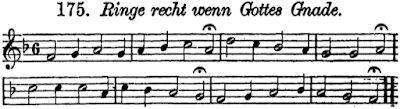


SIMPLE mind, thou holy splendor,
Deepest wisdom, greatest might,
Fairest jewèl, love’s defender,
Wisest valor in the fight!

2 Freedom is by chains surrounded,
Riches are but wind and dust.
Beauty is at last confounded,
If we have not simple trust.

3 When simplicity we cherish,
Then the soul is full of light:
But that view away doth perish,
Soon as double grows our sight.

4 With this gift a man is blessèd,
For he looks but to the Lamb;
Double minds will be disgracèd,
For they live in lightless flame.

5 True simplicity thinks solely
Of the One who hath all might,
And to Him adhereth wholly
As the Magnet infinite.

6 True simplicity outfloweth
From the Savior’s wounds and blood;
He who never thither goeth
Far remaineth from that good.

*7 If we know our Jesus rightly,
Who the Curse for us became,
And our love to Him burns brightly—
This simplicity we name.

8 Who before his eyes the Savior
Still as crucified doth see,
In His life-blood living ever—
He has true simplicity.

9 Who in Jesus finds all savor,
Who to Jesus looks alone,
Who doth Jesus’ quickning favor,
Who prefers His voice’s tone;

10 Who like some poor dog and lowly,
Laps the blood His wounds have shed,
Who within His bosom holy
As an infant makes his bed;

11 Who His pleasure only chooseth,
Who but what He bids, can do,
Who but what He giveth, useth,
Whose life all from Him doth flow;

12 Who on His path only moveth,
And sees only by His light;
Who grace! grace! alone approveth
From all else estrangèd quite;

13 Who so deeply doth adore Him
That his own self he forgets;
Who is troubled only for Him,
And whom only He elates;

14 Who alone by Jesus holdeth,
And in Him doth all possess:
On the Rock alone he buildeth,
Walks the path of simpleness.

15 Blood-bought church! shall I declare it,
What for thee my thoughts desire?
Ever fly on grace’s chariot,
Which is borne by wheels of fire.

16 Let the Savior still be driving,
He knows every passage well,
Knows when harder to be striving,
And when softer to compel.

17 Over stone and hillock goes it?
Sit but still, th’ event ne’er doubt;
Help Him not, alone He does it,
Thou in faith may’st look about.

18 Let thy mind not be too stirrèd;
Eat and drink, and love and rest!
Why should any child be worried;
Close thine eyes! His way is best.

19 Let Him work, for He will tend it
So that thou wilt be amazed;
Leave thy case to Him, to mend it,
As thy Prince forever praised.

Translation sts. 3, 5, 7–10, 16, 18–19 © 2023 Matthew Carver.
Alterations © 2023 Matthew Carver.


12-Stanza Version (Ev.-Luth. Gsb #500):
 

SIMPLE mind, thou holy splendor,
Deepest wisdom, greatest might,
Fairest jewèl, love’s defender,
Wisest valor in the fight!

2 Freedom is by chains surrounded,
Riches are but wind and dust.
Beauty is at last confounded,
If we have not simple trust.

3 When simplicity we cherish,
Then the soul is full of light:
But that view away doth perish,
Soon as double grows our sight.

4 (4v) Born of grace, this gift amazing
Bright with Christian valor burns,
On the narrow pathway gazing,
And no other way discerns.

5 True simplicity thinks solely
Of the One who hath all might,
And to Him adhereth wholly
As the Magnet infinite.

6 True simplicity outfloweth
From the Savior’s wounds and blood;
He who never thither goeth
Far remaineth from that good.

7 (9) Who in Jesus finds all savor,
Who to Jesus looks alone,
Who doth Jesus’ quickning favor,
Who prefers His voice’s tone;

8 (11v) Who but what He giveth, useth,
Whose life all from Him doth flow,
Who His pleasure only chooseth,
Who but what He bids, can do;

9 (12) Who on His path only moveth,
And sees only by His light;
Who grace! grace! alone approveth
From all else estrangèd quite;

10 (13) Who so deeply doth adore Him
That his own self he forgets;
Who is troubled only for Him,
And whom only He elates;

11 (14) Who alone by Jesus holdeth,
And in Him doth all possess:
On the Rock alone he buildeth,
Walks the path of simpleness.

12 (19v) He who is by Christ directed,
Trusting the good Shepherd’s care,
He is graciously protected,
And no danger needs to fear.


Translation sts. 3, 4v, 5, 7–10, 16, 18–19 © 2023 Matthew Carver.
Alterations © 2023 Matthew Carver.


Moravian Hymn-Book 1809.

3v When simplicity we cherish,
Then the soul is full of light:
But that light will quickly vanish,
When of Jesus we lose sight.

11 He who naught but Christ desireth,
He whom nothing else can cheer
But the joy which He inspireth,
Lending to His voice an ear;

13 Who sincerely loveth Jesus
And upon His grace depends;
Who but willeth what Him pleases,
Simply foll’wing His commands;

9? Who to Jesus humbly cleaveth,
Pays obedience to His Word,
Yea, in closest union liveth
With our Savior, Head, and Lord,

14 Who in Jesus Christ abideth,
And from self-dependence free
In naught else but Him confideth:
Walks in true simplicity.

19v He who is by Christ directed,
Trusting the good Shepherd’s care,
He is graciously protected,
And no danger needs to fear

Moravian Hymn-Book 1754.
1 Simple mind, thou grace’s wonder`
Deepest wisdom, greatest might,
Fairest jewel, love’s defender,
Most successful Christian fight!

2 Liberty does walk in fetters,
Riches are but empty wind,
Beauty has some ugly features,
If we’re not of simple mind.

3 When simplicity we cherish,
We’ve a whole and perfect light;
But that view away will vanish,
Soon as double grows our sight.

4 With this gift, a man is blessèd,
He looks only at the Lamb;
But without it, still diseasèd,
For one stands in some dark flame.

6 True simplicity, whence comes it?
From the wounds and blood divine.
Vainly anyone assumes it,
Who ne’er learn it at that Shrine.

8 ’Fore whose eyes the Lamb’s dear figure
Still as crucified doth stand,
Who in blood lives altogether;
He right holiness has gained.

9 To whom welcome taste presenteth
Naught, if Jesus be not there;
Whom naught out of Him contenteth,
Who has but for Him an ear;

10 Who to His red wounds for pasture,
As a hungry insect flies;
Who like a weak child for nurture,
Hid in His dear bosom lies;

11 Who but willeth what Him pleases,
Who but what He bids, can do,
Who but what He giveth, uses,
Whose life all from Him does flow;

12 Who on His path only moveth,
And sees only by His light;
Who grace! grace! alone approveth
From all else estrangèd quite;

13 Who’s so struck with His love’s arrows,
That his own self he forgets;
Who about Him only sorrows,
And but He his joy creates;

14 Who alone by Jesus holdeth,
And in Him does all possess:
He it is, who on Him buildeth,
He walks too in holiness.

15 Blood-bought church! shall I declare it,
What for thee my thoughts desire?
Ever fly on grace’s chariot,
Which is borne by wheels of fire.

16 Of the reins let Him be holder,
He can well the way contrive;
He knows when He swift and bolder
And when softly He shall drive.

17 Over stone and hillock goes it?
Sit but still, th’ event ne’er doubt;
Help Him not, alone He does it,
Thou in faith may’st look about.

19 Let Him work, in the conclusion
Thou wilt be astonishèd;
Jesus thy affairs will think on,
As thy ever-loving Head.

GERMAN
Heilge Einfalt! Gnadenwunder!
tiefste Weisheit! größte Kraft!
schönste Zierde! Liebeszunder!
Werk, das Gott alleine schafft! [allerklügste Ritterschaft]

2 Alle Freiheit geht in Banden,
aller Reichtum ist nur Wind;
alle Schönheit wird zu Schanden,
wenn wir ohne Einfalt sind.

3 Wenn wir in der Einfalt stehen,
ist es in der Seele licht;
aber wenn wir doppelt sehen,
so vergeht uns das Gesicht.

4 Einfalt ist ein Kind der Gnade, [Bei der Einfalt ist man selig]
eine kluge Ritterschaft, [denn man siehet nur aufs Lamm]
die auf ihrem schmalen Pfade [ohne Einfalt ist man schmählig]
nicht nach dem und jenem gafft. [denn man steht in finstrer Flamm].

5 Einfalt denkt nur auf das Eine,
in dem alles Andre steht;
Einfalt hängt sich ganz alleine […hänget sich alleine]
an den ewigen Magnet.

6 Einfalt quillt aus Jesu Wunden,
mit dem theuren Gottesblut;
wer sie da nicht hat gefunden,
der ist fern von diesem Gut.

*7 Wenn wir Jesum recht erkennen
unser liebs Anathema,
und so gegen ihn entbrennen,
so ist auch die Einfalt da.

*8 Wenn er so vor Augen schwebet,
wie er aufgehänget ward;
wer in seinem Blut so lebet,
der hat rechte Einfaltsart.

9 Wem sonst nichts als Jesus schmecket,
wer allein auf Jesum blickt; [wem nur Jesus lieblich riecht]
wessen Ohr nur Jesus wecket;
wen nichts außer ihm erquickt: […vergnügt.]

*10 Wer als wie ein armes Hündlein
seine blutge Wunden leckt;
wer sich als ein kleines Kindlein
in den Liebesschoß versteckt;

11 Wer nur hat, was Jesus giebet; […will was dem beliebet]
wer nur lebt aus seiner Füll; […kann was Jesus will]
wer nur will, was ihm beliebet; […hat was Jesus giebet]
wer nur kann, was Jesus will; […lebt aus seiner Füll;]

12 Wer nur geht auf seinem Pfade;
wer nur sieht bei seinem Licht;
wer nur stets verlangt nach Gnade, [wer nur schreit als Gnade!…]
und mag alles Andre nicht.

13 Wer ihn so mit Inbrunst liebet, […sich so in ihn verliebet,]
daß er seiner selbst vergißt;
wer sich nur um ihn betrübet,
und in ihm nur fröhlich ist;

14 Wer allein auf Jesum trauet,
wer in Jesu Alles findt; […hat]
der ist auf den Fels erbauet,
und ein seligs Gnadenkind. [und geht auf der Einfalt Pfad.]

*15 Blutgemeine soll ich sagen?
was dir meine Seele gönnt:
fahre auf dem Gnadenwagen
der mit Feuerrädern rennt.

*16 Laß den Heiland Furhmann bleiben,
er kennt alle Wege wohl,
er weiß wenn er stark soll treiben,
wenn er sachte gehen soll.

*17 Geht es über Stock und Steine,
sitz nur still, es wird schon gehn.
Hilf ihm nicht, er machts alleine;
doch du magst wohl um dich sehn.

*18 Leg dich nicht zu sehr aufs Denken!
Iß und trink, und lieb und ruh!
was soll sich ein Kindlein kränken?
Thue deine Augen zu!

19 Wohl dem, der den Herrn läßt machen, [Laß ihn machen, er wirds…]
wohl ihm, der Herr ist sein Hirt! [daß du dich verwundern wirst.]
Jesus wartet seiner Sachen, [Jesu warte ihrer Sachen]
daß man sich verwundern wird. [als ihr wohlgewogner Fürst!]

09 February 2023

O süßer Stand, o selig Leben (alt. & suppl.)

Here is my supplement to and alteration of the Moravian translation, “O Sweet Condition, Happy Living” (later: “O Blest Condition…”), of the hymn “O süßer Stand, o selig Leben” (Johann Joseph Winckler, d. 1722), Ev.-Luth. Gsb #499. Julian says that the 1754 omits stanza 3; rather, st. 4 is omitted, which I provide here. The 1789 version in the 1809 hymnal has further dropped stanza 3 and 5 and combined stanzas 7 and 8, and what is left is generally less faithful and only slightly more singable. The appointed melody in the Wisc. hymnal is “Die Tugend wird durchs Kreuz geübet.” (also used, e.g., with the hymn “Ich bin im Himmel angeschrieben’).


O SWEET estate, O blessèd living,
That flows from true simplicity,
When hearts, to God devoutly given,
Christ’s thinking filleth utterly;
The spirit in Christ’s image walketh,
And is upraised in light and right,
And under this pure Buckler breaketh
And pulls down every cheating height.

2 What by the world is fair esteemèd,
Such hearts disdain as childish stuff;
What is by others harmless deemèd,
For all such hearts is far too rough:
And why? We must with joys terrestrial
And things unclean not idly play;
None can obtain the Prize celestial
Unless all else be cast away.

3 The dainties of the heav’nly Lover
Unto His bride sweet pleasure give,
Her head and heart she watches over:
And if aught else to her would cleave,
Which of the worldly spices favors,
It fills her heart with hellish pain;
But she to live in God endeavors,
And therefore shakes herself quite clean.

4 The soul from worldly aggravation
Is kept by Christ’s simplicity
In Horeb’s cave, her gloomy station
She seeks her God and shelt’ring lee.
When hypocrites, this world’s adherents,
In pleasures vain and idle life
Act pompously, with fair appearance,
’Tis then she feels how hard and strife.

5 Simplicity admits no glory,
But that which lies in Jesus’ blood.
All folly false and transitory
Is by the heav’nly thirst subdued.
In God’s unspotted child, the splendor
Of God’s own name shines wondrously;
How should His child again surrender
To winds of worldly vanity?

6 Of cares and manifold distresses
With which the world is taken so—
Of envy, which the crowd possesses—
Simplicity doth nothing know
Within her heart she keeps her treasure
Against a world of envious spite;
If someone longs to share her pleasure,
It fills her heart with all delight.

7 A heart that doth th’ adornment carry
Of Christ’s simplicity, how bright!
Ye foolish virgins, ye may tarry
Till overtaken by the night:
What can your precious lamps avail you,
Without the oil and mind of Christ!
Fetch for your soul what will not fail you,
And leave the world its trifles prized!

8 Imprint, O Jesus, my Salvation!
Thy single mind into my heart:
Root out the world’s infatuation
Though it a thousand stings impart;
The ancient dragon’s token, scornèd,
I wear no longer; let me now
With true simplicity adornèd,
A creature new, before Thee bow.

Translation stanza 4 © 2023 Matthew Carver.
Alterations in sts. 1–3, 5–8 © 2023 Matthew Carver.


Moravian Hymn-Book 1754:

O sweet condition, happy living,
Which flows from true simplicity!
When hearts unto God so are given,
That Christ’s mind fills them reàlly.
The spirit in Christ’s Image walketh,
And doth rise up in truth an dlight,
And under this pure Shield he breaketh
And pulls odwn all conceited height.

2 The things which others are esteeming,
By such are loathèd with disdain;
What others innocent are deeming,
Gives to such hearts a jealous pain:
And why? Because all things terrestrial,
All things impure are bitter gall:
One can’t obtain the Prize celestial,
Unless one bid farewell to all.

4 The dainties of the heav’nly Lover
Unto His bride full pleasure give,
Her Head and Heart she watches over:
And if aught else to her would cleave,
Which of the worldly spices favors,
It fills her heart with hellish pain;
But she to live in God endeavors,
And therefore shakes herself quite clean.

5 Simplicity knows of no glory,
But that, which is in Jesus’ blood.
The foolish honor transitory
Is by the heav’nly thirst subdued.
In a pure child of God, the splendor
Of God’s name is distinctly seen;
How then should it again surrender
To trash and foolishness terrene?

6 Of cares and manifold distresses
Which are the worldlings’ daily cant,
Of envy, which so many teazes,
Simplicity is ignorant:
She keeps her excellent heart-treasure,
Maugre black envy’s sullen spite;
And if some one would share her pleasure,
She does not grudge, ’tis her delight.

7 A heart that does a likeness carry
Of Christ’s simplicity, how bright!
Ye foolish virgins, you may tarry
Till overtaken by the night:
Lamps without oil and Christ’s mind single,
What do they profit? Then be wise,
And Christ and world no longer mingle,
But from your heart the world despise.

8 Imprint, O Jesus, my Salvation!
Thy single mind into my heart:
Root out the world’s infatuation
Though it be done with sharpest smart;
Th’ old dragon’s image I have scornèd,
I wear it not more; now let me,
With true simplicity adornèd,
As a new crature, live to Thee.


Moravian Hymn-Book 1809.
1 O Blest condition, happy living,
Which true simplicity imparts,
When we to God are wholly given,
And Jesus’ mind rules in our hearts!
This every vain imagination
Casts down, and us subjects to grace.
It shows the ground of our salvation
To be Christ’s blood and righteousness.

2 That which is by the world esteemèd,
A single mind counts vanity;
What’s innocent by others deemèd,
Is shunned by true simplicity:
Because the love to things terrestrial
We must deny through Jesus’ grace,
And, to obtain the prize celestial,
Cast of whate’er impedes our race.

6 The simple heart no care perplexeth
That robs the world of all content;
Of envy, which so many vexeth,
Simplicity is ignorant;
And carefully preserves its treasure,
Unruffled by the worldling’s spite;
If others ask to share this pleasure,
Simplicity tastes true delight.

7/8 O Jesus, God of my salvation,
Thy single mind to me impart;
Root out the world’s infatuation,
Though it be done with keenest smart:
Thrice happy they, who tread unwearied
The path of true simplicity;
They as wise virgins are preparèd
To meet the Bridegroom cheerfully.


GERMAN
O süßer Stand, o selig Leben,
das aus der wahren Einfalt quillt,
wenn sich ein Herz Gott so ergeben,
daß Christi Sinn es ganz erfüllt;
wenn sich der Geist, nach Christi Bilde,
in Licht und Recht hat aufgericht,
und unter solchem klaren Schilde
durch alle falsche Höhen bricht.

2 Was andern schön und lieblich scheinet,
ist solchem Herzen Kinderspiel;
was mancher für unschuldig meinet,
Ist solchem Herzen schon zu viel.
Warum? Es gilt der Welt absagen,
hier heißts: rührt kein Unreines an;
das Kleinod läßt sich nicht erjagen,
es sei denn Alles abgethan.

3 Die Himmelskost schmeckt viel zu süsse
dem Herzen, das in Jesu lebt.
die Braut bewahrt Haupt, Herz und Füße;
und wo ihr etwas noch anklebt,
das zu dem Glanz der Welt gehöret,
das ist ihr lauter Höllenpein,
und wo sie recht in Gott einkehret,
da macht sie sich von Allem rein.

4 Die Einfalt Christi schleißt die Seele
vor allem Weltgetümmel zu;
da sucht sie in der dunkeln Höhle,
in Horeb, Gott Und ihre Ruh;
wenn sich das Heuchelvolk in Lüsten
der Welt und ihrer Eitelkeit,
auch wohl bei gutem Schein will brüsten,
fühlt jene Kampf und harten Streit.

5 Die Einfalt weiß von keiner Zierde,
als die im Blute Christi liegt;
die reine Himmlische Begierde
hat solche Thorheit schon besiegt;
an einem reinen Gotteskinde
glänzt Gottes Name schön und rein;
wie könnt es denn vom eitlen Winde
der Welt noch eingenommen sein?

6 Von Sorgen, Noth und allen Plagen,
damit die Welt sich selbst anficht,
vom Neid, damit sich andre tragen,
weiß Christi Sinn und Einfalt nicht,
den Schatz den sie im Herzen heget,
behält sie wider allen Neid;
ist Jemand der Lust dazu träget,
das macht ihr lauter Herzensfreud.

7 O schönes Bild, ein Herz zu schauen,
das sich mit Christi Einfalt schmückt!
Geht hin, ihr thörichten Jungfrauen,
harrt nur bis euch die Nacht berückt.
Was sind die Lampen sonder Oele?
Schein ohn Einfalt und Christi Sinn.
Sucht doch was Bessers für die Seele,
und gebt der Welt das Ihre hin.

8 Ach Jesu, drücke meinem Herzen
den Sinn der lantern Einfalt ein:
reiß aus, obschon mit tausend Schmerzen,
der Welt ihr Wesen, Tand und Schein;
des alten Drachen Bild und Zeichen
trag ich nicht mehr, drum laß mich nur
der Einfalt Zier und Schmuck erreichen,
das ist die neue Creatur.

08 February 2023

Ach, wenn ich dich, mein Gott, nur habe

Here is my translation of the hymn, “Ach, wenn ich dich, mein Gott, nur habe” (Benjamin Schmolck, d. 1737), on love for God, based on Psalm 73:25–26 (cf. “Lord, Thee I Love with All My Heart”), from Ev.-Luth. Gsb #497, with a variant first line, which perhaps explains the lack of ascription here. This variant is found perhaps first in the Hanover Gsb 1759, though with a 2nd variant in st. 2, l. 4, noted below. Other hymnals published in North America have the original form, though heavily revised throughout the rest, as seen from the German below, where the square brackets generally show the original form. It first appears in the author’s Heilige Flammen (Striegau, 1704) entitled “Divine Comfort of the Heart” (Herzenstrost in Luther, in the AV: “strength of heart”). A translation is listed in Julian, Hymnol., viz., “My God, if I possess but Thee” by Rev. Moultrie, 1870, which is not in the original meter, using three couplets 88.88.88. For my translation, I have followed the revised text (which departs mostly superficially from the original, i.e., for the sake of euphony) but offer some alternative lines where called for by the distinctness of the original. The appointed melody for Schmolck’s hymn is “Wer nur den lieben Gott läßt walten.”


MY God, oh, may I have Thee only,
Then heav’n and earth I reckon slight;
Thou only canst refresh me wholly,
My God, my Comfort and my Light.
The world may boast in vanity—
I know no comfort else but Thee.

2 Though this my flesh and soul be failing,
Yet boldly will I hope in Thee.
What are to me all ills assailing?
For Thou alone dost quicken me,
Though all creation ’gainst me rise,
I love Thee! There the matter lies.

3 With Thee alone I have whatever
The soul could ask for or desire,
With Thee, misfortunes frighten never,
Thy love o’ercomes all dangers dire:
Thou art my Portion, saith my heart,
My soul’s salvation, Lord, Thou art.

Translation © 2023 Matthew Carver.

GERMAN

Mein Gott! ach wenn ich dich nur habe, [Ach, wenn ich dich, mein Gott,…]
frag ich nach Erd und Himmel nicht: [nach Erd und Himmel frag ich…]
dieweil ich mich an dir nur labe, [Nichts ist, was meine Seele…]
der du mein Gott, mein Trost und Licht. [also du…]
mein Herz, dem sonst kein Trost bewußt, [Rühmt sich die Welt mit ihrer Lust,]
sucht dich, und lacht der eitlen Lust. [ohn dich ist mir kein Trost bewußt.]

2 Sollt mir auch Leib und Seel verschmachten, [Soll Leib und Seele mir…]
so hoff ich doch getrost auf dich. [ich hoffe…]
Was werd ich alle Plagen achten? [nichts will ich alle Plage…]
denn du, mein Gott, erquickest mich, [an dir allein erquick ich…] Han. Gsb:[[denn bloß an dir…]
Erhebt sich Alles wider mich, [Regt sich auch…]
ich bleib an dir und liebe dich. [es bleibt darbei,…]

3 Hab ich nur dich, so hab ich Alles,
was meine Seele wünschen kann;
mit dir fürcht ich mich keines Falles: [auch fürcht ich mich gar…]
denn liebst du mich, was ficht mich an? [liebst du mich nur,…]
Ich glaub und weiß, du bist mein Theil, [Drum sprich mein Herz…]
mein Herzenstrost, der Seelen Heil. [in dir ist meiner…]

07 February 2023

Mein Gott! weil ich in meinem Leben

Here is my translation of the Christian Life hymn, “Mein Gott! weil ich in meinem Leben” (Benjamin Schmolck, d. 1737), Ev.-Luth. Gsb #496, originally, as Fischer says, in the author’s collection Klage und Reigen (1734) among the hymns on the virtues of the First Table, on the First Commandment: “For True Fear of God.” Variants eventually appeared with such titles as “Dich Höchster ehrerbietig,” “Vor dir o Gott sich kindlich scheuen.” The appointed melody is “Wer nur den lieben Gott läßt walten.”


MY God, since I in life should hold Thee
Unceasingly before my face,
Give me a heart that will enfold Thee
With fear and love, that twin embrace;
For if our Christian faith shall stand,
These two must join us hand in hand.

2 Make fear of Thee the due beginning
Of wisdom in my thoughts and deeds,
My footstep to that pathway winning
That never errs nor wayward leads;
For he that fears Thy pow’r and wrath
Forsakes as well the foolish path.

3 Lord, in the Spirit to me given
The Spirit of Thy fear was gained;
Grant me, by this same Spirit driven,
To learn Thy fear in faith unfeigned;
Yet fear must also childlike be,
That it may “Abba” cry in me.

4 Oh, let my heart remember meetly
That Thou art everywhere with me,
And let me blush and shun completely
What is detestable to Thee.
Yea, let Thy fear be my defense,
Lest ever I offend Thee hence.

5 Oh, let Thy wrath cause me to quiver,
Work true repentance in my heart,
Let me live in Thy fear forever,
Nor from Thy grace be drawn apart—
That grace that oft amid my sin
By patience hath my guardian been.

6 Sustain in me a conscience holy,
That ne’er to world nor devil cedes,
Restrain my flesh that struggles dully,
And every hindrance that impedes;
Lest fear of men should me dismay
Or heart recoil before the fray.

7 Grant that Thy fear may keep me humble,
And as I walk, my polestar be,
That I may ne’er in darkness stumble
In pretense and hypocrisy;
For Thou dost see the heart aright,
Nothing is hidden from Thy sight.

8 Oh, let me fear no tribulation!
Through cross and all adversity,
True fear of God finds vindication,
And in due course our crown shall be;
Give me therefore a dauntless mind
With godly fear and hope combined.

9 Grant me to work out my salvation
With fear and trembling constantly!
Ne’er give Thy Spirit provocation
By self-will or security,
But paint before me hellish woe,
That I may not let heaven go.

10 In fear to Thee I’ll yield my spirit
And tremble not at death or grave,
The promise then I will inherit
Which in Thy Word Thy mercy gave.
In fear of God the blessing lies,
A glorious crown shall be its prize.

Translation © 2023 Matthew Carver.

GERMAN
Mein Gott! weil ich in meinem Leben
dich stets vor Augen haben soll,
so wollst du mir ein Herze geben,
das deiner Furcht und Liebe voll;
denn beides muß beisammen gehn,
soll unser Christenthum bestehn.

2 Laß deine Furcht bei Thun und Denken
den Anfang aller Weisheit sein
und mich auf solche Wege lenken,
die alles Irrthums mich befrein;
denn wer dich fürchtet in der That,
der meidet auch der Thorheit Pfad.

3 Der Geist, den du mir hast gegeben,
ist ja ein Geist der Furcht des Herrn;
laß mich mach seinem Triebe leben,
daß ich dich herzlich fürchten lern;
doch muß die Furcht auch kindlich sein,
soll er in mir das Abba! schrein.

4 Gieb, daß ich stets zu Herzen nehme,
daß du allgegenwärtig bist,
und das zu thun, mich hüt und schäme,
was, Herr! vor dir ein Gräuel ist;
ja deine Furcht bewahre mich
vor allen Sünden wider dich.

5 Laß mich vor deinem Zorn erbeben,
und wirke wahre Buß in mir;
laß immerdar in Furcht mich leben,
daß ich die Gnade nicht verlier,
die meiner in der Missethat
mit Langmuth oft verschonet hat.

6 Erhalt in mir ein gut Gewissen,
das weder Welt noch Teufel scheut,
und wehre allen Hindernissen
und meines Fleisches Blödigkeit,
das keine Menschenfurcht mich schreck
und ein verzagtes Herz entdeck.

7 Hilf, daß ich immer also wandle,
das deine Furcht mein Leitstern sei,
daß ich auch nie im Finstern handle,
in bloßem Schein und Heuchelei;
du stehst ja in das Herz hinein,
nichts kann vor dir verborgen sein.

8 Ach, laß mich keine Trübsal scheuen;
durch Kreuz und Widerwärtigkeit
muß wahre Gottesfurcht gedeihen,
die krönet uns zu rechter Zeit;
drum gieb mir einen tapfern Sinn,
wenn ich in Furcht und Hoffnung bin.

9 Ach, gieb mir stets mit Furcht und Zittern
zu schaffen meine Seligkeit!
Laß nie mich deinen Geist erbittern
durch Eigensinn und Sicherheit,
und stelle mir die Hölle Für,
daß ich den Himmel nicht verlier.

10 In deiner Furcht laß mich auch sterben,
so fürcht ich weder Tod noch Grabe;
da werd ich die Verheißung erben,
die mir dein Wort aus Gnaden gab.
Die Gottesfurcht bringt Segen ein,
ihr Lohn wird eine Krone sein.

06 February 2023

Ich danke dir, mein Gott! / daß du mir hast gegeben

Here is my translation of the Christian Life hymn “Ich danke dir, mein Gott! / daß du mir hast gegeben” (Johann Olearius, d. 1684 / Anon., ?1714) in both forms: the original in 6 stanzas by Johann Olearius from 1676, and the revised hybrid form from Freylinghausen 1714 consisting of stanzas 1–3 of the original, altered to eliminate the references to the Sabbath (Sunday), and with three additional stanzas of general content without ascription (perhaps Freylinghausen himself). In the Ev.-Luth. Gsb #494, the revised first stanza is included from Freylinghausen but stanzas 4–6 of either version are omitted. Here, it is categorized under the subsection “Individual Christian Duties.” The earlier version specifies the melody “Nun danket all,” while the Freylinghausen form appoints: “O Gott, du frommer Gott.”

“SABBATH HYMN” FORM


I THANK Thee, O my God,
For mercifully giving
The Sabbath, that I may
Here praise Thee by my living;
Oh, rule my heart as well,
Assist me all the day,
Advice and action lend
In all that I assay.

2 May all my plans, O Lord,
See what Thine eyes are viewing,
Which see all that I do
And what I should be doing.
Grant that my every thought
May on this scale be weighed:
“God sees, attends, reproves;
Thou canst not Him evade.”

3 Teach me in all affairs
To ponder well and rightly:
Would that which I would do
Be to the world unsightly?
Would it be right and just
Though seen by no man’s eye?
Yea, is it always right
Before thy God most High?

[4 Keep soul and body safe
From all of sin’s afflictions,
Let not my conscience gnaw
My heart with dread convictions;
Be Thou my Shield of might,
My Jesus, with me stay,
Oh, nevermore depart!
Keep me in Thee for aye!

5 Let me be purged of pride,
By humbleness constrainèd;
Let not this virtuous crown
Be ever lost or stainèd.
Those who love Thee the world
Will punish and deplore,
But Thou wilt know Thine own,
And lift them up e’ermore.

6 When misery is o’er,
When torments now offending
Shall cease at last, and fear
And trembling meet their ending,
Then will I be refreshed
In yonder Sabbath-day.
Oh, hear me now, my God,
And gladden me for aye!]

Translation © 2023 Matthew Carver.


LATER, GENERIC FORM


I THANK Thee, O my God,
For mercifully giving
To me a mind that longs
To praise Thee by my living;
Oh, rule my heart as well,
Assist me all the day,
Advice and action lend
In all that I assay.

2 May all my plans, O Lord,
See what Thine eyes are viewing,
Which see all that I do
And what I should be doing.
Grant that my every thought
May on this scale be weighed:
“God sees, attends, reproves;
Thou canst not Him evade.”

3 Teach me in all affairs
To ponder well and rightly:
Would that which I would do
Be to the world unsightly?
Would it be right and just
Though seen by no man’s eye?
Yea, is it always right
Before thy God most High?

4 Oh, guide me, Thou my God,
And grant by Thy bestowing
That I may take no step
But where Thou too art going;
For if I guide myself,
My death is all too clear,
But if Thou lead me, Lord,
Then there is naught to fear.

5 Let me forsake myself,
And my imagination,
And seek none else but Thee—
Far better then my station!
For if I sought myself
And did not on Thee call,
I certainly would fail
To find myself at all.

6 Let not Thy precious grace
Be vainly to me given,
But fill me with the pow’rs
Of Thy own life from heaven,
That so my soul may lift
Thy name eternally,
And I may dwell and move
And live e’en now in Thee.

Translation © 2023 Matthew Carver.

GERMAN
Ich danke dir, mein Gott!
daß du mir hast gegeben
den Sinn, der gerne will [den Sabbat, daß ich dir]
dir hier zu Ehren leben; [kann hier…]
regier nun auch mein Herz, [regiere du…]
steh bei mir früh und spat,
in allem meinem Thun
gieb selber Rath und That.

2 Laß mein Vorhaben stets
auf deine Augen sehen,
die Alles sehen, was
ich thu, was soll geschehen;
laß die Gedanken stets
auf dieser Probe stehn:
Gott siehts,Gott hörts, Gott straft,
du kannst ihm nicht entgehn.

3 Lehr mich bedenken wohl
in allen meinen Sachen:
ists denn auch recht, wenn ichs
der Welt gleich wollte machen?
Ists denn auch recht, obgleich
die Menschen sehens nicht?
Ists recht vor Gott? Ists recht
vor seinem Angesicht?

*4 Behüte Leib und Seel
vor allen Sündenplagen,
laß mein Gewissen nicht
mich selbst erschrecklich nagen,
sei du mein starker Schutz,
mein Jesus, bleib bei mir,
ach! weiche nimmermehr,
erhalt mich stets bei Dir!

*5 Treib allen Hochmut aus,
laß Demut mich regieren,
laß diesen Ehrenschmuck
mich nimmermehr verlieren:
Welt bleibt doch Welt; die Welt
drückt, haßt die lieben dich:
du kennst die Deinen du
erhöhst sie ewiglich.

*6 Wann dieses Elend aus,
wann alle Angst und Plagen,
wann alle Sorgen aus,
samt aller Furcht und Zagen;
so folgt der Sabbat dort,
der wird erquicken mich:
erhöre mich, mein Gott,
erfreu mich ewiglich.

Freylinghausenische Strophen:

*4 Ach führe mich, mein Gott,
und laß ja nicht geschehn,
daß ich auch einen Schritt
nur ohne dich sollt gehen;
denn wo ich selbst mich führ,
so stürz ich mich in Tod,
führst du mich aber, Herr!
so hat es keine Noth.

*5 Laß mich verlassen mich
und von mir selbst entwinden,
nicht suchen mich, nur dich,
so werd ich mich doch finden
an einem bessern Ort;
sucht ich mich ohne dich,
so würd ich doch gewiß
niemals recht finden mich.

*6 Laß deine Gnad an mir
doch ja nicht sein vergebens,
erfülle mich vielmehr
mit Kräften deines Lebens,
sodaß dich meine Seel
in Ewigkeit erhöh
und ich schon jetzt in dir
geh, sitze, lieg und steh.

05 February 2023

Kommt ihr Menschen, laßt euch lehren

Here is my translation of the Christian wisdom hymn “Kommt ihr Menschen, laßt euch lehren” (Johann Anastasius Freylinghausen, d. 1739), from Ev.-Luth. Gsb #439, first appearing in the author’s famous hymnal of 1714 without ascription. The authorship, says Fischer, is attested in the posthumous edition of his hymnal (1741). It is a companion hymn to Johann Heermann’s “Kommt ihr Christen kommt und höret” and more so, to David Denicke’s reworking, “Kommt laß euch den Herren lehren, / kommt und lernet allzumall,” yet only formally. Only the beginning and closing stanzas contain echoes of the older hymn. Neither does Freylinghausen deal with the “blesseds” like his predecessors, from the Sermon on the Mount of Matthew 5, but rather presents the marks of Christian wisdom in free manner Instead of Hermann’s stanzaic incipits “Selig sind…” we find here the repeated incipit “Weise sind…” Thus far Fischer. A couple variants are noted, where the reviser unwisely repeated the “erwählen” used earlier and brought it to my attention. The appointed melody is “Freu dich sehr, o meine Seele.”


PEOPLE, come, receive instruction!
To that number, one and all,
Gain hereby an introduction,
Which we wise and righteous call,
And deserve that all men find
Theirs a wise and prudent mind
Though reviled by the unholy,
As though all their deeds were folly.

2 Wise the ones their state perceiving,
How corrupt their heart and mind,
For their foolish nature grieving,
And detecting just how blind
Are their will and mind astray,
From their Maker turned away;
At their folly freely blushing,
Ever to confession rushing.

3 Wise the ones who by the Spirit
And His light th’ Anointed know,
Wisdom would in Him inherit,
And to bliss eternal go—
Who would gladly give up all
That this world doth wisdom call,
And its treasures lose forever,
Only to possess the Savior.

4 Wise the ones forever praying
For the Spirit, wisdom’s voice—
Never from His guidance straying,
Ever following His choice:
Those not by the Spirit taught
To perversion soon are brought,
Clever though their speech be sounding,
Matters spiritual propounding.

5 Wise the ones who have selected
Scripture as their beacon bright,
And thereby aright directed,
Well distinguish pow’r and sight.
Who will lightly them deceive
Who God’s Word refuse to leave,
And when passes this creation,
They abide without cessation?

6 Wise the ones who seek not after
What cannot forever stay,
Scorning fleeting lust and laughter,
Which to lengthy woe give way;
Who the world ne’er fondly hold,
Honor, pleasure, wealth, and gold,
And renounce it, since its treasure
Leads to grief in greater measure.

7 Wise the ones who hold the Savior
As their highest, greatest prize,
Nor about Him doubtful waver,
Where alone salvation lies.
Those who on Him set their sights,
Whom naught else but He delights.
Who but seek to do His pleasure—
They are wise, by God’s own measure.

8 Wise the ones who, unashamèd,
Are by love for Jesus led
To take up His cross defamèd,
Where they once affixed their Head.
Jesus’ cross doth purely shine,
Never dims its light divine:
Seekest thou the wise direction?
Hold the cross in all affection.

9 Wise the ones with Jesus faring
Filled with understanding here,
Fervent longing in them bearing
For their homeland true and dear,
Ever mindful of the goal—
Not to earth they stake their soul,
Like the crowds that call and beckon,
But themselves as pilgrims reckon.

10 Lord, whose wisdom we can never
In our weakness here achieve,
Of Thy wisdom but a sliver
Let me by Thy grace receive,
My own self to know aright,
And the Christ as Wisdom’s Light,
For His Spirit ever praying,
From His Word no moment straying.

11 With Thy wisdom all displacing,
May I vanities despise,
Jesus’ shame and cross embracing,
Numbering my days, as wise.
Father, help me, with Thy Son,
and the Spirit ever one,
That while here, Thy faithful student,
I become so wise and prudent.

Translation © 2023 Matthew Carver.

GERMAN
Kommt ihr Menschen, laßt euch lehren,
kommt und lernet allzumal,
welche die sind, die gehören
in der rechten Weisen Zahl,
und die billig Jedermann
als verständig siehet an;
ob gleich viele sie verletzen,
und ihr Thun für Thorheit schätzen.

2 Weise sind, die sich selbst kennen,
wie so gar verderbt sie sind;
die sich selber Thoren nennen,
und befinden, wie so blind
beides Wille und Verstand,
weil sie sich von Gott gewandt;
die sich ihrer Thorheit schämen
und zur Buße sich bequemen.

3 Weise sind, die Christum wissen
durch des Geistes Glaubenslicht;
die ihn als die Weisheit küssen,
der es nie an Licht gebricht;
die die Weisheit dieser Weit,
und was sonst die Welt und hält,
fahren lassen aus den Sinnen,
um nur Christum zu gewinnen.

4 Weise sind, die Gott stets flehen
um den Geist, der weise macht;
die nach dessen Leitung gehen,
und darauf stets haben Acht:
denn die Gottes Geist nicht lehrt,
bleiben thöricht und verkehrt,
ob sie gleich von Geistes Sachen
könne kluge Worte machen.

5 Weise sind, die sich erwählen
Gottes Wort zum Prüfestein,
damit sie, nicht mögen fehlen,
zu erkennen Kraft und Schein.
Wer will den betrügen leicht,
der von Gottes Wort nicht weicht,
das, wenn Alles auch vergehet,
ohn Aufhören doch bestehet?

6 Weise sind, die das nicht suchen,
was nicht ewig währen mag,
und die kurze Lust verfluchen,
die da bringt ein langes Ach;
die nicht lieben in der Welt
Ehre, Wollust, Gut und Geld,
sondern allem dem absagen,
weil es doch nur mehrt die Plagen.

7 Weise sind, die Gott erwählen, […ergreifen]
als ihr höchst und bestes Theil,
und sich nicht vergeblich quälen, […nicht lang um ihn herschweifen]
weil doch ohne Gott kein Heil.
Die sich ihm zum Zweck gesetzt,
die sonst nichts als er ergößt,
und ihm zu gefallen trachten;
die kann man recht weise achten.

8 Weise sind, die sich nicht schämen,
sondern deren Sinn sich lenkt,
Christi Kreuz auf sich zu nehmen,
den man selbst ans Kreuz gehenkt.
Christi Kreuz bringt lauter Licht,
das verdunkelt nimmer nicht:
wer recht weise denkt zu werden,
liebe Christi Kreuz auf Erden.

9 Weise sich, und voll Verstandes,
die, so lang sie wallen hier,
ihres rechten Vaterlandes
mit entzündeter Begier
sind und bleiben eingedenk,
und nicht mit der großen Meng
andrer sich hier feste setzen,
sondern sich als Pilgrim schätzen.

10 Herr, deß Weisheit zu erreichen,
keinem möglich hier auf Erd;
hilf, daΩs dieser Weisheit Zeichen
ich aus Gnaden fähig werd.
Gieb, daß ich mich selbst recht kenn,
Christum meine Weisheit nenn,
dich um seinen Geist stets flehe,
und vom Worte nie abgehe.

11 Daß ich alles Eitle hasse
und nur dich allein erwähl;
Christi Schmach und Kreuz auffasse,
und stets meine Tage zähl.
Vater hilf, sammt deinem Sohn
und dem Geist von deinem Thron,
daß ich möge hier auf Erden
doch so klug und weise werden.

04 February 2023

O himmlische Barmherzigkeit

Here is my translation of the hymn, “O himmlische Barmherzigkeit” (Laurentius Laurentii, d. 1730), a hymn on showing mercy to the needy, found in Ev.-Luth. Gsb #491 with 2 stanzas omitted, originally appearing in the author’s Evangelia Melodica (1700) for the 4th Sunday after Trinity (Romans 8:18–23 / Luke 6:36–42) with specification of melody: “Ach Gott vom Himmel sieh darein,” which fits quite well with the theme and many of the German lines. The choice was no doubt recommended by the tone of Luther’s hymn. The Wisconsin hymnal, like many others, appoints “Es ist gewisslich an der Zeit.”


O MERCY thou of heaven’s clime,
Commended by our Savior!—
What man is there who in our time
Is marked by such behavior,
And always showeth mercy here
Arising from a heart sincere,
Like God the heav’nly Father?

2 That God is merciful, men own
And many a mouth has stated,
But that His mercy thus made known
Should then be imitated—
To this are heart and ear shut tight,
Faith wavers like a willow slight—
Impossible, they think it.

3 God’s mercy surely is desired
By men while they are living,
Of mercy’s gift they grow not tired,
Yea, would be more receiving.
How seldom yet is mercy done
As God commands, by anyone
To any of his neighbors!

4 Ah, think how God most High to thee
Such mercy hath extended;
Then by His love convicted be,
And to His will amended,
Help to the needy to afford
Who members are of Christ the Lord;
Such is the will of Jesus.

5 Hereafter shall a judgment stern
The merciless be bearing,
Who here this failure well discern
And yet pass on uncaring;
Mere knowledge giveth no excuse
What God says must be put to use;
This is love’s very nature.

[6 How many rich men turn away
And chase from door and portal
The poor who by their porches stay
And cry to every mortal
Their sad laments, so that a stone
Would surely pity such a one,
Yet men refuse to hear them.]

7 Ah, let my heart with mercy teem,
Nor let my hand close proudly,
But kindly give, not only seem,
When souls are wailing loudly
In hunger and in poverty,
That, sharing of my bread with me,
O Christ, they may be gladdened!

8 With boundless mercy Thou dost burn
For me, a man so lowly;
So let my heart and hand in turn
In manner kind and holy
Distribute what is granted me,
That so the poor may nourished be,
And worship Thee, the Father.

[9 Though the world be merciless
And its heart shut tightly,
Yet let me Thy heart possess,
And give aid forthrightly;
Oh, let me like the Father be,
Who pours forth abundantly
Mercy, grace, and kindness!]

10 Yea, Father, grant me such a mind
That from Thy rich supplying
I may to others be inclined
And still the needy’s sighing;
Make me like Thine image true,
Gentle, kind, and loving, too:
Amen, I pray sincerely!

Translation © 2023 Matthew Carver.

GERMAN
O Himmlische Barmherzigkeit,
die Jesus uns anpreiset!
Ach, wer ist doch zu dieser Zeit,
der sie getreu erweiset;
der, gleichwie Gott der Vater ist,
barmherzig ist zu jeder Frist,
und das aus Herzensgrunde?

2 Daß Gott barmherzig, spricht der Mund,
und wer ist, ders nicht gläubet?
Allein, macht Gott dies also kund,
daß es zur Nachfolg treibet;
so ist verschlossen Herz und Ohr,
so wankt der Glaube wie ein Rohr,
weil mans unmöglich achtet.

3 Von Gott will man Barmherzigkeit
in seinem ganzen Leben;
ja, daß sie möge weit und breit
sich über uns erheben:
allein, soll man Barmherzigkeit
am Nächsten thun, wie Gott geheut,
so finden sich nur wenig.

4 Ach, denke, daß der Höchste dir
Barmherzigkeit erzeiget,
daß dich die Güte überführ
und du auch seist geneiget
zu geben dem, der dürftig ist
und doch ein Glied von Jesu Christ;
das ist des Herren Wille.

5 Es wird fürwahr ein schwer Gericht
dort über den ergehen,
der dieses hat erkannt im Licht
und läßt es nicht geschehen:
das Wissen das entschuldigt nicht,
man muß ausüben, was Gott spricht;
dies ist die rechte Liebe.

*6 Wie mancher Reicher stosset aus,
Und weist von Thür und Pforten,
Die Armen, die vor seinem Haus
Die Noth mit vielen Worten
Ausschütten, daß ein Felsenstein
Darüber sollt misleidig sein;
Allein man wills nicht hören.

7 Ach! laß mein Herz barmherzig sein
und nach Vermögen geben,
aus wahrer Liebe, nicht zum Schein,
wenn ihre Stimm erheben
die Armen in der Hungersnoth,
daß sie an meinem Stücklein Brod,
o Jesu, sich erfreuen.

8 Du giebst Barmherzigkeit ohn End
mir Armen auf der Erden;
so laß auch wieder Herz und Händ
mit freundlichen Geberden,
austheilen, was du mir beschert,
daß auch der Arme werd ernährt,
und dich, den Vater, preise.

*9 Ist unbarmherzig gleich die Welt,
Und hat ihr Herz verschlossen,
So laß mich thun, was dir gefällt,
Und helfen unverdrossen;
Laß mich dem Vater ähnlich sein,
Der überflüßig schenket ein
Barmherzigkeit und Güte.

10 Ja, Vater, gieb mir solchen Sinn,
daß ich von deinen Gaben,
die du mir giebst, geb andern bin,
die Dürftigen zu laben;
laß mich nach deinem Ebenbild
sein liebreich, gütig, sanft und mild;
dies bitt ich herzlich; Amen.


03 February 2023

Glaube, Liebe, Hoffnung sind

Here is my translation of the hymn “Glaube, Liebe, Hoffnung sind” (Benjamin Schmolck, d. 1737), in its revised form in Ev.-Luth. Gsb #488. A meditation (sts 1–4) and prayer (5–8) on 1 Corinthians 13:13 (hence suitable for Quinquagesima / Estomihi Sunday), it appears in its original form (indicated in square brackets below) in the author’s Bochim und Elim (1731) with the title “The Beautiful Clover-leaf.” It underwent slight alterations shortly after publication, which may or may not have come from the author’s manuscript, e.g., Hanover Gsb 1740, which already shows most of the below-noted revision (the Wisc. hymnal text) except that of the first line, while Gottschaldt 1737 still shows the original form; but perhaps out of respect for the author, since its preparation preceded his death. The appointed melody is “Liebster Jesu, wir sind hier.”


FAITH and love and hope, these three,
Are the Christian’s true adorning;
Sons of God seek constantly
To employ them, eve and morning;
Would we true devotion nourish,
Then this clover-leaf must flourish.

2 Faith is first to lay a stone
For the bedrock of salvation,
Set on Jesus Christ alone,
Troubled by no tribulation,
Holds with heart and mouth unbroken
What His Spirit once hath spoken.

3 Love must show the fruit of faith
Unto God and unto neighbor,
Yields to what the Master saith,
His at rest and His in labor;
In all suff’ring suffers never
Anything their bond to sever.

4 Hope doth love with courage fill
To o’ercome all life’s distresses,
As an anchor holds her still
When the flood of trials presses. […deepest flood op-]
Through the sadness yet awaiting [Knows that things to come will sweeten]
Gladness full and unabating. [Stings by which it now is beaten.]

5 Lord my God, this faith in me,
Safely keep and strengthen ever;
Put to shame the enemy,
Who to steal it doth endeavor;
Keep this feeble reed from breaking,
Let this glimm’ring wick be waking.

6 Make my love as pure as snow,
More than merely fine appearing;
May it from my heart outflow
By Thy Spirit’s pow’r inhering,
And, from genuine feeling driven,
To my neighbor too be given.

7 Ground my hope unshakingly,
Strength in time of trouble lending;
When the world forsaketh me,
When it seems my life is ending;
Keep my eyes on heaven steadied, [Keep its spyglass ever…]
Where th’ eternal prize is readied. [Where the future…]

8 Faith and hope, when cometh sight,
Cease at last, no longer needed;
Love, however, seeks the light
Whence at first it had proceeded.
There my love will need no mending,
There will love be never-ending.

Translation © 2023 Matthew Carver.

GERMAN
Glaube, Lieb und Hoffnung sind [Glaube, Liebe,…]
der wahrhafte Schmuck der christen; [Das Geschmeide wahrer…]
hiermit muß sich Gottes Kind [und mit dem muß…]
stets bestreben auszurüsten; [sich bemühen…]
wo man Gott will eifrig dienen,
da muß dieses Kleeblatt grünen.

2 Glaube legt den ersten Stein
zu des Heils bewährtem Grunde, […Heiles festen Grunde,]
sieht auf Jesum nur allein,
und bekennt mit Herz und Munde
sich zu seines Geistes Lehren,
läßt sich keine Trübsal stören.

3 Liebe muß des Glaubens Frucht
Gott und auch dem Nächsten zeigen,
unterwirft sich Christi Zucht
und giebt sich ihm ganz zu eigen,
lässet sich in allen Leiden […allem Leiden]
nicht von ihrem Jesu scheiden.

4 Hoffnung macht der Liebe Muth,
alle Noth zu überwinden. […überwinden,]
Sie kann in der Trübsalsfluth [und kann in der tiefsten Fluth]
ihren Anker fester gründen, [als ein fester Anker…]
sie erwartet nach dem Leide [was sie hier erdulden müssen,]
ewige vollkommne Freude. [muß das künftige versüssen.]

5 Jesu, du mein Herr und Gott, [Der du bist…]
ach, bewahr in mir den Glauben! […Glauben,]
Mache du den Feind zu Spott,
der dies Kleinod denkt zu rauben. [Der mir will das Kleinod…]
Laß das schwache Rohr nicht brechen
und mein glimmend Docht nicht schwächen. [und den kleinen…]

6 Mache meine Liebe rein,
daß sie nicht im Schein bestehe.
Flöß mir Kraft des Glaubens ein, [Flöße deine Kraft mir…]
daß sie mir von Herzen gehe,
und ich aus rechtschaffnem Triebe
doch und auch den Nächsten liebe.

7 Gründe meine Hoffnung fest,
stärke sie in allen Nöthen,
wenn mich alle Welt verläßt, [daß sie dich nicht fahren läßt,]
wenn du mich gleich wolltest töten. […auch wolltest…]
Laß sie nach dem Himmel schauen [Laß mich durch ihr Fernglas…]
und auf das, was ewig, bauen. […was künftig…]

8 Glaub und Hoffnung hören auf, […höret…]
wenn wir zu dem Schauen kommen;
doch die Liebe dringt hinauf,
wo sie Ursprung hat genommen.
Ach, da werd ich erst recht lieben
und die Liebe ewig üben.

02 February 2023

Lasset uns den Herren lieben

Here is my translation of the hymn “Lasset uns den Herren lieben” (Anon., 1729?), from Ev.-Luth. Gsb #487, a hymn on brotherly love of unknown authorship. Fischer does not mention it. The clean, concise style eschewing the unusual reminds of a Schmolck or Neumeister. Its first appearance known to the translator is the Gotha hymnal of 1729 and the prayerbook associated with it, both printed by Reyher. Here it has the title: “Firmly bound love of God and brother. 1 John 4:19–21” (hence suitable for Trinity I) and falls between two Schmolck hymns with explicit authorship, while the present hymn conspicuously lacks ascription. After this it appears in Hessia-Hamburg 1734 (with mel.: “Gott des Himmels), Silesia 1749, Breslau/Burg 1745ff., Regensburg Sing-Schule 1770, etc. Its inclusion in Breslau explains that ascription in the Gsb für Gemeinden des Ev.-Luth. Bekenntnisses, no. 403 (in 4 sts.). The appointed melody is almost universally “Herr, ich habe mißgehandelt.”


LET us love the Lord of heaven,
Whose love first to us was shown
And who in great love was driven,
For our sake to give His Son;
Thus we must, His mercies seeing,
Give Him all our heart and being.

2 This should be our fitting pleasure,
Since we have from God far more
Than our mind can ever measure
Of His love’s unfathomed store,
Yet few deeds can be detected
Whereby words are well reflected.

3 Who to love his Maker claimeth,
Yet his brother doth despise,
Yea, afflicteth and defameth,
Nor will help in Christian wise
Carry any burden pressing—
What of love is he confessing?

4 If he sees his brother ever,
Yet withholds all love and grace,
While conversely he can never
See His God and Maker’s face,
How, since he doth see his brother,
Can he love the unseen Father?

5 Who loves God, who all created,
Let him so with actions prove,
Which is thereby demonstrated,
That he doth his brother love;
For the Lord acclaims this labor:
Lov’st thou God? Then love thy neighbor.

Translation © 2023 Matthew Carver.

GERMAN
Lasset uns den Herren lieben,
denn er hat uns erst geliebt;
Liebe hat ihn angetrieben,
daß er seinen Sohn uns giebt:
unser Herz und alles Leben
sind wir schuldig ihm zu geben.

2 Billig ist es, dies zu leisten,
da Gott ungleich mehr gethan,
wie die Zahl der allermeisten
dieses auch erkennen kann:
gleichwohl sieht man wenig Thaten,
ihren Worten gleich gerathen.

3 Denn wer Gott vermeint zu lieben,
und doch seinen Bruder haßt,
sich nicht scheut, ihn zu betrüben,
und ihm auch die schwerste Last
nicht mag christlich helfen tragen:
was kann der von Liebe sagen?

4 Seinen Bruder sieht er immer,
liebet ihn gleichwohl doch nicht;
dahingegen sieht er nimmer
seines Schöpfers Angesicht:
Sollte wohl dem Unsichtbaren
wahre Liebe widerfahren?

5 Welcher Gott zu lieben meinet,
der erweis es in der That,
so denn aus der Lieb erscheinet
die er zu dem Bruder hat.
Denn dies ist ein Spruch des Höchsten:
Liebst du Gott, lieb auch den Nächsten.

01 February 2023

Gott ist die wahre Liebe,

Here is my translation of “Gott ist die wahre Liebe” (Ernst Lange, d. 1727), from Ev.-Luth. Gsb #486, a hymn on love of neighbor. It first appears in the author’s LXI Gottgeheiligte Stunden (Danzig, 1711). The appointed melody is: “Nun lob mein Seel den Herren.”


OUR God is Love unfailing,
Love drives Him without stint or rein,
His visage never veiling
For those who will in Love remain:
For therefore Love was brought in,
Its gladsome tidings spread,
That what Love hath begotten
Might be on all men shed,
God’s Son that light hath given
Love’s glorious Ray and Crown,
Our Guarantee from heaven,
Whom God to us sent down.

2 God’s Heart, whom He doth cherish,
Was born a Man—the only Son—
Or else the lost would perish
Who with Him by the flesh are one.
Through Him to God united,
They are to live for’er,
Yet is that love requited:
He will not only spare
From ruin, and relieve them;
His Spirit too is sent
That He might all things give them
Pledged in the covenant.

3 Consider, friends, where ever
Shall ye find something greater, say?
His pledge is broken never
He swears to be your own for aye.
In turn He what doth He bid you?
To love Him and be true,
And of false loves to rid you,
That so He dwells in you;
Ye can be richer even
Than those for gold who strive,
As ye walk unto heaven,
Till yonder ye arrive.

4 He who God’s love remembers
And unto God in love doth burn,
Expends not thus love’s embers
But to his neighbor too doth turn,
And is inclined as keenly
As to himself he is,
And serving him not meanly,
No duty he will miss;
When one doth love his brother,
The child is marked thereby;
The same doth God the Father,
Who doth all good supply.

5 Then gaze we on His glory
And follow Him with eager pace;
For well we know the story:
We lay in sin and all disgrace,
Longed not for liberation,
Yet liberty He brought,
In servant’s humble station
In mercy for us sought;
He came, our cause defending,
When we were put to flight;
He led the way ascending
To our salvation’s height.

6 Oh, therefore let us love Him,
For He hath truly loved us first
And faithfulness did move Him
To make His Son for us accursed.
Now He hath truly found us,
Him in the Son we’ve known.
He to Himself hath bound us,
Us as His sons doth own,
Would all ye therefore know Him,
Please Him in heart and mind,
And fervent spirits show Him
In love toward all mankind.

Translation © 2023 Matthew Carver.

GERMAN

Gott ist die wahre Liebe,
die ihn ohn Maaß und Ende treibt,
ihr Blick wird dem nicht trübe,
der sie umfaßt und in ihr bleibt:
Sie ist dazu erschienen
und Menschen kund gemacht,
daß sie sich deß bedienen,
was sie hervorgebracht.
Sie leuchtet aus dem Sohne,
den er zu uns gesandt,
der ist ihr Glanz und Krone,
und ihr Versichrungspfand.

2 Er ist ein Mensch geboren,
der Gottes Herz und einigs Kind:
sonst gingen die verloren,
die mit ihm eines Fleisches sind.
Sie sollen durch ihn leben
und Gott versöhnet sein,
doch sich ihm wieder geben.
Denn er will nicht allein
vom Untergang sie retten,
er schenkt auch seinen Geist,
damit sie Alles hätten,
was dieser Bund verheißt.

3 Bedenket dies, ihr Lieben,
wo trefft ihr etwas Größers an?
Er hat sich euch verschrieben,
und bleibet ewig fest daran:
Was fordert er begegen?
Auch eure Lieb und Treu,
woran euch selbst gelegen,
er wohnt euch darin bei,
ihr könnet reicher werden,
so fern ihr darnach strebt,
als welcher hier auf Erden
viel tausend Schätze gräbt.

4 Der liebt nach seinem Willen,
der gegen Gott in Liebe brennt;
er kann die Glut nicht stillen,
bis sie ihn auch zum Nächsten wendt;
dem wird er so geneiget,
wie er sich selber ist,
daß er ihm Dienst erzeiget,
und keine Pflicht vergißt
es ist ein kindlich Zeichen,
wenn man die Brüder liebt,
der Vater thut desgleichen,
der alles Gute giebt.

5 Drum laßt uns auf ihn sehen,
und folget ihm mit Eifer nach;
ihr wisset was geschehen:
wir hatten Unglück, Sünd und Schmach,
nach Freiheit kein Verlangen;
noch hat er uns befreit,
er ist uns nachgegangen,
hat aus Barmherzigkeit
sich unser angenommen;
wir waren in der Flucht,
er ist uns vorgekommen,
hat unser Heil gesucht.

6 Ach, lasset uns ihn lieben,
denn er hat uns zuerst geliebt,
ist immer treu geblieben,
wie viel wir wider ihn verübt.
Nun hat er uns gefunden,
wir ihn im Sohn erkannt,
er sich mit uns verbunden,
und wir sind ihm verwandt.
Wollt ihr ihn alle kennen,
so thut, was ihm gefällt:
ach laßt die Herzen brennen
in Lieb vor aller Welt.